To Take a Photo by Fidan Nazim Qizi
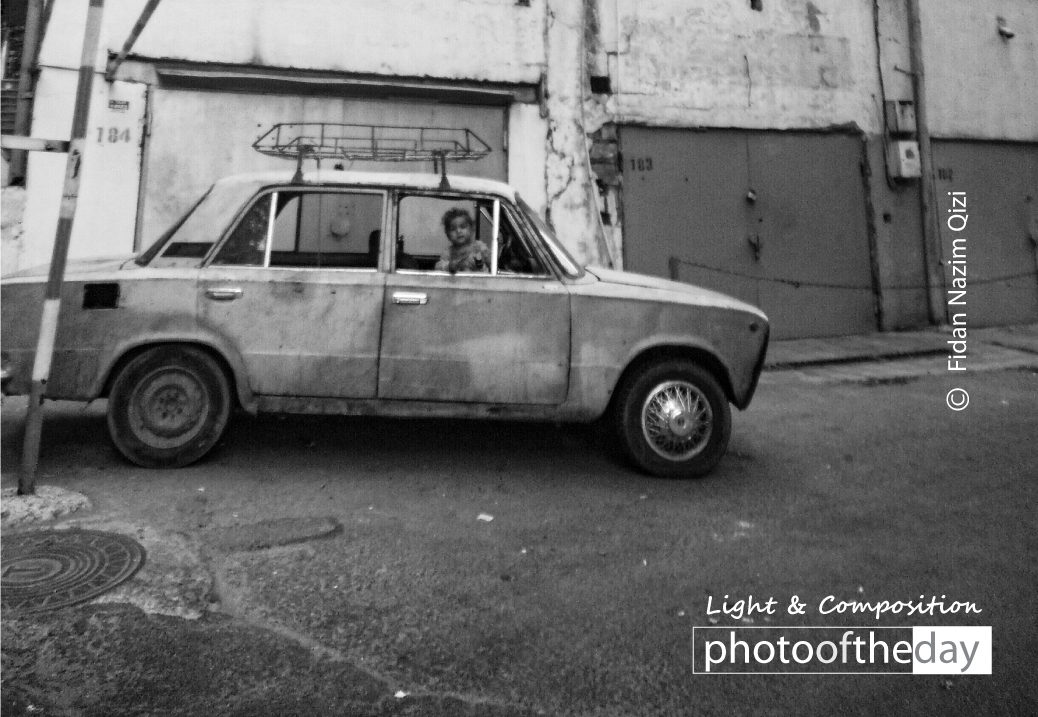
Driven by a year-long commitment to capture the world daily, the photographer sought to transform the mundane into the extraordinary. By carrying a camera everywhere, she cultivated a heightened sense of sight, allowing her to perceive familiar streets and everyday encounters with newfound depth and clarity. This image represents the culmination of that disciplined practice, showcasing a shift in perspective where the ordinary is elevated through intentional observation. The photograph is award-worthy for its ability to turn a simple, daily routine into a profound visual narrative, proving that the most compelling stories often reside in the spaces we walk through every single day.
Fidan Nazim Qizi
Born in Baku, Azerbaijan, Fidan Nazim Qizi maintains a deep connection to her home city while frequently traveling to explore global landscapes. Her photographic journey was profoundly influenced by the work of Vivian Maier, which inspired her to master the evocative medium of black and white photography. An avid hiker and nature enthusiast, she views the camera as a vital tool for capturing energy and inspiration, consistently seeking to translate the raw feelings of her surroundings into compelling visual stories for an international audience.
Resonance Score Breakdown
Transparency Note: The resonance score (7.8/20) is calculated based on social engagement metrics collected before the award announcement.
Expert Photography Reviews · 4
The Archive of Passing Moments
We walk through our days as if reading a book in a language we have forgotten how to speak. We see the street, the corner, the slant of light against a brick wall, yet we do not truly read them.
Read the reflection →The Weight of Seeing
We walk through our days as if the world is a static backdrop, a familiar map we have already memorized. We move with our heads bowed, eyes skimming the surface of the pavement, rarely stopping to invite the light to reveal what is hidden in plain sight.
Read the reflection →Reviews & Comments
Share your thoughts about this award-winning photograph. Your reviews contribute to the community engagement score.
The frame holds a breath. Baku’s light hits the pavement, carving out a stillness I haven’t felt in months. It’s quiet. The shadows don’t crowd the subject; they give it room to exist. I find myself leaning in, waiting for a sound that never comes. Nothing here is accidental. The empty corner is not empty. It’s a deliberate pause in a city that usually rushes. I’ve finally found a moment of true rest.
It’s a quiet echo of Cartier-Bresson’s decisive moment, though stripped of his geometric rigor. Using a modest FinePix sensor, Qizi finds a texture in Baku’s streets that recalls the raw, unvarnished honesty of early street documentary. I’ve spent decades tracing this lineage, yet the way she frames the mundane here genuinely caught me off guard. It doesn’t rely on technical perfection; it leans into the grit of the everyday, proving that vision always outpaces the gear.
The frame’s geometry dictates the narrative. A rigid vertical axis bisects the composition, forcing the eye toward the central aperture. It’s a disciplined arrangement of light and shadow that keeps the chaos of Baku at bay. The negative space doesn’t just exist; it anchors the subject. I’ve rarely seen such a stark, clinical balance in street work. It’s cold, yes, but the structural integrity is undeniable. It’s a rare moment where the frame actually holds.
The shutter snaps, and the street freezes. It’s a tight, rhythmic beat of Baku life caught in a Fujifilm frame. I love the way the light hits the pavement here; it’s a quiet, cinematic pause that refuses to cut away. The composition holds its breath, turning a mundane walk into a lingering wide shot. It’s the frame the editor keeps because it’s got soul. I’d watch this film for hours. It’s a perfect, still sequence.