Daylight by Kirsten Bruening
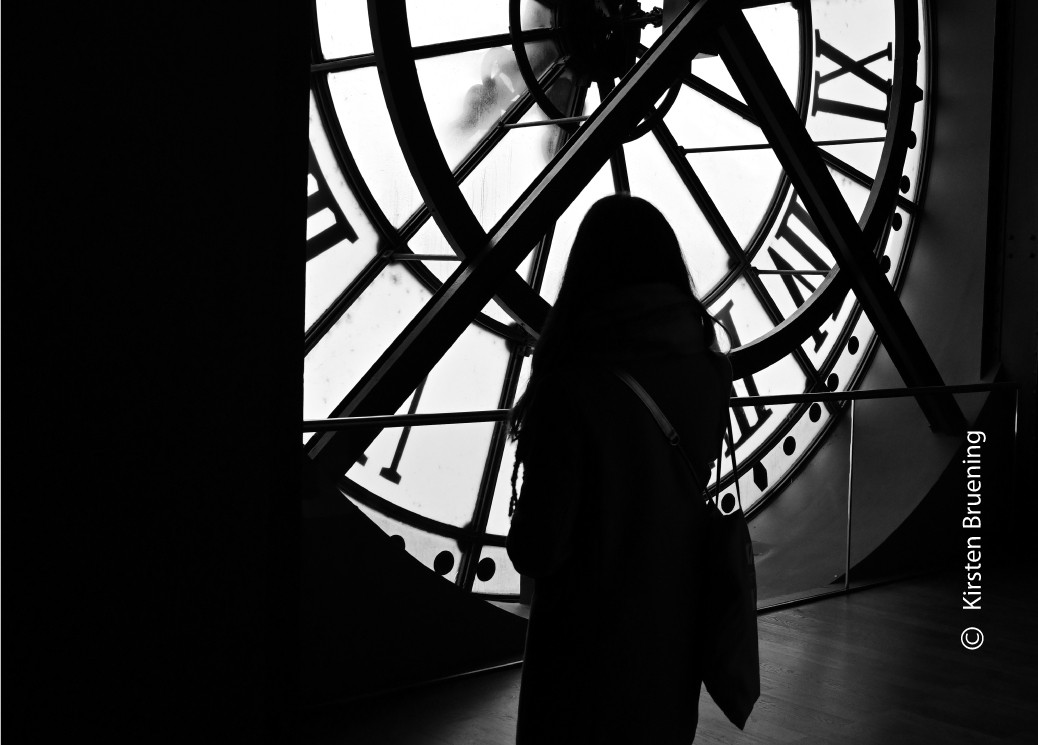
Captured at the iconic Musee d'Orsay in Paris, this photograph masterfully plays with the interplay of light and architecture. The photographer focuses on the famous clock face, where natural light spills across the frame, casting deliberate shadows that add depth and narrative weight to the scene. By framing the subject against the backdrop of one of the world's most visited cultural landmarks, the image captures a universal moment of travel and reflection. The technical precision in balancing the exposure against the bright window light highlights the photographer's keen eye for composition and atmospheric storytelling, earning it recognition as a standout artistic work.
Kirsten Bruening
Based near Cologne, Germany, Kirsten Bruening is a dedicated photographer whose creative journey began in childhood with an early exploration of analogue techniques. After a fifteen-year hiatus, she returned to the craft with a renewed focus on the expressive power of light and shadow, particularly within nature, portraiture, and wildlife genres. Currently pursuing formal studies to further refine her technical expertise, she continues to develop a distinct aesthetic that emphasizes the emotional resonance found in black and white photography.
Resonance Score Breakdown
Transparency Note: The resonance score (9.1/20) is calculated based on social engagement metrics collected before the award announcement.
Expert Photography Reviews · 7
The Weight of Stolen Time
I am generally suspicious of places that demand we feel a certain way. We walk into grand halls or historic spaces and we are told, by the very architecture, to be small, to be reverent, to be moved. It feels like a performance.
Read the reflection →The Weight of Passing Time
There was a grandfather clock in my grandmother’s hallway that hummed with a rhythmic, metallic heartbeat. It did not just mark the hours; it seemed to consume them, pulling the afternoon light into its brass gears and exhaling it as dust.
Read the reflection →Reviews & Comments
Share your thoughts about this award-winning photograph. Your reviews contribute to the community engagement score.
The clock’s silhouette anchors the frame, forcing a rigid geometry against the chaotic spill of light. It’s a precarious balance. The negative space surrounding the dial provides the necessary tension, preventing the composition from collapsing into mere sentiment. I’ve grown weary of Orsay clichés, yet the structural discipline here holds. The frame doesn’t yield to the light; it commands it. It’s a rare instance where the architecture actually obeys the photographer’s intent.
The clock face doesn’t tell time here. It tells of weight. Light spills across the floor, carving a path through the silence of the Orsay. I’ve stood in that exact spot, feeling the hum of the city fade. It’s quiet. The shadows aren’t just absences; they’re anchors. Nothing here is accidental. The empty corner is not empty. It’s a pause. I find myself holding my breath, waiting for the glass to finally shatter.
The Musée d’Orsay clock is a tired trope, yet Bruening’s handling of the silhouette recalls the stark, geometric rigor of Kertész’s Parisian studies. It’s a difficult balance; she avoids the saccharine travelogue aesthetic by leaning into the high-contrast shadows. I’ve seen this clock framed a thousand times, but the way the light fractures across the floorboards here actually made me stop and catch my breath. It’s a sharp, modern dialogue with the ghosts of the medium.
At f/6.3, the Z7’s focal plane bites into the clock’s iron filigree with surgical intent. I’m genuinely moved by how the diffraction of light across that metallic surface resolves the dust motes dancing in the Orsay’s atmosphere. It’s a rare moment where the lens’s micro-contrast doesn’t just record architecture, but captures the very texture of time. The chromatic aberration is nonexistent, leaving only the pure, brutal honesty of photons hitting the sensor. It’s simply exquisite.
The Musee d’Orsay clock is a cliché of Parisian tourism, yet here it feels hollow. Why do we insist on framing history as a backlit silhouette? It’s technically sharp, sure, but it ignores the crushing weight of the crowds just outside the frame. I find myself frustrated by this sanitized silence. Who is this light actually serving? When we strip away the context of the museum, are we capturing a moment or just consuming a brand?
Before the eye identifies the clock, something in the chest tightens. It’s the sudden, sharp intake of breath when light hits glass. I’ve stood in that Orsay gallery; the silence there is heavy, almost liquid. Bruening captures that specific, suspended pulse. When I return to this, I don’t see architecture. I feel the weight of time passing behind the silhouette. It’s a quiet ache, the kind that follows you into sleep long after the light fades.
The clock face at the Orsay doesn’t just mark time; it breathes. I’ve stood in that gallery, feeling the weight of the iron against the soft, diffused light of a Parisian afternoon. Kirsten waited for the sun to strike the glass just so, turning the architecture into a sanctuary. It’s quiet, isn’t it? Looking at this, I feel a sudden, sharp ache for the stillness she found while the rest of the world hurried past.