Some Birds are Not Meant to be Caged by Dipsankar Saha
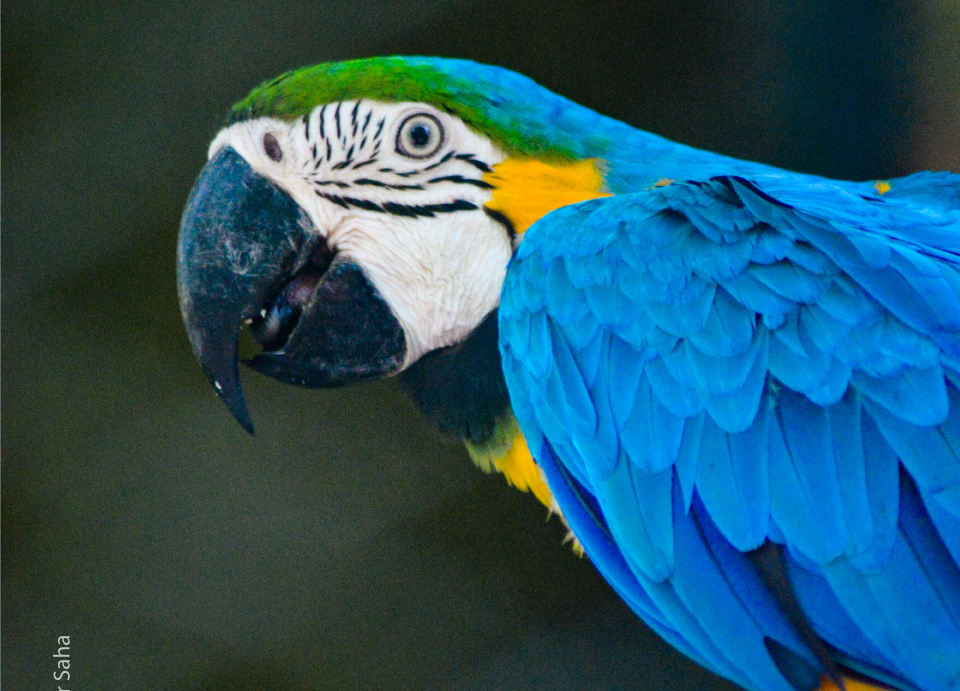
Captured at the Alipore Zoo in Kolkata, this striking portrait of a blue and yellow macaw highlights the bird's vibrant plumage and impressive scale. The photographer was drawn to the creature's brilliant colors, which demanded attention amidst the zoo's diverse animal population. Beyond the technical execution, the image serves as a poignant reflection on the nature of captivity, prompting the photographer to contemplate the bird's inherent right to soar freely in the open sky. This award-winning shot succeeds by balancing technical clarity with a deeply felt emotional narrative regarding the dignity of wildlife.
Dipsankar Saha
Born and based in the vibrant city of Kolkata, India, Dipsankar Saha is a dedicated explorer who views photography as a vital tool for deepening his engagement with the world. His work is driven by a lifelong passion for travel and a desire to interact with diverse cultures, using his camera to intensify his personal experiences. Through his lens, he seeks to uncover the beauty in his surroundings, transforming fleeting moments of discovery into meaningful visual stories for an international audience.
Resonance Score Breakdown
Transparency Note: The resonance score (11.3/20) is calculated based on social engagement metrics collected before the award announcement.
Expert Photography Reviews · 4
The Weight of Stolen Skies
I often find myself standing before the wrought-iron gates of the old botanical gardens in the city, watching the way the light catches the dust motes as they drift toward the glass houses.
Read the reflection →The Weight of Stilled Wings
The macaw’s plumage is a riot of primary colors, evolved not for the dim light of an enclosure, but to signal across the vast, humid canopy of a rainforest. In the wild, such vibrancy is a functional necessity, a way to navigate the dense green architecture of the jungle.
Read the reflection →Reviews & Comments
Share your thoughts about this award-winning photograph. Your reviews contribute to the community engagement score.
The macaw’s eye is sharp, but the cage bars are the real story here. Cartier-Bresson would’ve waited for a human element to intersect that geometry. It’s a clean shot, sure, but is it the decisive moment? I feel a sharp pang of claustrophobia looking at those feathers pressed against steel. One tenth of a second later and the bird might have turned, breaking the tension. It’s technically sound, but it lacks that chaotic, unrepeatable street pulse.
The macaw’s plumage screams, yet it’s the encroaching gloom behind the wire that truly haunts me. We’re looking at a prisoner whose vibrant feathers only emphasize the suffocating stillness of its cage. It’s a cruel irony; the light reveals a beauty that has nowhere to go. I’ve felt that same heavy, hollow ache when watching a trapped bird stare into the void. When the shadow swallows the wing, the tragedy finally becomes clear. It’s not just wildlife; it’s exile.
We look into the macaw’s eye and we don’t just see feathers; we see a prisoner’s quiet resignation. Dipsankar didn’t just snap a bird; he listened to the silence behind the bars. The vibrant blue and yellow plumage feels heavy here, a costume for a life lived in a cage. It breaks my heart, honestly. We’re left wondering if the bird remembers the sky, or if it’s forgotten how to dream of flight altogether.
The macaw’s diagonal axis creates a sharp tension against the vertical bars, effectively bisecting the frame into a 1:3 ratio of negative space. It’s a rigid, claustrophobic geometry. The bird’s eye sits precisely at the intersection of the upper-left third, anchoring the composition’s visual gravity. I’m genuinely unsettled by how those parallel lines slice through the plumage. It’s a cold, mathematical trap, yet the vibrant color vectors fight back against the grid. A perfectly solved, painful equation.