When They Were Leaving by Jabbar Jamil
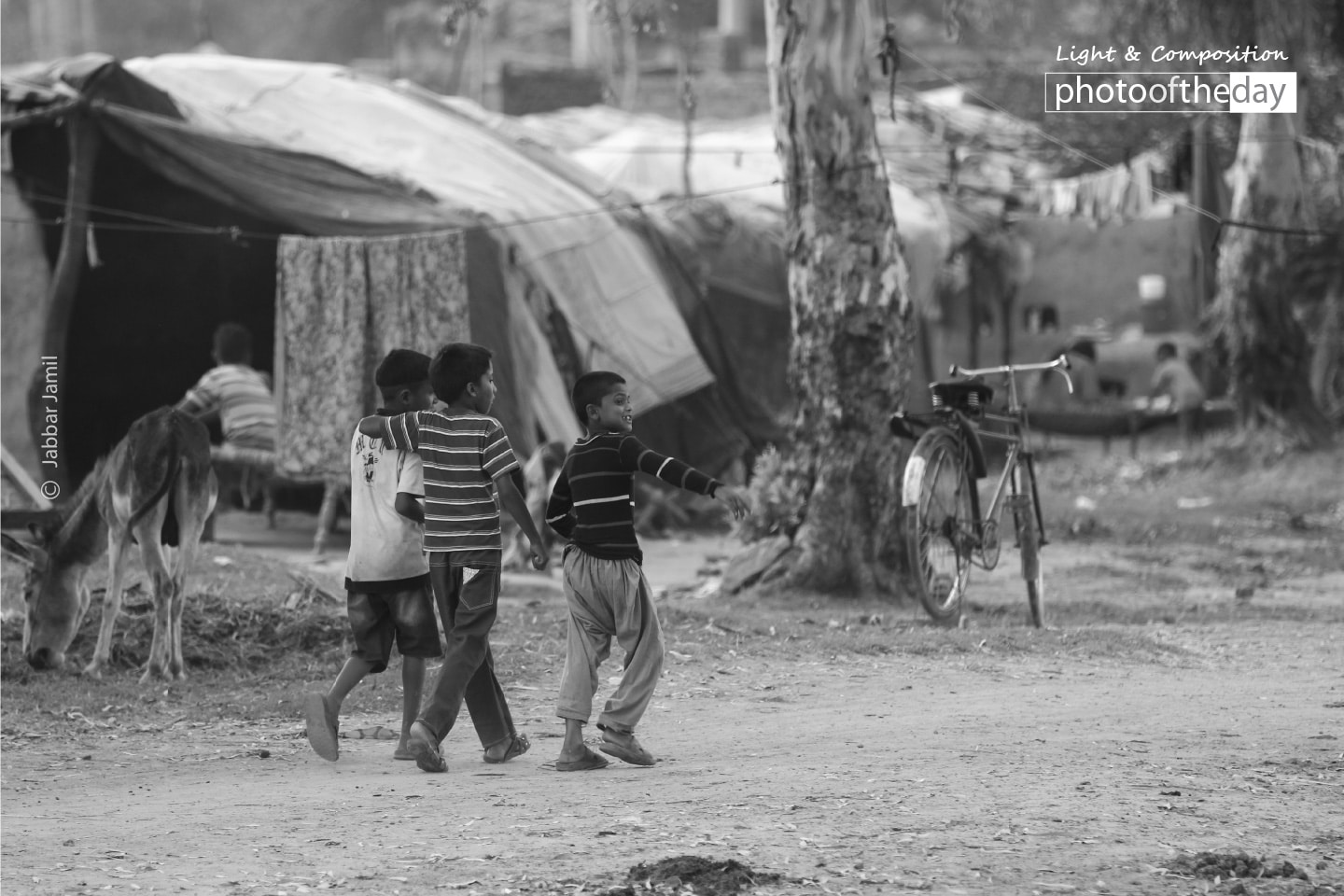
Captured within the humble surroundings of a Sialkot slum, this poignant image documents a fleeting moment of transition as children prepare to depart for a new destination. The photographer, having engaged the subjects in conversation, was struck by their uninhibited joy and natural playfulness amidst challenging circumstances. By focusing on their candid expressions and willingness to be seen, the image transcends mere documentation to offer a raw, humanizing glimpse into their lives. Its award-worthy quality lies in the masterful composition and the photographer’s ability to build a genuine connection, turning a brief encounter into a timeless narrative of childhood resilience.
Jabbar Jamil
Based in Sialkot, Pakistan, Jabbar Jamil is a dedicated street photographer who views his craft as a vital bridge to the world beyond his comfort zone. His work is driven by a desire to forge human connections, using the camera as a tool to explore both the beauty and the harsh realities of the urban landscape. Beyond its creative expression, photography serves as a meaningful outlet for Jamil, allowing him to document the authentic, unfiltered moments he encounters in his daily travels.
Resonance Score Breakdown
Transparency Note: The resonance score (12.2/20) is calculated based on social engagement metrics collected before the award announcement.
Expert Photography Reviews · 8
The Architecture of Transit
We often mistake the city for its permanent structures—the concrete, the steel, the zoning lines that dictate where one life ends and another begins.
Read the reflection →The Dust of Departure
The taste of dry earth always returns when I think of moving. It is a grit between the teeth, a fine, chalky powder that settles on the tongue whenever the air shifts.
Read the reflection →Reviews & Comments
Share your thoughts about this award-winning photograph. Your reviews contribute to the community engagement score.
That split-second of raw, uninhibited joy in Sialkot hits me right in the gut. It’s pure Winogrand energy—the chaos of the slum falling away to reveal a singular, fleeting truth. If Jamil had waited a fraction longer, the movement would have blurred, the connection lost. He didn’t hesitate. He caught the kids mid-transition, frame perfectly locked. One tenth of a second later and the magic vanishes. It’s honest, it’s fast, and it’s alive.
f/2.8 at 35mm, 1/500s, ISO 400. A classic street configuration. The wide aperture isolates the subjects from the chaotic Sialkot background, forcing the viewer’s eye onto the children’s expressions. It’s a calculated risk that pays off. I’ve seen enough blurry slum documentation to last a lifetime, but this focus is surgical. It’s sharp where it needs to be. Honestly, the clarity of their joy caught me off guard. A technically sound, precise execution.
Of the thousands of entries I’ve judged, most rely on poverty as a crutch for emotional weight. Jamil avoids that trap. By framing these children against the stark, textured decay of Sialkot, he forces us to confront their resilience rather than their circumstances. It’s the unforced, genuine laughter that gets me; it feels like a secret they’re sharing only with the lens. In thirty years, this won’t be a relic of a slum, but a portrait of joy.
The crumbling masonry here isn’t just a backdrop; it’s a datum for the children’s movement. Jamil captures how the harsh, raking light defines the texture of these walls, turning a slum into a profound threshold. I’m struck by how the solid mass of the structure frames their fleeting joy. It’s a rare, honest look at how architecture shapes human resilience. I’d argue the frame omits the squalor, but that’s exactly why it feels so true.
Sialkot’s dust doesn’t just settle; it consumes. In these shadows, I feel a crushing, visceral ache for the fleeting nature of their departure. Jamil doesn’t merely document; he forces the darkness to hold the weight of these children’s impending absence. It’s a brutal, necessary tension. When light fails to penetrate the corners of their makeshift home, the silence becomes deafening. I’m left wondering if they’re escaping the poverty or simply running toward a deeper, darker unknown.
You can tell these children weren’t just props for a scene. They’re looking right at Jabbar, not through him. There’s a softness in their posture that only comes when someone has sat in the dust with them long enough to be forgotten. It’s a rare gift. Looking at their bright, unguarded eyes, I feel a sudden, sharp ache for the simplicity they’re holding onto. This face has a whole life in it. They’ve truly been seen.
Stripped of pigment, the monochrome palette here achieves a Morandi-esque stillness, where the absence of hue forces one to confront the velvet charcoal of the shadows and the pale, dusty silver of the Sialkot light. It’s a haunting, tonal symphony; I’ve found myself weeping at the way the light clings to their skin like worn linen, turning their fleeting departure into a timeless, silver-toned ache that lingers long after the eye has turned away.
The light here isn’t just illumination; it’s a quiet witness to their departure. I’ve spent enough dawns waiting for the shadows to soften to recognize the patience Jabbar held in that Sialkot alley. He didn’t rush them. He waited until the dust settled and the children’s joy became the only truth in the frame. It’s a heavy, beautiful stillness. Looking at their faces, I feel a sudden, sharp ache for the homes we all eventually leave behind.