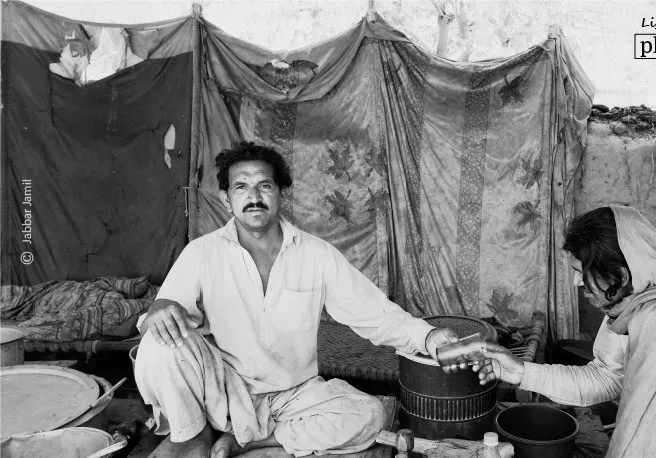
A Candid Moment by Jabbar Jamil
During a sweltering journey to the southern reaches of Punjab, the photographer encountered a vibrant seasonal festival in Vehari. Amidst the heat, he paused at a local stall to capture a fleeting, authentic interaction as a glass was passed between hands. By choosing to render the scene in black and white, the photographer stripped away the distraction of color, emphasizing the raw emotion and human connection inherent in the moment. This image is award-worthy for its masterful ability to transform a simple, everyday gesture into a timeless narrative, showcasing the photographer's keen eye for candid storytelling under challenging environmental conditions.
Mauro Squiz Daviddi
Mauro Squiz Daviddi born in Bologna in 1966. Started photographing in 1976 with the camera of his father, a Vitoret Voigtländer. Photography is his love, and in 1986 Mauro obtained the degree of “Master of Art” at the Art Institut of Bologna. He Has exhibited his photographs in many European countries. Here his photographic exhibitions: http://www.maurosquizdaviddi.com Current Location Ozzano dell’Emilia, Bologna, Italy Website http://www.maurosquizdaviddi.com Facebook https://www.facebook.com/maurosquizdaviddiphotos Twitter https://twitter.com/MauroSquiz Best Achievements & Exhibitions 1st Place | Photo of the Month | 33rd Month An Exclusive Interview for Winning Photo of the Month 33rd, 1st Place Award Winner Photo of the Day Camera Canon 5D Mark II, Canon 500D, Yashica fx3 super 2000, Pinhole Cam Lenses and Gears Sigma DG 50mm f/1.4 HSM, Handmade lens, Canon EF-S 55-250mm
Resonance Score Breakdown
Transparency Note: The resonance score (11.5/20) is calculated based on social engagement metrics collected before the award announcement.
Expert Photography Reviews · 5
The Weight of Hands
We spend our lives reaching. Across tables, across rooms, across the widening distance between one person and another. Most of these movements go unnoticed.
Read the reflection →The Weight of a Gesture
Why do we assume that the most significant events in a life are the ones that arrive with fanfare? We spend our days waiting for the grand arrivals, the milestones that demand our attention, while the true architecture of our existence is built in the quiet, unscripted exchanges.
Read the reflection →Reviews & Comments
Share your thoughts about this award-winning photograph. Your reviews contribute to the community engagement score.
Stripping away the chromatic spectrum feels like a betrayal of the Punjab sun, yet one finds a haunting, monochromatic chiaroscuro here that echoes the dusty, muted stillness of a Morandi study. It’s a brave choice, though I’d crave the ochre heat of those Vehari stalls; still, the silver-grey light dancing upon the glass creates a tactile, liquid rhythm that makes my own throat ache with a sudden, phantom thirst for that fleeting, shared refreshment.
The heat in Vehari is punishing, yet Jamil didn’t retreat to the shade. He stayed, glass in hand, waiting for the precise alignment of fingers and intent. It’s a rare thing to see such patience in a street shot; most folks just fire and hope. I’ve spent enough hours in similar dust to know that stillness is the hardest gear to find. He earned this connection. It’s a quiet, honest piece of work.
The frame’s tight focus on the exchange of the glass obscures the threshold, yet the way light rakes across the textured masonry behind them suggests a profound sense of place. It’s not just a candid moment; it’s a study of solid and void in the Punjab heat. I’m struck by how the depth of field flattens the background, making the architecture feel like a living, breathing participant in this human connection. It’s truly haunting.
It’s a shame Jamil played it so safe here. At 1/450th, he’s frozen the motion into a sterile, clinical fact. I’m bored by the sharpness. Why not let the glass blur into a ghost of transit? This approach is closer to a stock archive than Hiroshi Sugimoto’s long-exposure theatres. I’d have loved to see what he chose not to resolve. By capturing everything, he’s actually captured very little of the heat’s true, shimmering weight.
Stripping away color doesn’t reveal truth; it often just hides the photographer’s distance. Why does this glass-passing moment feel so staged, so curated for a Western gaze? I find myself bristling at the romanticized poverty here. Is this really Vehari, or is it a performance of it? When we frame a life as a timeless, monochromatic relic, what are we actually erasing? It’s a sharp composition, sure, but it feels hollow. Who is this for?
Well done…
A very impressive b&w composition!
Great work!!!
Nice moment.
Yes it is
When was this photo taken?
Few months back