The Grand Rot by Henri Coleman
Captured in November at the historic Château d'Arche in Bordeaux, France, this photograph documents the remnants of the harvest following the phenomenon known as 'The Grand Rot.' The photographer focused on the lingering Sauterne grapes, drawing inspiration from vines that have yielded fruit for over a century. By isolating these final, weathered clusters against the backdrop of a storied vineyard, the image captures the quiet transition of the season. The composition is award-worthy for its delicate balance of texture and light, transforming a fleeting agricultural moment into a timeless study of viticulture and natural decay.
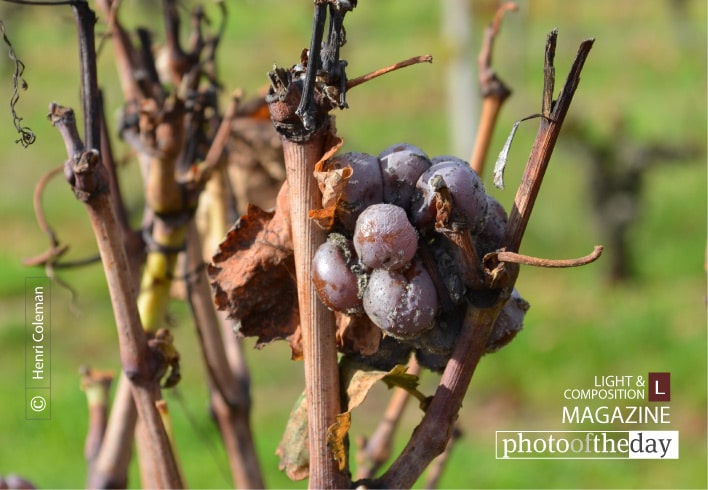
Exposure 1/250sec @ f/8 | ISO 160 | Focal Length 55mm
Tamal Debnath
Tamal Debnath is a School Teacher in English Language. He is 28, and an amateur photographer. He has a deep love for photography. Though he started photography in 2008 with Nikon D40, he always try to learn by observing others’ works. To him, each and every day his camera teaches him new lessons. His camera is his best companion and he believes it will be for ever. [caption id="" align="alignnone" width="145"] Tamal Debnath[/caption] Camera Gear: Nikon D3100 Lenses: Nikon 55-300mm ED VR Current Location: Cooch behar, West bengal, India Flickr: http://www.flickr.com/photos/65228858@N03 Facebook: http://www.facebook.com/#!/profile.php?id
Resonance Score Breakdown
Transparency Note: The resonance score (13.1/20) is calculated based on social engagement metrics collected before the award announcement.
Expert Photography Reviews · 7
The Architecture of Decay
We often mistake the city for its monuments, those polished facades that signal power and permanence. Yet, the true history of a place is written in the margins, in the spaces where utility gives way to the inevitable cycle of decline.
Read the reflection →The Alchemy of Wither
We are taught to fear the shriveling of things, to equate the loss of plumpness with the loss of purpose. Yet, there is a secret sweetness that only arrives when the skin begins to fold, when the sun has finished its long, slow work of concentration.
Read the reflection →Reviews & Comments
Share your thoughts about this award-winning photograph. Your reviews contribute to the community engagement score.
The frame’s geometry is tight, yet the background’s soft blur threatens to dissolve the structure. It’s a precarious balance. The clusters occupy the lower third, anchoring the frame against the vertical chaos of the vines. I’m genuinely unsettled by how the decay pulls the eye toward the edge. The spatial tension holds, but only just. It’s a clinical study of rot that doesn’t collapse into sentimentality. The composition earns its weight through sheer, cold discipline.
At f/8, the 55mm focal plane renders the desiccated skins of these Sauterne grapes with startling micro-contrast. You can see the exact point where the diffraction limit begins to soften the background, creating a bokeh that’s purely a function of the aperture’s geometry. It’s haunting. I’ve spent years studying optics, yet the way the light catches the fungal bloom on these withered clusters—it’s physically visceral. It’s a rare, beautiful intersection of decay and precise glass.
Most entries in this category rely on the romanticism of the harvest, but this avoids that trap. It’s the brutal, shriveled texture of the botrytis that anchors the frame. I’ve seen thousands of vineyard shots, yet the way these grapes cling to the vine, looking almost like dried leather, actually makes me shiver. It’s a grim, honest look at decay. Thirty years from now, people won’t remember the vineyard, but they’ll remember this specific, haunting rot.
1/250sec at f/8, 55mm, ISO 160. A safe, clinical choice. The f/8 aperture keeps the rot in sharp, unforgiving focus across the frame. It’s technically sound, though it lacks the courage to isolate the subject through shallow depth. I’ve spent years looking at these sensors, and honestly, the Nikon 5100’s noise profile at ISO 160 is clean enough to make me wish Coleman had pushed for more texture. It’s competent, but it’s safe.
November in Bordeaux brings a heavy, damp silence. Henri stood here as the light turned thin and grey, listening to the vines surrender their final, shriveled weight. It’s a quiet ache, watching the rot claim what was once vibrant. I’ve felt that same chill, the way the air holds its breath before winter. He didn’t rush the decay; he let the grapes dictate the frame. It’s a beautiful, somber surrender to the earth’s inevitable cycle.
You’ve captured the exhaustion of the harvest here. It’s not just rotting fruit; it’s the quiet surrender of a season that’s given everything it had. I can feel the damp chill of that November air just looking at these shriveled skins. You didn’t try to make it pretty, and that’s why it works. You waited for the decay to tell its own story. There’s something honest happening here. It’s a hard, beautiful ending.
The vine curls. It’s brittle. A single cluster hangs, shriveled by the rot. I’ve spent minutes staring at the blurred rows behind it. They don’t distract. They recede. It’s a quiet surrender to the season. I feel a sudden, sharp ache for the harvest that’s already gone. Nothing here is accidental. The empty corner is not empty. It’s the weight of what remains when the noise of the vineyard finally stops.