Bluebonnet Bee by Tisha Clinkenbeard
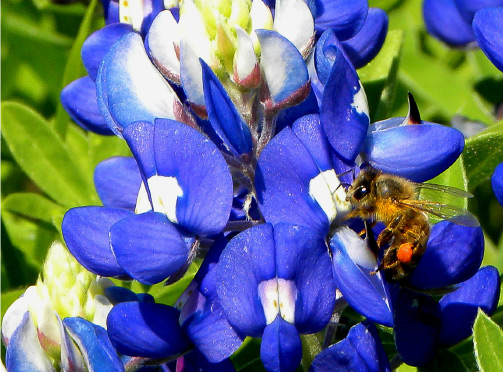
In this evocative nature photograph, the photographer captures the vibrant arrival of spring in Texas, where vast fields of bluebonnets transform the landscape. The image highlights a delicate moment of pollination, revealing the fascinating biological transition of the flowers from white to their signature blue hue. By focusing on the intimate interaction between the bee and the blossom, the photographer emphasizes the intricate beauty of the natural world. This award-worthy shot succeeds through its sharp technical execution and its ability to turn a common seasonal occurrence into a compelling, educational narrative about the cycle of life.
Tisha Clinkenbeard
Based in Powderly, Texas, Tisha Clinkenbeard is a dedicated photographer whose work has been featured in prestigious venues such as the Black Box Gallery and The Fine Arts Center of Hot Springs. Her artistic journey began long before the advent of digital technology, fostering a deep-seated passion for documenting the wonders she encounters while wandering the earth. Through her blog, Found Round & About, she shares her unique perspective on the world, consistently capturing the quiet beauty of nature and her surroundings.
Resonance Score Breakdown
Transparency Note: The resonance score (12.5/20) is calculated based on social engagement metrics collected before the award announcement.
Expert Photography Reviews · 6
The Weight of a Wing
I remember sitting on a porch in La Grange, watching a neighbor tend to his garden. He didn’t rush. He moved with a kind of deliberate slowness, as if he knew that the flowers were on their own clock and he was merely a guest in their timeline.
Read the reflection →The Weight of Small Things
In the quiet corners of a garden, there is a geometry that defies our human need for grand narratives. We often look for meaning in the sweeping arcs of history or the loud declarations of change, yet the world is held together by the smallest of transactions.
Read the reflection →Reviews & Comments
Share your thoughts about this award-winning photograph. Your reviews contribute to the community engagement score.
The shutter clicks, and time stops dead. It’s a tight, macro-lens sequence where the bee is the lead actor, caught in a frantic, buzzing rhythm against the blue. I love the way the focus pulls us into that tiny, frantic labor. It’s a frame the editor keeps because the movement is implied, not lost. The cut would have been a mistake. You can almost hear the hum. It’s a beautiful, suspended second of spring.
Before the eye identifies the bee, something in the chest softens. It’s the color—that specific, electric blue that pulls a sudden, sharp intake of breath. I’ve felt this exact stillness in a Texas field, where the heat hums against your skin. Returning to this a year later, the image doesn’t just show pollination; it triggers a phantom scent of damp earth. It’s a quiet, visceral reminder of how small we are in the cycle.
We often forget that nature has its own language, one we must listen to before we dare to look. In this frame, the bee isn’t just a visitor; it’s a storyteller in the bluebonnet fields. I feel a sudden, quiet peace watching that tiny, industrious life unfold. It’s a portrait of a season’s heartbeat. When we lean in, we realize the flower and the bee have been whispering to each other all along. It’s truly beautiful.
The frame operates on a strict diagonal tension, pulling the eye from the lower-left petal cluster toward the bee’s precise position in the upper-right quadrant. It’s a classic golden ratio distribution, balancing the dense, chaotic texture of the bluebonnets against the singular, sharp vector of the insect. I’m genuinely thrilled by how the white-to-blue gradient creates a mathematical progression of color. It’s a perfectly solved spatial equation that turns a simple pollination event into pure, rhythmic geometry.
A Nikon P90 isn’t the tool of a man seeking comfort, though the results here feel a bit hurried. One suspects the bee didn’t wait for the photographer, and the photographer didn’t wait for the light. It’s a decent enough snapshot of a Texas spring, but I’ve spent enough mornings in damp fields to know when a shot was earned. This one feels like a lucky encounter rather than a hard-won victory. It’s fine, I suppose.
At f/5.6, the Nikon P90’s sensor struggles against the diffraction limit, yet the focal plane captures the bee’s wing structure with surprising clarity. I’m genuinely moved by how the lens resolves the pollen grains against the bluebonnet’s chromatic transition. It’s a fragile intersection of optics and biology. While the sensor’s dynamic range is pushed, the bokeh as a function of that aperture creates a soft, ethereal depth that makes the insect’s labor feel almost monumental.