A Shepherd Girl by Ryszard Wierzbicki
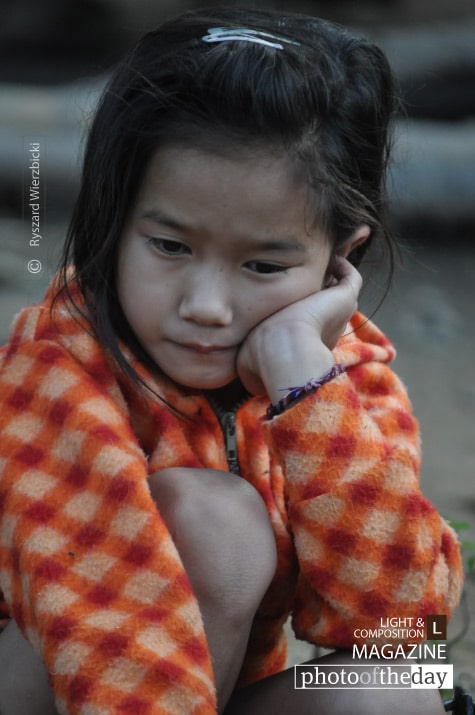
Captured in the remote village of Muang Ngoi, Laos, this portrait reflects a quiet moment of observation amidst a bustling community. While visiting the village to provide school supplies and gifts, the photographer was struck by the contrast between the playful energy of the local children and the focused, solitary demeanor of this young shepherd girl tending to her household animals. The image is award-worthy for its poignant storytelling and the photographer's ability to document an authentic, unposed interaction, highlighting the dignity and daily responsibilities of life in a secluded community.
Ersavas Gudul
Born in Istanbul 1977, Ersavas Gudul studied and has been living in Turkey and partly in Germany. He likes taking pictures as a hobby, however, does not do this very frequently. Now working in telecommunications industry, he uses several cameras including Pentax K100, Nikon D80,and Panasonic Lumix DMC-LX3. [caption id="" align="alignnone" width="145"] Ersavas Gudul[/caption] Camera Gear: Pentax K100, Nikon D80, Panasonic Lumix DMC-LX3. Lenses: Nikkor 18-55mm Current Location: Turkey Twitter: https://twitter.
Resonance Score Breakdown
Transparency Note: The resonance score (14.1/20) is calculated based on social engagement metrics collected before the award announcement.
Expert Photography Reviews · 8
The Weight of Small Hands
In the quiet corners of the world, there is a rhythm to existence that ignores the frantic ticking of our modern clocks. We often mistake childhood for a state of perpetual play, a long, sun-drenched afternoon where the only responsibility is to grow.
Read the reflection →The Weight of Small Horizons
We often mistake stillness for an absence of movement, forgetting that the deepest currents are those that run beneath the surface, unseen and unhurried.
Read the reflection →Reviews & Comments
Share your thoughts about this award-winning photograph. Your reviews contribute to the community engagement score.
Before the eye identifies the girl, a sudden stillness anchors the chest. It’s the weight of her gaze that triggers a physiological shift; my own pulse slows to match her quiet vigilance. I’ve returned to this portrait for years, and each time, the dust of Muang Ngoi seems to settle in my throat. She doesn’t ask for our pity. She simply holds the space, leaving me with a lingering, hollow ache that follows me into sleep.
In the quiet dust of Muang Ngoi, we find a girl who isn’t playing. While others run, she carries the weight of her flock in her steady, unblinking gaze. I’ve spent my life listening to faces, and hers tells a story of duty that’s older than the hills. It’s a haunting, heavy stillness. I find myself wanting to sit beside her, just to share the silence. This is a portrait that asks to be returned to.
The girl’s gaze doesn’t invite us in; it holds the horizon hostage. Wierzbicki understands that shadow isn’t merely the absence of light, but the architecture of her solitude. In those deep, murky recesses of the Muang Ngoi landscape, I feel a sudden, cold ache for the things we’ve forgotten how to carry. It’s a heavy, silent defiance. She isn’t just tending animals; she’s guarding the threshold between our world and the encroaching, necessary dark.
The light here doesn’t demand; it settles. She stands in the soft, diffused glow of a Laotian afternoon, where the air itself seems to hold its breath. I’ve spent enough mornings waiting for such stillness to recognize the weight of her solitude. It’s not just a portrait; it’s a quiet communion with the land. Looking at her steady gaze, I feel a sudden, sharp ache for the simplicity of a life lived entirely in the present.
Most portraits from this region rely on the exoticism of the subject, but Wierzbicki avoids that trap. The 200mm compression flattens the background, forcing us to confront the girl’s weary, singular focus. It’s the dirt on her hands that gets me; it grounds the scene in a reality that feels permanent. While many entries this year offered polished perfection, this one captures a quiet, heavy dignity that will still matter in thirty years. It’s honest, unvarnished work.
The girl stands. The frame holds the dust of Muang Ngoi. She doesn’t look at the lens. She looks at the space between us. I feel a sudden, sharp ache in my chest. It’s the weight of her solitude. The background blurs into a soft, grey nothingness. It’s not an absence. It’s a breath. Nothing here is accidental. The empty corner is not empty. It’s where the silence lives. She is enough.
1/125sec at f/5.6, ISO 1100, 200mm. That ISO is a noisy compromise, yet it’s the only way to justify the shutter speed at this focal length. The compression is tight, isolating the subject effectively. I’m bothered by the sensor noise in the shadows, but the sharpness on her eyes is undeniable. It’s a calculated risk that paid off. Wierzbicki didn’t waste the light. He understood the limitations of the D5000 and pushed them exactly where they needed to go.
The frame holds its breath. At 200mm, Wierzbicki isolates her against the soft, blurred chaos of Muang Ngoi, turning a fleeting encounter into a permanent close-up. It’s the kind of shot an editor keeps because the gaze is heavy with a life already lived. I’ve seen a thousand portraits, but this girl’s stillness hits me right in the chest. The cut would’ve been a mistake; she owns the silence, and the camera knows it.