Once Upon a Time by Faisal Khan
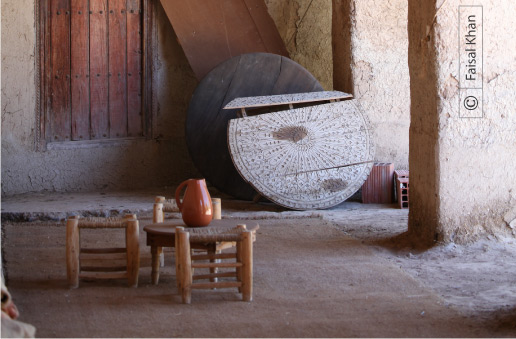
In this evocative still life, Faisal Khan captures the weathered texture of a wall in Marrakesh, finding profound beauty in its aged surface. The photographer was drawn to the deep cracks, which he perceived as a metaphor for an elderly person standing with enduring pride and dignity. By utilizing a 100mm focal length at f/4, Khan isolates these intricate details, creating a shallow depth of field that emphasizes the tactile history of the structure. The image serves as a meditative reflection on time and resilience, transforming a simple architectural element into a powerful narrative of grace and survival.
Faisal Khan
Raised in Saudi Arabia, Faisal Khan is a chemical engineer turned photographer whose global travels across 30 countries have deeply informed his artistic perspective. His work is rooted in a journey of self-discovery, spiritual growth, and a desire to connect with the divine through the natural world. Viewing photography as a form of meditation, Khan uses his camera to channel positive energy and document the majesty of creation, aiming to inspire others toward personal development and a more meaningful, aware existence.
Resonance Score Breakdown
Transparency Note: The resonance score (12.5/20) is calculated based on social engagement metrics collected before the award announcement.
Expert Photography Reviews · 6
The Architecture of Memory
We often speak of time as a river, something that flows away from us, leaving only the silt of what used to be. But perhaps time is more like a wall, a physical accumulation of every season it has endured.
Read the reflection →The Cartography of Skin
We are taught to fear the fraying edge, the way a garment thins at the elbow or a page yellows at the corner. We treat the map of our own history—the lines etched by laughter, the fissures carved by long winters—as if they were failures of the material.
Read the reflection →Reviews & Comments
Share your thoughts about this award-winning photograph. Your reviews contribute to the community engagement score.
The light here doesn’t demand; it lingers. Faisal stood before this Marrakesh wall as the sun softened, listening to the silence held within those deep, jagged cracks. It’s a portrait of endurance, really. I’ve spent enough hours waiting for the shadows to lengthen to recognize that ache in his framing. My own hands felt a strange, quiet warmth tracing those weathered lines. He didn’t just capture a surface; he waited until the stone finally decided to speak.
Before the eye identifies the wall, the pulse slows. There’s a tactile ache in the way the light catches those fissures; it’s as if the plaster is breathing. I’ve returned to this frame three times today, and each time, the cracks feel deeper, like lines on a palm I’ve held. It doesn’t just record Marrakesh; it settles into my own skin. It’s a quiet, heavy grace that lingers long after I’ve looked away.
The wall breathes. It’s a map of erosion, a slow surrender to the sun. I’ve spent minutes tracing these cracks. They aren’t scars. They’re lines of grace. Nothing here is accidental. The empty corner is not empty. It’s a weight. A silence. I feel my own pulse slow down in front of it. It’s rare to find such stillness in a frame. Khan doesn’t shout. He lets the plaster speak for itself. It’s enough.
Marrakesh heat has a way of bleaching the ambition out of a man, yet here, the texture feels deliberate. One wonders how many afternoons Khan spent leaning against that wall, waiting for the shadows to carve out those cracks just so. It’s a quiet, stubborn piece of work. I’ve spent enough hours in the dust to know that kind of patience isn’t cheap. It’s earned. I find myself wanting to touch it. That’s rare.
Most entries in this category rely on heavy-handed metaphors, but Khan’s wall avoids the trap of sentimentality. By choosing f/4, he forces our eyes to navigate the cracks as if they were wrinkles on a face. I’ve stared at this for weeks, and it still feels like a quiet, honest conversation with time. It’s the restraint that wins here; he didn’t over-process the decay, he just let the light reveal the dignity in the erosion.
1/100sec at f/4, 100mm. It’s a narrow slice of reality. The choice of f/4 at 100mm isolates the texture, but it’s a gamble. The focus plane is razor-thin, leaving the edges of the frame to dissolve into irrelevance. I’ve spent too long staring at these cracks; they’re technically sharp, but the light feels flat. It’s a competent execution of a shallow depth of field, yet it doesn’t quite earn its own gravity.