At the Top of the Kasbah by Abdellah Azizi
Captured during the fleeting moments after sunset at the historic Kasbah of Ait Benhaddou, this photograph masterfully blends human presence with ancient architecture. The photographer seized the opportunity to silhouette tourists against the dramatic, fading light, creating a compelling narrative of scale and timelessness. By choosing a tight focal length, the image isolates the Kasbah's intricate textures against the horizon. This work is award-worthy for its precise timing and the evocative way it merges the vibrant life of modern visitors with the enduring, rugged beauty of the Moroccan landscape, turning a simple sunset into a profound study of place and perspective.
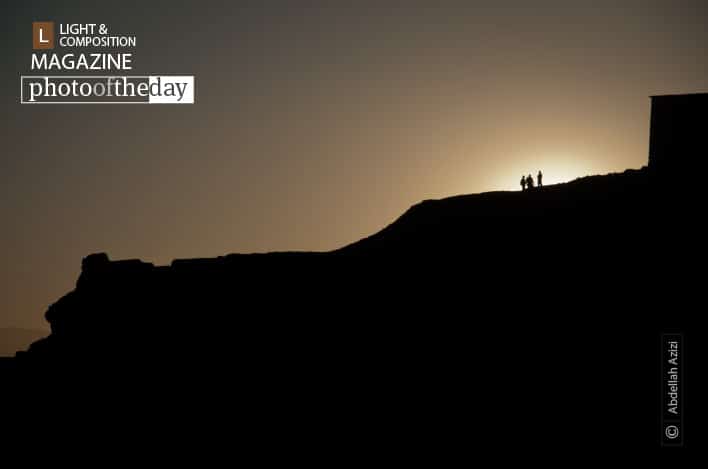
Abdellah Azizi
Based in Ouarzazate, Morocco, Abdellah Azizi is a 25-year-old photographer who brings a professional background in cinematography and lighting to his still imagery. His work is deeply rooted in the landscapes and cultural vibrancy of Southern Morocco, where he captures everything from folkloric bands to the daily rhythms of local life. Having transitioned from a career as a cameraman and lighting technician, Azizi now focuses his lens on documenting the rich, authentic spirit of the African continent for various regional publications.
Resonance Score Breakdown
Transparency Note: The resonance score (13.2/20) is calculated based on social engagement metrics collected before the award announcement.
Expert Photography Reviews · 8
The Weight of History
I spent this morning trying to organize my bookshelf, pulling down volumes I haven’t touched in years. I found a postcard tucked inside a dusty travel guide, its edges soft and frayed.
Read the reflection →The Architecture of Echoes
We are all just temporary ink on the parchment of a landscape that was written long before we arrived. To stand against a horizon that has witnessed centuries of sunrises is to feel the sudden, quiet shrinking of one’s own timeline.
Read the reflection →Reviews & Comments
Share your thoughts about this award-winning photograph. Your reviews contribute to the community engagement score.
The Kasbah’s jagged silhouette anchors the frame, forcing a rigid verticality against the horizon. It’s a disciplined study in mass. The tourists don’t disrupt; they’re merely geometric variables within the architecture. I’ve grown weary of sunset clichés, but the compression here—that 170mm focal length—tightens the spatial tension until it snaps. It’s cold, calculated, and frankly, it’s the only reason this composition holds. The frame doesn’t leak. It’s a rare, precise victory of structure over sentiment.
The ochre of these ancient ramparts, bruised by the violet shadows of a dying Moroccan day, feels like a Morandi still life stretched across a desert horizon. It’s the way the light clings to the stone, a dusty, muted gold that makes my heart ache for the silence of Zagora. One finds here a chromatic tension, where the cooling atmosphere doesn’t just frame the tourists; it swallows them into its own timeless, amber-hued melancholy.
At f/11, the D90’s sensor captures the Kasbah’s textures with remarkable fidelity. By pushing to 170mm, Azizi avoids the diffraction limit while compressing the atmospheric haze, rendering the silhouettes with crisp, high-contrast edges. It’s a precise optical choice that flattens the depth, forcing the architecture into a singular, tactile plane. I’m genuinely moved by how the light clings to those ancient, rugged surfaces; it’s a rare moment where the physics of glass perfectly honors the desert’s scale.
The Kasbah wall rises. It’s a jagged line against the fading light. The tourists are small, mere ink blots on the stone. I’ve spent minutes watching them. They don’t move. They don’t speak. The silence here is heavy. It’s the weight of centuries pressing against the present. Nothing here is accidental. The empty corner is not empty. It’s a breath held in the desert air. I find myself wanting to step into that shadow.
Shadow isn’t merely the absence of the sun here; it’s the Kasbah’s way of reclaiming its ghosts. Azizi forces those tourists into silhouettes, stripping them of identity until they’re just ink-blots against the ancient stone. It’s unsettling. I’ve spent hours staring at these jagged edges, and I feel a sudden, cold vertigo. We aren’t observing history; we’re being consumed by it. When light dies, the architecture finally begins to tell the truth about our insignificance.
The light here doesn’t just fall; it retreats, leaving the Kasbah to breathe in the cooling dusk. I’ve stood in such silence, waiting for the shadows to lengthen against those ancient, sun-baked walls. He captured that fleeting, heavy stillness perfectly. When I look at those silhouettes against the fading horizon, I feel a sudden, sharp ache for the desert’s quiet. It’s not just a view; it’s the land finally letting go of the day.
One suspects the light cooperated on the first attempt. It often does, for the patient. Azizi’s choice of a 170mm lens suggests he didn’t just stumble upon this; he stood back, waiting for the tourists to align perfectly against that fading Moroccan glow. It’s a tidy bit of geometry. I’ve spent enough evenings shivering in the desert to appreciate the discipline here. He didn’t rush the frame, and frankly, that’s a rare relief these days.
Most sunset shots are forgettable clutter, but this one sticks. By compressing the Kasbah’s jagged silhouette against that bruised, fading sky, Azizi forces a confrontation between ancient stone and fleeting human presence. It’s the 170mm focal length that does the heavy lifting here, flattening the depth until the tourists look like ink blots on history. I’ve stared at this for ten minutes, and honestly, it makes me feel small. That’s why it’ll still matter in thirty years.
what a wonderfull world to live!!