In the City by Aude-Emilie Dorion
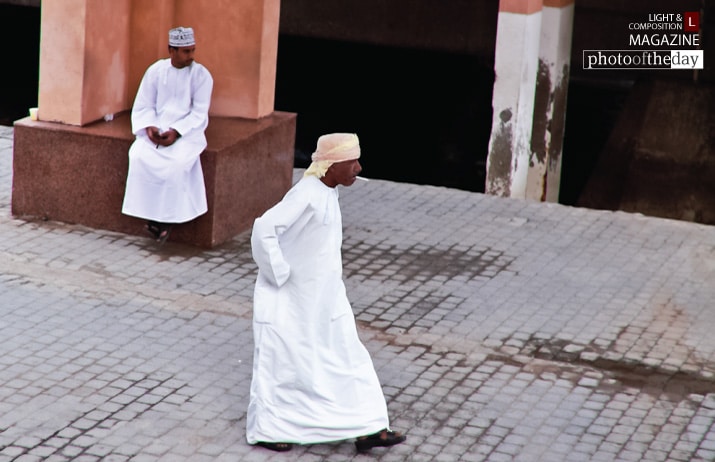
Captured in the historic port city of Muscat, Oman, in December 2009, this image explores the deep-rooted connection between the city and the sea. The photographer focused on the bustling maritime activity of Old Muscat and Mutrah, where cruise ships and cargo vessels define the local landscape. By documenting the intersection of traditional anchorage and modern global trade, the image captures the essence of a city in constant transition. This work is award-worthy for its keen observation of social geography and its ability to transform a routine port scene into a poignant reflection on urban identity and economic movement.
Aude-Emilie Dorion
Born in France in 1980, Aude-Emilie Dorion is a freelance photographer and writer based in Paris. Her work is deeply influenced by the effects of globalization and economic inequity, with a focus on capturing the tensions and transformations inherent in modern cultures. While she maintains a background in the live performance industry, she is primarily driven by social documentary and photojournalism. Dorion views photography as a vital tool for raising public awareness, consistently striving to create art that functions as a catalyst for social and political change.
Resonance Score Breakdown
Transparency Note: The resonance score (14.6/20) is calculated based on social engagement metrics collected before the award announcement.
Expert Photography Reviews · 4
Salt on the Skin
The air near the water always tastes like iron and wet stone. It is a thick, humid weight that clings to the back of the throat, carrying the sharp, briny sting of ancient tides.
Read the reflection →The Weight of Arrival
We are always waiting for something to dock. We stand on the edge of the land, watching the horizon for a shape that breaks the line between water and sky. There is a specific heaviness to a port.
Read the reflection →Reviews & Comments
Share your thoughts about this award-winning photograph. Your reviews contribute to the community engagement score.
The ochre dust of Muscat’s port bleeds into the cerulean of the Gulf, creating a chromatic friction that’s utterly intoxicating. It’s a Morandi-esque study in muted earth tones, where the heat-hazed horizon vibrates against the steel hulls. I’m breathless at how the light catches the salt-crusted rigging, turning industrial decay into a shimmering, painterly reverie. One finds the palette doesn’t merely describe the scene; it’s the very pulse of the city’s ancient, sun-drenched transition.
Most street photography in Muscat settles for postcard aesthetics, but this frame hits harder. By anchoring the traditional dhow against the looming, sterile steel of a cargo ship, Aude-Emilie captures a city losing its breath to progress. I’ve stared at this for years, and it still makes my chest ache. It’s the tension between the weathered wood and the industrial horizon that ensures this won’t be forgotten. It’s a rare, honest document of a vanishing world.
Muscat’s heat is a physical weight, yet one senses Dorion didn’t just wander by for a quick snap. She’s waited for the precise alignment of those rusted hulls against the ancient stone. It’s a quiet, disciplined study of commerce meeting tradition. I’ve spent enough afternoons sweating in similar ports to know the patience required here. It’s a rare, honest bit of work. She clearly didn’t mind the grit, and for that, I’m genuinely impressed.
Muscat’s harbor isn’t merely a site of trade; it’s a collision of eras held in the grip of encroaching night. Dorion understands that the steel hulls don’t just displace water—they displace history. When I look at these deep, ink-stained shadows clinging to the docks, I feel a sudden, cold shiver of displacement. It’s not a scene of progress, but a quiet, heavy erasure. The light here doesn’t reveal; it only marks what’s about to vanish.