When you walk into an alleyway holding a heavy professional camera body and a foot-long zoom lens, life changes around you.
People look up. Postures stiffen. Shoulders tense. Children turn shy, and vendors become suspicious. Whether you intend it or not, the sheer physical presence of the traditional camera announces an observer — an outsider documenting from above.
When you hold a phone, you are invisible.
You are not an intruder. You are simply another human being in the crowd — checking a message, waiting for a friend, breathing the same air as the people around you. There is no giant lens pointed at their face. No loud mechanical mirror slap slapping the quiet street. Just silence.
The Ethics of Invisibility
In Book 067 of Light & Composition’s textbook series, A Photographer’s Guide to Candid Photography, I wrote a principle that guides all our documentary students:
“Invisibility is not permission to exploit; it is a sacred trust to witness without disturbing. The candid photographer does not take; they receive what life presents when truth is unprovoked.”
— Dean Nasrul Eam, Book 067
For fifteen years, the tragedy of smartphone photography was that while you possessed complete invisibility, you lacked optical truth. The lens was fixed wide open. Background separation was simulated by software routines that made scenes look synthetic and cold.
With the iPhone 18 Pro, that compromise is over.
The Unobtrusive Instrument
Consider what happens when you combine true unobtrusiveness with physical optics:
- Silent Electronic Haptic Shutter: No click, no clatter. You can stand two feet from an artisan carving wood or a child reading by a window, capture the frame, and leave the human moment completely undisturbed.
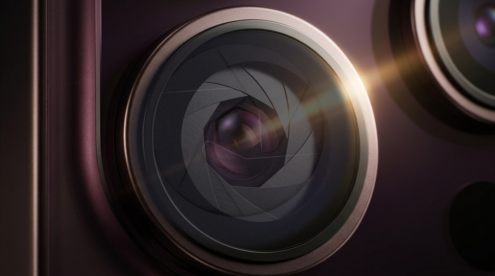
- Physical ƒ/1.8 & ƒ/2.8 Control: Real mechanical blades shape the depth of field. You can separate your subject softly from the bustling background without algorithmic halo artifacts.
- Eye Contact Remains Natural: Looking down at a screen held near your chest allows you to converse naturally with people, engaging with warmth rather than hiding behind a black plastic prism.
The Camera as an Extension of Empathy
At Light & Composition University, we teach that the camera captures only one thing — light; everything else is the photographer’s interpretation.
The iPhone 18 Pro does not make you a great documentary photographer because it has six blades or titanium edges. It makes you a great documentary photographer because it removes every physical barrier between your eye and the living world.
Carry it with you. Walk slowly. Respect the dignity of every subject you photograph. Let the quiet blades open.
Study Documentary Photography in PHO 180
In Module 3 of PHO 180: iPhone 18 Pro — The Aperture in Your Pocket, students complete field exercises in street ethics, silent witness capture, and the 12-frame capstone narrative.