The Bird Who Saw It All by Syed Asir Ha-Mim Brinto
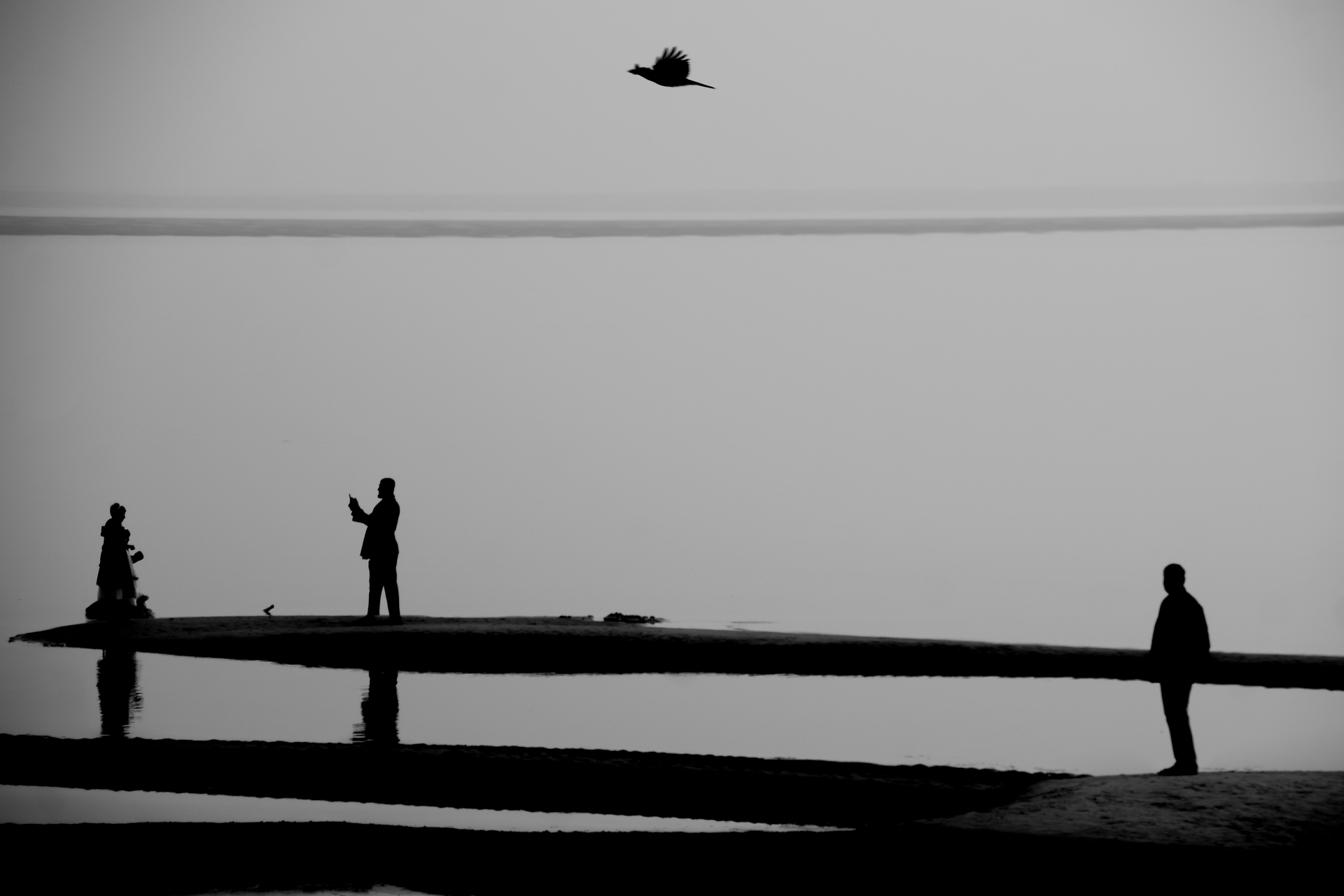
Photographed along the Padma riverside in Rajshahi, this silhouette scene captures layered stories within a single frame — a father photographing his daughter, a lone man standing apart in quiet contemplation, a small group gathered in the distance, and above them all, a solitary bird gliding through the open sky. The bird, ever watchful, becomes the silent witness to these fragments of riverside life
Syed Asir Ha-Mim Brinto
Syed Asir Ha-Mim Brinto, a self-taught photographer hailing from Bangladesh, discovered his passion for the art form early in life. His fascination with cameras was sparked by his childhood exposure to them through his family. This early connection led him to develop a deep and enduring interest in photography.
Brinto's work spans a variety of genres, including street, lifestyle, landscape, and documentary photography. He is a storyteller at heart, using his camera as a tool to explore the world around him and share compelling narratives. Through his lens, he captures the vibrant essence of everyday life, the beauty of natural landscapes, and the poignant stories hidden within communities. His dedication to his craft is evident in every shot, making him a compelling voice in the world of photography.
Resonance Score Breakdown
Transparency Note: The resonance score (5.6/20) is calculated based on social engagement metrics collected before the award announcement.
Expert Photography Reviews · 6
The Witness Above
I have been thinking about the things we leave behind when we think no one is watching. We move through our days in small, frantic circles, convinced that our private griefs or quiet joys are contained entirely within our own skin.
Read the reflection →The Silent Witness
I spent this morning sitting on a park bench, just watching the people pass by. There was a woman reading a book, a man checking his watch every thirty seconds, and a group of teenagers laughing at something I couldn't hear.
Read the reflection →Reviews & Comments
Share your thoughts about this award-winning photograph. Your reviews contribute to the community engagement score.
It’s refreshing to see a frame where the wildlife isn’t the victim of a telephoto lens. By keeping the bird as a distant, natural element of the Padma riverside, the photographer avoids the intrusive proximity that ruins so much modern work. I’ve spent enough time in marshes to know that bird didn’t care he was there, and that’s the point. It’s a quiet, honest observation. I actually felt a sense of relief seeing it.
The Padma’s edge isn’t just a boundary; it’s a datum where human scale dissolves into the void. Brinto captures the tension between the solid silhouettes and the vast, unbuilt sky. I’m struck by how the fenestration of the distant figures creates a rhythm against the river’s expanse. It’s a quiet, spatial honesty. I find myself wanting to walk into that frame, to feel the air move between those bodies. It’s a rare, hauntingly precise geometry.
The frame resolves into a precise 1:3 ratio, anchoring the figures along the lower horizontal axis while the bird occupies the negative space above. It’s a masterclass in spatial equilibrium. The bird’s vector creates a perfect diagonal tension against the father’s silhouette, balancing the visual mass of the group. I’m genuinely moved by how the geometry forces the eye to scan the entire horizon. It’s a beautifully solved equation of solitude and scale.
The shutter snaps, and the Padma river freezes into a storyboard. It’s a wide shot, perfectly blocked. The father, the daughter, the lone man—they’re actors waiting for a cue that never comes. I’m struck by the bird’s arc; it’s the perfect motion blur caught in stillness. It’s the frame the editor keeps because the rhythm is flawless. Brinto didn’t just take a photo; he held the breath of the river. It’s cinema, pure and quiet.
Stripped of chromatic distraction, one finds the silver-grey light of the Padma river possesses a Morandi-esque restraint, where the absence of pigment forces the eye to map the subtle, velvet gradations of charcoal and ash. It’s a haunting, monochromatic hush that makes my own heart ache with a quiet, sudden longing. The bird’s silhouette, suspended against that pale, luminous void, doesn’t just occupy space; it anchors the atmosphere, turning the entire frame into a meditation on silence.
There’s a quiet distance here that feels honest. You’ve captured the Padma riverside not as a stage, but as a collection of separate, drifting lives. That lone man standing apart—I feel his solitude in my own chest; it’s a heavy, familiar ache. The bird overhead is a nice touch, but the real story is in the father and daughter. They’re together, yet lost in their own world. You didn’t intrude; you just let them be.