Victory by Ryszard Wierzbicki
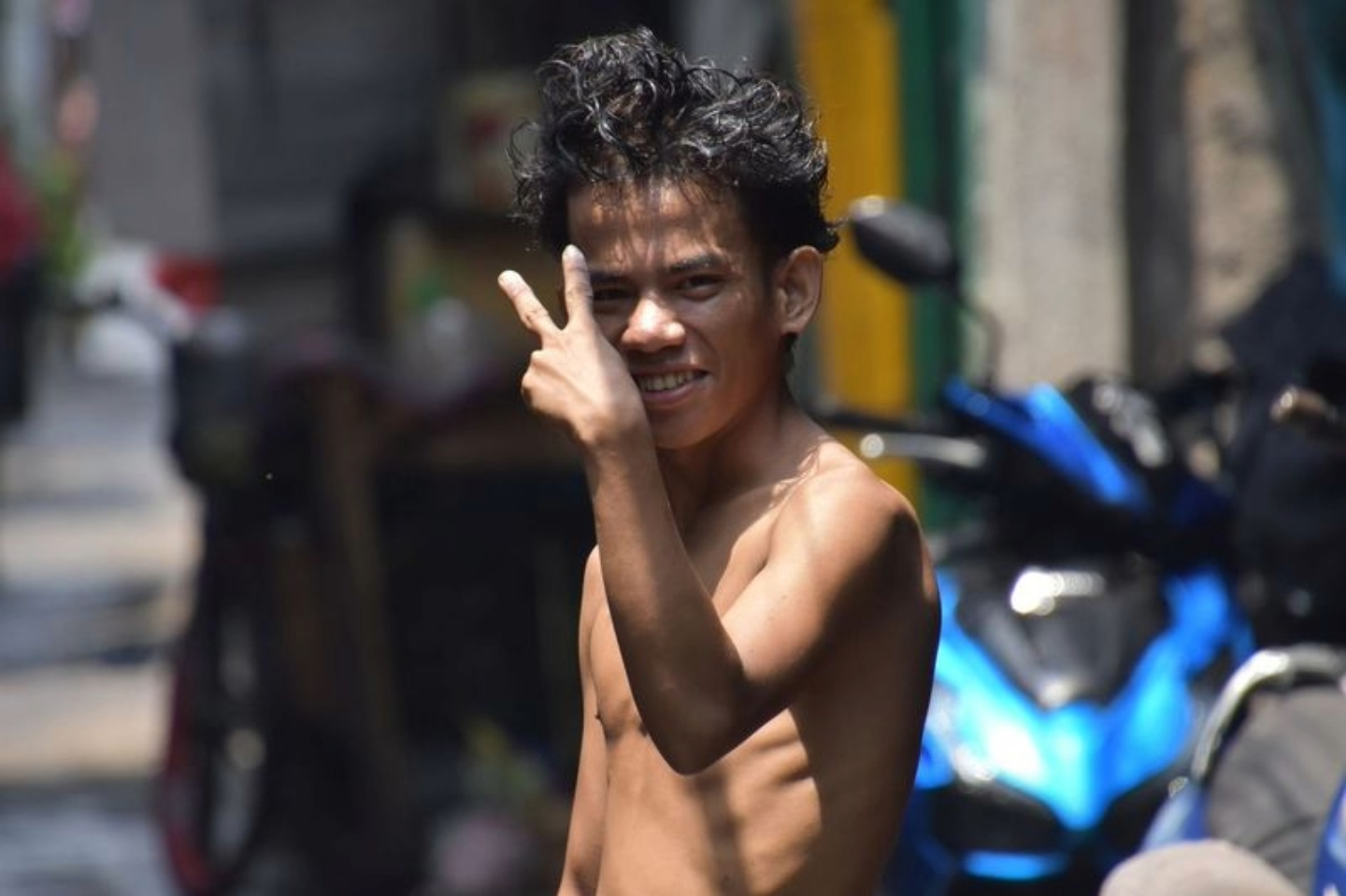
Captured during a brief stopover in Manila, this poignant image documents a resident of the Smoky Mountain district, a community built upon a sprawling landfill. The photographer, accompanied by a local guide, encountered the subject at the entrance to a narrow, makeshift street constructed from corrugated iron and cardboard. The man’s spontaneous Victoria gesture serves as a powerful symbol of resilience amidst challenging living conditions. The photograph is award-worthy for its raw, humanistic approach, transforming a stark environment into a narrative of dignity and connection, masterfully framed to highlight the subject against the backdrop of his unique, improvised surroundings.
Ryszard Wierzbicki
Born in 1963, Ryszard Wierzbicki is a multifaceted professional who holds a Master's in Social Sciences from the University of Gdańsk. After a diverse career spanning child care, dentistry, and IT, he transitioned into a life of exploration as a PADI scuba instructor and dedicated traveler. Since relocating to the United Kingdom in 2006, he has focused his lens on Southeast Asia, where he actively supports orphan charities. As the founder of the photography forums Instant Travelling and World Around, Wierzbicki balances his professional life as a marketing advisor with his enduring passion for documenting global cultures.
Resonance Score Breakdown
Transparency Note: The resonance score (6.7/20) is calculated based on social engagement metrics collected before the award announcement.
Expert Photography Reviews · 6
The Architecture of Resilience
We are taught that beauty requires a certain polish, a stillness found only in curated spaces where the light falls exactly as it should.
Read the reflection →The Weight of a Gesture
I am wary of the shorthand of suffering. We are conditioned to look for signs of hardship, to scan for the telltale markers of poverty as if they were a badge of authenticity.
Read the reflection →Reviews & Comments
Share your thoughts about this award-winning photograph. Your reviews contribute to the community engagement score.
We look at this man in Manila and see the weight of the landfill behind him, yet his fingers rise in a defiant V. Did Wierzbicki listen to the silence of that corrugated iron alley before clicking the shutter? I feel a lump in my throat seeing such pride held against the dust. It’s a portrait that doesn’t just record a life; it honors a spirit. This is a photograph that asks to be returned to.
Shadows here aren’t merely voids; they’re the heavy, corrugated iron lungs of Manila’s landfill. Wierzbicki forces us to confront the man’s V-sign not as a triumph, but as a desperate negotiation with the dark. It’s a brutal, claustrophobic geometry. I’ve stared at these jagged edges until my own eyes ached, feeling the crushing weight of that cardboard horizon. It doesn’t invite us in. It demands we acknowledge that dignity is often just a refusal to disappear.
A man flashes a V-sign against a backdrop of literal trash. It’s a jarring juxtaposition. Does this gesture belong to him, or is it a performance for the lens? I find myself wincing at the romanticization of poverty here. Why does the photographer need this man to be resilient for our consumption? When we frame survival as a victory, we ignore the structural rot. It’s a beautiful composition, but it leaves me feeling deeply uncomfortable.
1/800sec at f/7.1, ISO 800, 400mm. That’s a heavy lens for a street portrait. The shutter speed is overkill, but it’s frozen the subject’s hand perfectly. I’m actually impressed by the sharpness at 400mm; handheld, that’s no small feat. The depth of field is tight enough to isolate the man from the corrugated iron mess behind him. It’s a calculated, clinical choice that works. He’s sharp. The background is just noise. It’s technically sound.
Before the eye identifies the corrugated iron, something in the chest tightens. It’s the sudden, sharp intake of breath when that V-sign cuts through the grey. I’ve looked at this three times today, and each time, the man’s smile feels less like a gesture and more like a physical weight shifting in my own gut. It’s a quiet, bruising defiance. When I close my eyes, that jagged, improvised horizon follows me into the dark.
The subject’s fingers are splayed in that V-sign, but the wrist is already collapsing. It’s a millisecond late. I’ve seen that specific fatigue in a sprinter’s final stride; the energy has peaked and started to bleed out. The tension isn’t in the hand, it’s in the shoulder. It’s a shame, really, because I wanted to feel that surge of triumph. Instead, I’m just looking at a man who’s already beginning to let go.