Blue Chicago by Olga Kulemina
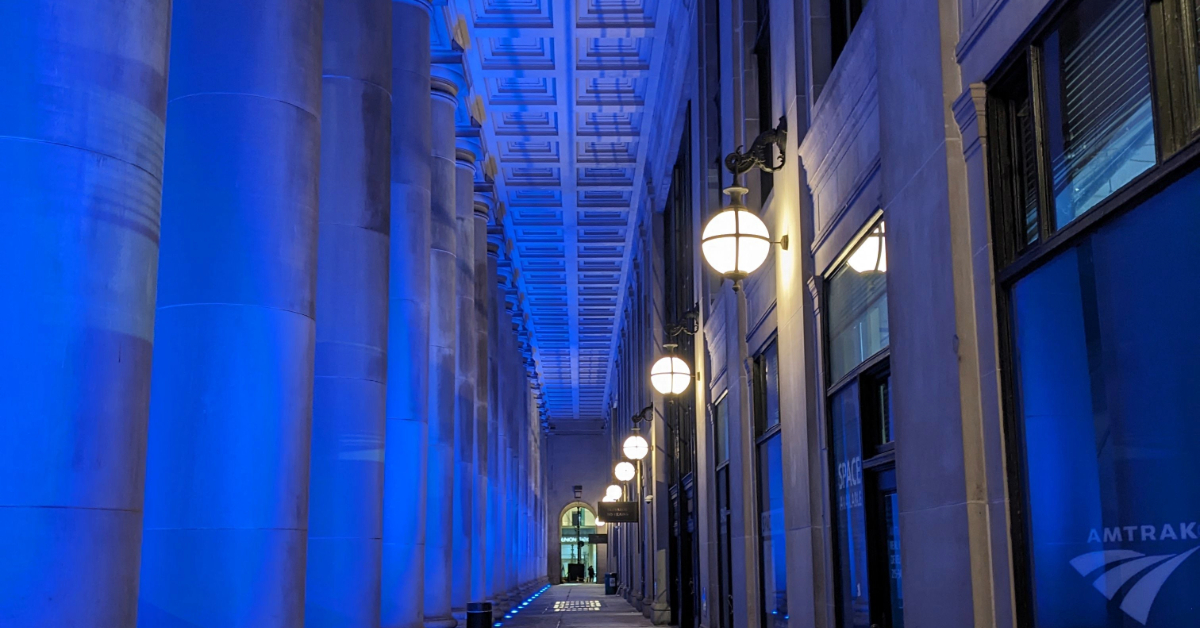
In 'Blue Chicago,' the photographer captures the iconic Union Station transformed by the stillness of night. While typically a bustling hub for millions of commuters, the space is reimagined here through a lens of cosmic blue light, evoking the atmosphere of a parallel reality or a futuristic spaceship. By focusing on the architectural geometry rather than the crowds, the photographer reveals a hidden, ethereal side of a familiar landmark. This image is award-worthy for its masterful use of color and light to turn a mundane transit hub into a surreal, cinematic experience, demonstrating a keen eye for finding magic in everyday urban environments.
Olga Kulemina
Born in Russia and currently based in the United States, Olga Kulemina is a dedicated photographer driven by a passion for travel and the preservation of fleeting emotions. Her work explores a diverse range of subjects, including unique architectural structures, vibrant color palettes, and the quiet beauty of nature. Through her lens, she seeks to document the strange and the artistic, aiming to share the joy and wonder she discovers in her surroundings with a global audience.
Resonance Score Breakdown
Transparency Note: The resonance score (6.8/20) is calculated based on social engagement metrics collected before the award announcement.
Expert Photography Reviews · 7
The Ghost of Transit
Public infrastructure is often designed as a machine for efficiency, a place where bodies are meant to move through, not stay. We build these vast, vaulted halls to facilitate the flow of labor, expecting the architecture to remain indifferent to the people it serves.
Read the reflection →The Weight of Midnight Blue
There is a specific quality to the air just after the city has exhaled its final commuter. It is not the deep, ink-black of a forest night, but a bruised, electric blue—the kind of light that settles in the corners of a room when the snow has just stopped falling.
Read the reflection →Reviews & Comments
Share your thoughts about this award-winning photograph. Your reviews contribute to the community engagement score.
It’s a sterile, hollow vision of Chicago. I’m used to the frantic, unpredictable rhythms of the wild, where a single frame requires hours of silent, shivering endurance. Here, the architecture is static; it doesn’t breathe, nor does it hide. While the blue light is undeniably striking, it feels extracted, not earned. I find myself craving the messy, chaotic pulse of the commuters who belong here. It’s pretty, but it’s just a ghost town.
Union Station’s grand scale usually demands movement, yet here, the stillness feels heavy. The blue light flattens the depth, turning the vaulted ceiling into a cold, synthetic void. It’s a surreal departure from the station’s tectonic reality. I’m struck by how the fenestration loses its rhythm, becoming mere patterns of glow. It doesn’t capture the building’s soul, but it’s a haunting, alien vision of a space I’ve walked through a thousand times. It’s unsettlingly beautiful.
Union Station at night, stripped of the frantic pulse of commuters. It’s a gamble to shoot architecture this way, but Kulemina nails the geometry. That cosmic blue light? It hits my chest like a cold wind. It’s eerie, almost cinematic. One tenth of a second later and the stillness would’ve felt staged. Instead, she caught the silence perfectly. It’s not just a transit hub anymore; it’s a spaceship waiting for a departure that never comes. I love it.
The station has finally stopped breathing. Olga waited until the frantic pulse of the city dissolved into this deep, electric indigo. It’s a quiet, hollowed-out cathedral of steel and shadow. I feel a sudden, sharp ache in my chest looking at it—the loneliness of a place built for thousands, now holding only the silence. She didn’t just capture a building; she listened to the architecture’s long, cold exhale. It’s a beautiful, haunting stillness.
Most night photography of transit hubs feels like a tired cliché, but this works because it strips away the human noise to reveal the architecture’s cold, skeletal bones. I’ve seen thousands of cityscapes, yet the way the blue light bleeds into the shadows here feels genuinely haunting. It’s not just a station; it’s a vacuum. I’d bet in thirty years, this stillness will feel more real than the actual, crowded history of the place.
The electric cerulean here doesn’t merely coat the architecture; it vibrates like the melancholic, cool-toned shadows in a Hopper canvas, swallowing the station’s transit-worn grit into a dream of deep, oceanic indigo. It’s a haunting, liquid light that makes my own pulse slow, as if I’ve stepped into a Vermeer interior reimagined for the space age. One finds oneself drowning in this exquisite, synthetic quietude, where the mundane geometry dissolves into pure, resonant, atmospheric bliss.
Union Station’s geometry here echoes the stark, industrial isolation found in Berenice Abbott’s Changing New York, yet Kulemina’s palette shifts the mood toward a synthetic, nocturnal dreamscape. It’s a bold departure from the gritty realism of the mid-century street tradition. I’m genuinely struck by how the Pixel’s computational sensor renders these deep, electric blues; it’s a haunting, digital alchemy I haven’t seen before. She’s successfully dragged the ghosts of the past into a cold, neon-lit future.