Getting Ready to Cross The Road Over by Hirotoshi Takano
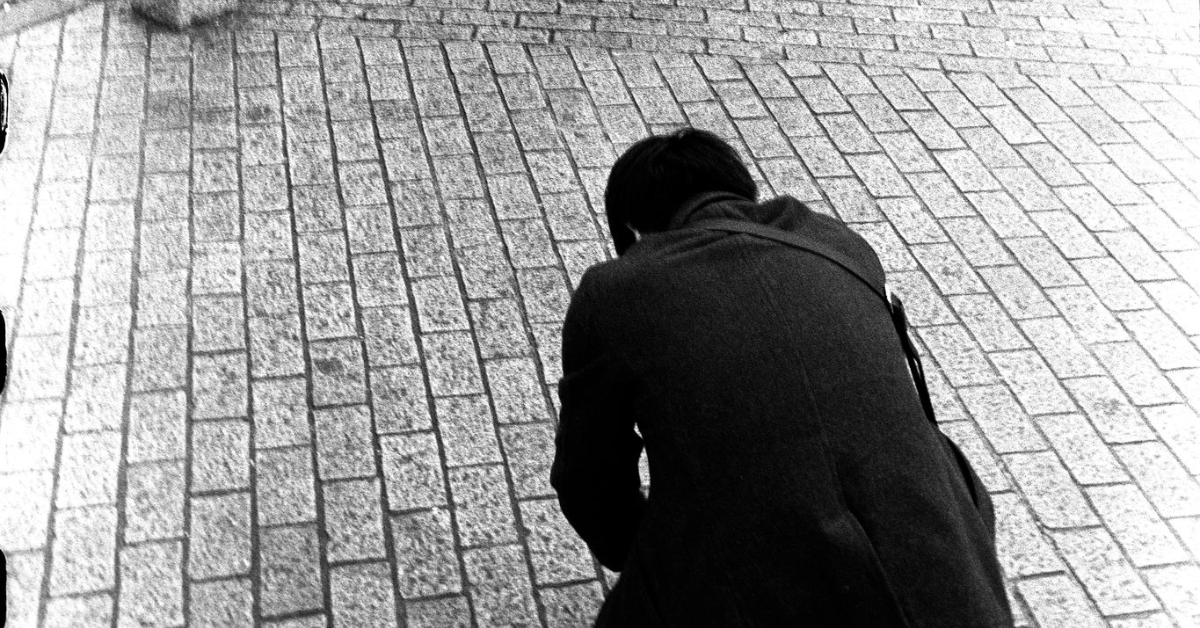
In the bustling heart of Shibuya, Tokyo, Hirotoshi Takano captured a fleeting, candid moment on Center Street. Observing a man hurriedly tying his shoelace, the photographer made the deliberate creative choice to shoot from behind, waiting for the traffic light to turn red to ensure an empty, uncluttered space in the frame. This composition highlights the contrast between the solitary figure and the urban environment. The image is award-worthy for its keen sense of timing and the photographer's ability to transform a mundane, everyday occurrence into a compelling narrative of urban life, demonstrating a sophisticated eye for street photography.
Hirotoshi Takano
Raised in a rural Japanese setting, Hirotoshi Takano views the sprawling metropolis of Tokyo as a landscape of perpetual fascination. His street photography serves as a bridge between his internal perspective and the external world, focusing on the subtle, often overlooked narratives of city dwellers. By documenting the fleeting interactions of others through his own unique lens, Takano seeks to capture the profound moments that exist just beyond the edges of the viewfinder.
Resonance Score Breakdown
Transparency Note: The resonance score (6.9/20) is calculated based on social engagement metrics collected before the award announcement.
Expert Photography Reviews · 3
The Knot of Stillness
There is a rhythm to the world that we often overlook in our rush to arrive. We move through streets and intersections as if we are merely passing through a corridor, eyes fixed on the destination, feet impatient for the next step.
Read the reflection →The Pause Before the Pace
There is a peculiar rhythm to the city, a frantic pulse that demands we move in lockstep with the crowd. We are taught that to stop is to fail, that the sidewalk is a conveyor belt meant only for transit. Yet, there is a quiet rebellion in the act of kneeling.
Read the reflection →Reviews & Comments
Share your thoughts about this award-winning photograph. Your reviews contribute to the community engagement score.
Shooting with a Jupiter-12 on a Zarya evokes the stark, utilitarian precision of the Soviet school, yet Takano’s Shibuya frame feels surprisingly lonely. It’s a quiet echo of Kertész’s geometry, though stripped of his whimsical surrealism. I’m genuinely struck by the negative space here; it’s rare to find such stillness in Tokyo. While the composition leans heavily on the tradition of the solitary urban wanderer, that shoelace moment adds a fragile, human friction I haven’t seen quite this way before.
Shibuya’s chaos usually demands our attention, but Takano forces us to stare at a man’s back. Why does he deserve our scrutiny? By waiting for the light to clear the frame, the photographer strips away the city’s pulse, leaving only a vulnerable, anonymous silhouette. It’s technically clean, yet I feel a prickle of unease. Does this framing turn a private moment of adjustment into a specimen? We’re watching him, but he never gets to look back.
1/125sec at f/8 with a 35mm lens. It’s a calculated gamble on depth of field. At f/8, the Jupiter-12 renders the Shibuya pavement with clinical, biting sharpness. Takano didn’t rely on shallow bokeh to hide his subject; he forced the environment to coexist with the man. I’ve spent years staring at these Soviet optics, and seeing this level of edge-to-edge discipline actually makes me smile. It’s a rare, honest marriage of glass and intent.