A Mother and Her Small Boy by Shahnaz Parvin
In the remote hill tracks of Bandarban, Bangladesh, the photographer captured a poignant moment of human connection. The image features a mother and her young son waiting patiently before their bamboo home, set against the rugged backdrop of a tribal village. By utilizing a wide aperture of f/1.8, the photographer achieved a shallow depth of field that isolates the subjects, drawing the viewer’s focus to their expressive presence. This photograph is award-worthy for its intimate storytelling and the photographer's ability to transform a simple, quiet scene into a powerful cultural narrative that highlights the resilience and beauty of life in these isolated valleys.
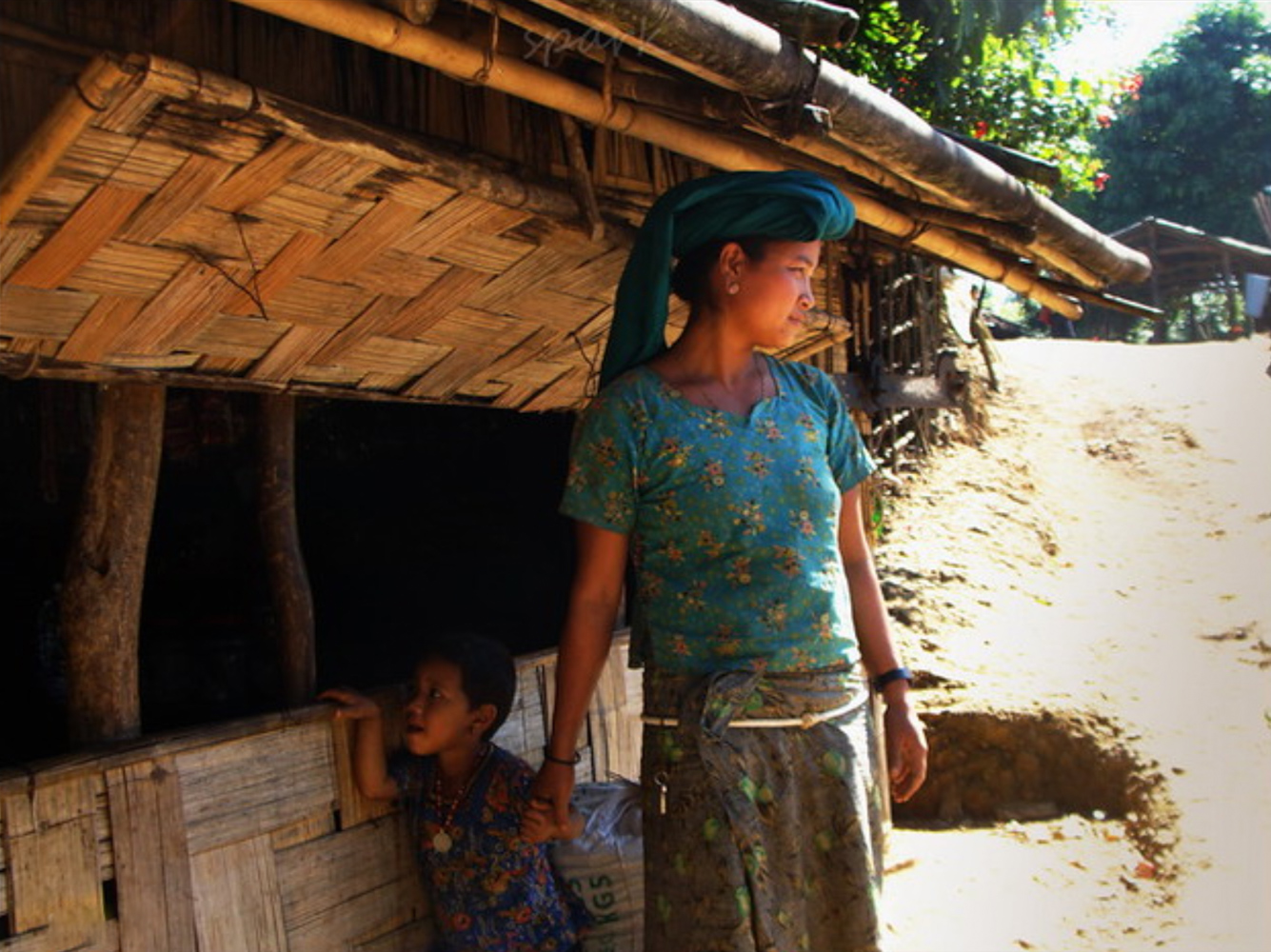
Exposure 1/400sec @ f/1.8 | ISO 200 | Focal Length 85mm
Shahnaz Parvin
Shahnaz Parvin was a highly acclaimed photojournalist and a passionate advocate for Bangladeshi culture. Based in Dhaka, she gained international recognition for her documentary work, consistently ranking among the world's top photographers during her career. As a dedicated contributor to Light & Composition, she documented the complexities of conflict, culture, and daily life across South Asia with profound empathy. Her legacy remains defined by her commitment to representing her homeland through a lens of integrity and artistic excellence until her untimely passing in 2016.
Resonance Score Breakdown
Transparency Note: The resonance score (13.5/20) is calculated based on social engagement metrics collected before the award announcement.
Expert Photography Reviews · 6
The Weight of the Hand
We are taught that protection is a heavy thing, a fortress built of stone or iron. But look closer. It is often lighter than air.
Read the reflection →The Architecture of Belonging
In the quiet hours of the morning, I often think about the way we construct our sense of home. We tend to think of it as a place of walls and roofs, a physical shelter against the elements. But if you watch closely, you realize that home is rarely found in the structure itself.
Read the reflection →Reviews & Comments
Share your thoughts about this award-winning photograph. Your reviews contribute to the community engagement score.
Optically and technically, ‘A Mother and Her Small Boy’ delivers exceptional execution. The depth of field is measured to isolate the vital textural details while maintaining context in the background. Exposure values are tightly controlled, retaining subtle highlight gradations without crushing the shadow details. The shutter speed captures the organic cadence of the environment cleanly, proving that intentional camera craft is the bedrock of powerful imagery.
The structural balance in ‘A Mother and Her Small Boy’ demonstrates a rigorous spatial discipline. Shahnaz Parvin anchors the visual weight with precision, establishing a clear hierarchy that guides the eye across the frame without hesitation. The negative space functions not as an empty void, but as an intentional counterbalance to the central subject. There is a geometric integrity here that holds the entire scene together with commendable authority.
The ochre of the bamboo walls, reminiscent of a Morandi still life, anchors this scene in a warmth that feels almost tactile, like sun-baked clay. It’s the way the muted, earthy tones bleed into the boy’s skin that truly undoes me; I’ve rarely seen such tender chromatic resonance. One finds the light here isn’t merely illuminating, but breathing, casting a gentle, golden haze that softens the ruggedness of the Chittagong hills into a quiet, chromatic prayer.
One suspects the light cooperated on the first attempt. It often does, for the patient. Yet, there is a stillness here that suggests Shahnaz didn’t just stumble upon this bamboo threshold. She’s earned that gaze. I’ve spent enough mornings shivering in the hills to know when someone has actually sat in the dirt to gain a subject’s trust. It’s a quiet, decent bit of work. I find myself wanting to know if she returned.
Of the thousands of portraits I’ve reviewed, most rely on cheap sentiment. This one avoids that trap because of the 85mm compression. By pinning the mother and boy against the blurred bamboo, Parvin forces us to confront their stillness. It’s not just a documentary shot; it’s a quiet, heavy gaze that makes me ache for their isolation. In thirty years, we won’t remember the gear, but we’ll still feel the weight of their patient, waiting eyes.
The shallow depth of field doesn’t just isolate; it severs these figures from the world, forcing them into a fragile, luminous exile. I’m haunted by the way the bamboo texture dissolves into the dark, indifferent void behind them. It’s a brutal, quiet erasure. When I look at the boy’s gaze, I feel a sudden, sharp ache for the things we leave in the dark. Parvin understands that to see them, we must first accept their inevitable vanishing.