Food for His Father by Shahnaz Parvin
In a poignant scene captured in rural Bangladesh, a young boy named Kashim carries a basket of food to his father working in the fields. Nearby, his mother watches the horizon, embodying the quiet, timeless rhythm of rural life and familial devotion. The photographer sought to document this profound connection, balancing the raw simplicity of the moment with the emotional depth of the subjects. This image is award-worthy for its authentic portrayal of human bonds and the evocative, natural storytelling that transforms a simple daily chore into a powerful, universal narrative of love and duty.
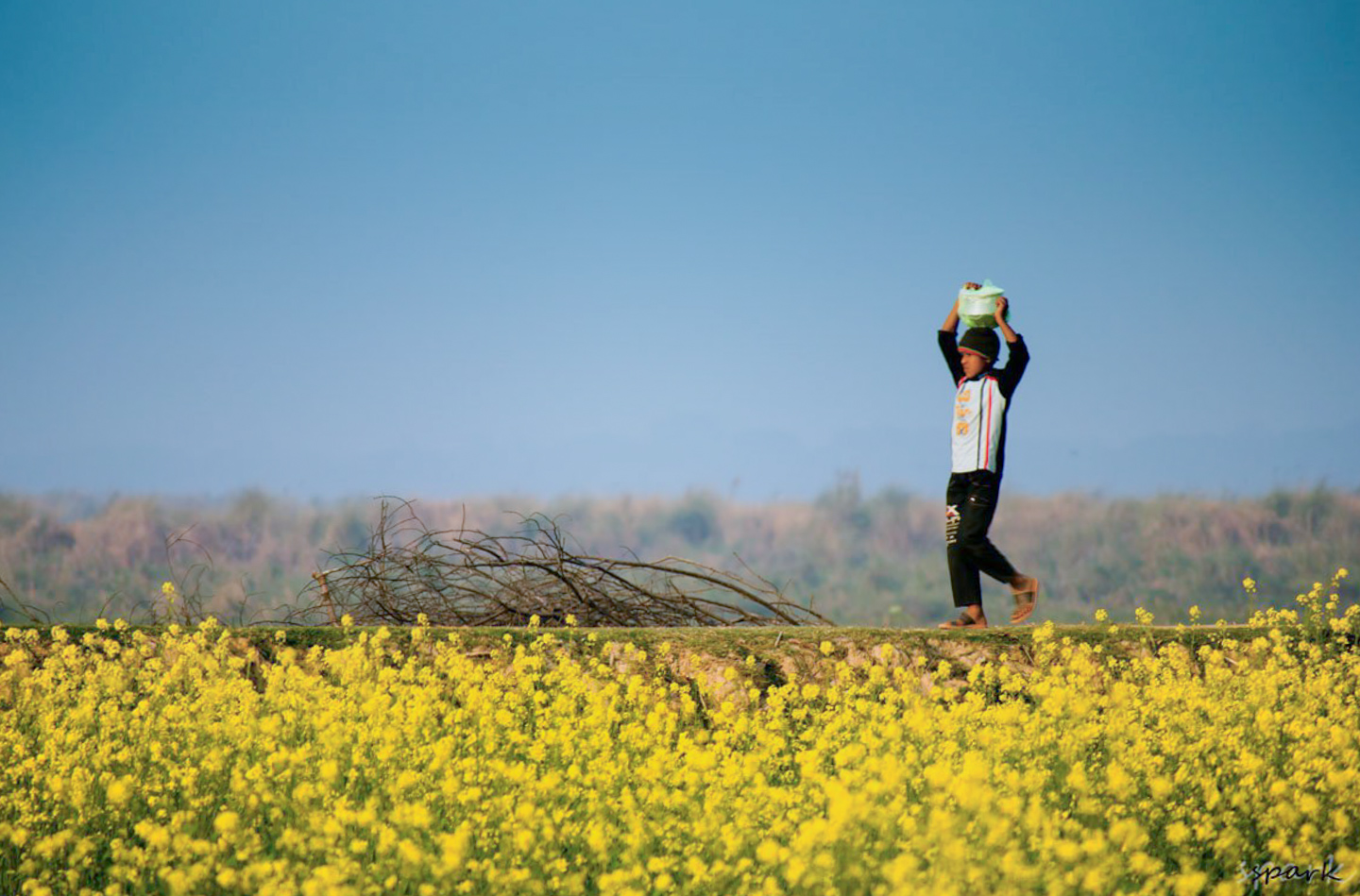
Exposure 1/400sec @ f/1.8 | ISO 200 | Focal Length 85mm
Shahnaz Parvin
Shahnaz Parvin was a celebrated award-winning photojournalist based in Bangladesh, recognized globally for her exceptional documentary work. Throughout her career, she consistently ranked among the world’s top 100 photographers, dedicating her lens to capturing the complexities of culture, conflict, and the human spirit across South Asia. A passionate storyteller and a prolific contributor to Light & Composition, she left an indelible mark on the field of photography before her untimely passing in 2016, leaving behind a legacy of profound visual narratives that beautifully represented her homeland.
Resonance Score Breakdown
Transparency Note: The resonance score (12.9/20) is calculated based on social engagement metrics collected before the award announcement.
Expert Photography Reviews · 6
The Weight of the Offering
In the ancient world, the act of carrying was a sacred geometry. To move a burden from one place to another was not merely a matter of labor; it was a physical manifestation of devotion.
Read the reflection →The Weight of the Bread
There is a rhythm to the earth that demands a response. We are born into a sequence of debts, small offerings passed from hand to hand, across fields that have seen the same sun for centuries. A child learns the weight of a basket before he learns the weight of his own name.
Read the reflection →Reviews & Comments
Share your thoughts about this award-winning photograph. Your reviews contribute to the community engagement score.
Most entries in this category rely on forced sentimentality, but Parvin’s work avoids that trap. The 85mm compression flattens the field, turning the boy’s walk into a deliberate, rhythmic pilgrimage. It’s the mother’s gaze, anchored against the horizon, that truly hits me; it’s a quiet, heavy ache I haven’t forgotten since I first saw it. This will endure because it captures the weight of duty without needing a single word of explanation. It’s simply, devastatingly human.
One suspects the photographer didn’t just stumble upon this. That shallow depth of field at f/1.8 suggests a deliberate isolation of the boy, a choice made while standing in the heat, waiting for the mother’s gaze to align just so. It’s a quiet, heavy moment. I’ve spent enough afternoons in fields to know that stillness isn’t accidental. She clearly committed to the rhythm of that place. It’s a rare, earned bit of grace.
Light here doesn’t merely illuminate; it interrogates the boy’s burden. Parvin forces us to confront the heavy, encroaching darkness that swallows the periphery of the field. It’s a brutal, honest geometry of survival. I’ve stared at the mother’s silhouette until my own chest tightened—she isn’t just watching, she’s anchored to the void. When shadows possess this much gravity, they cease to be absences. They become the very architecture of the boy’s duty. It’s haunting.
The tonal harmony in ‘Food for His Father’ is nothing short of luminous. The palette breathes with natural warmth, capturing the distinct atmospheric quality of Bangladesh with delicate chromatic fidelity. The transitions between warm ochres, deep earth tones, and cool atmospheric light evoke the painterly sensibility of classical chiaroscuro. It is a work of profound color coherence that enriches the emotional resonance of the entire frame.
Optically and technically, ‘Food for His Father’ delivers exceptional execution. The depth of field is measured to isolate the vital textural details while maintaining context in the background. Exposure values are tightly controlled, retaining subtle highlight gradations without crushing the shadow details. The shutter speed captures the organic cadence of the environment cleanly, proving that intentional camera craft is the bedrock of powerful imagery.
The structural balance in ‘Food for His Father’ demonstrates a rigorous spatial discipline. Shahnaz Parvin anchors the visual weight with precision, establishing a clear hierarchy that guides the eye across the frame without hesitation. The negative space functions not as an empty void, but as an intentional counterbalance to the central subject. There is a geometric integrity here that holds the entire scene together with commendable authority.