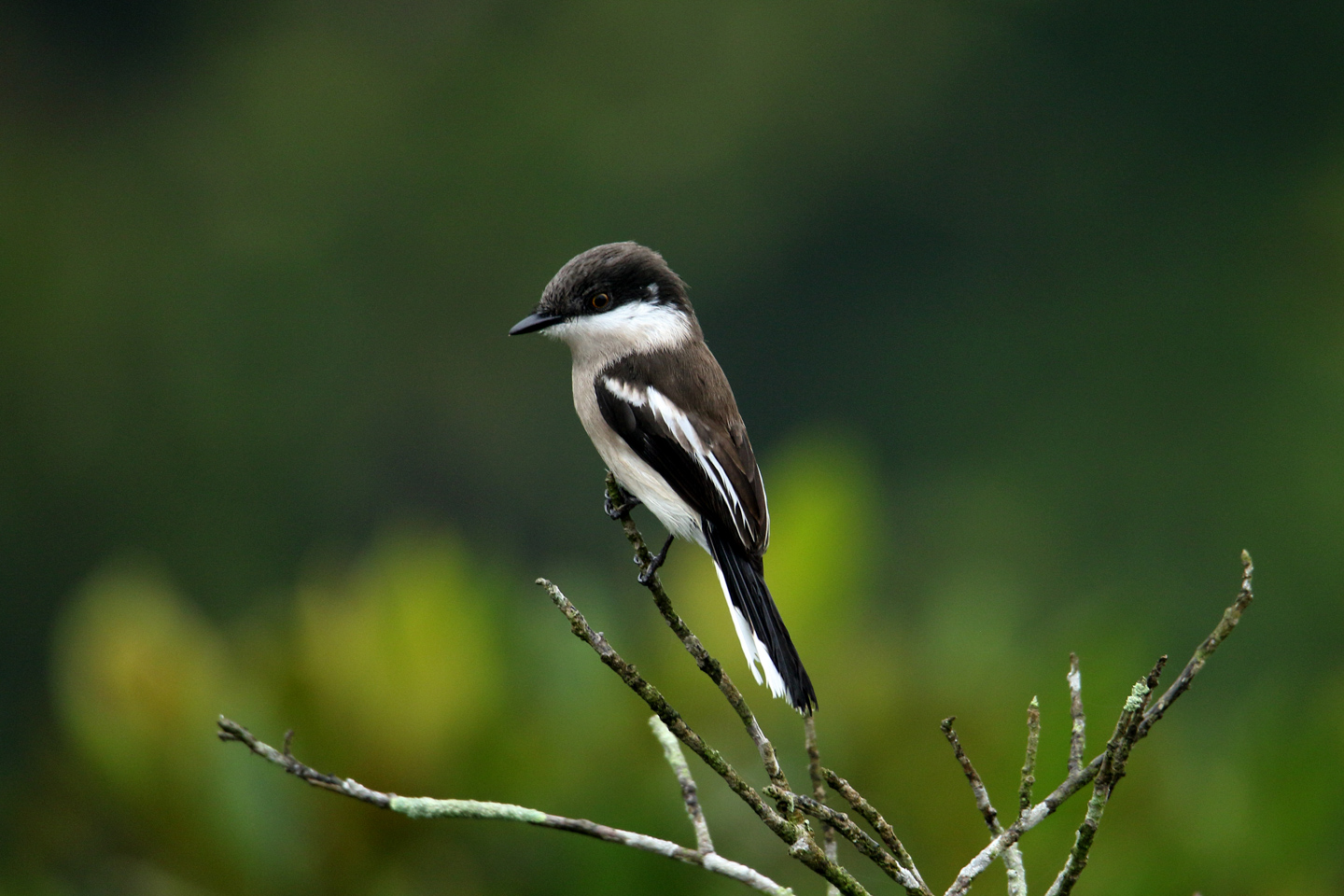
Bar-winged Flycatcher Shrike in the Sundarbans by Saniar Rahman Rahul
Perched gracefully upon a weathered branch within the dense, verdant expanse of the Sundarbans, the Bar-winged Flycatcher Shrike is captured in a moment of quiet, regal stillness. The photographer expertly isolates the subject against the rustic, textured backdrop of the mangrove forest, highlighting the delicate interplay between the bird's poised elegance and its wild, untamed environment. This image is award-worthy for its masterful use of a long focal length to achieve a shallow depth of field, rendering the subject with remarkable clarity while maintaining the atmospheric, natural essence of one of the world's most unique ecosystems.
Saniar Rahman Rahul
Based in Dhaka, Bangladesh, Saniar Rahman Rahul is an accomplished Art Director at Grey Worldwide with a career deeply rooted in the creative arts. His journey into photography began in childhood, inspired by his father's work, and was later refined through his extensive professional background in graphic design and advertising. Since winning his first major photography award in 2010, Rahul has balanced his high-level corporate creative responsibilities with a dedicated pursuit of nature and wildlife photography, consistently capturing the intricate beauty of the natural world.
Resonance Score Breakdown
Transparency Note: The resonance score (7.2/20) is calculated based on social engagement metrics collected before the award announcement.
Expert Photography Reviews · 8
The Geometry of Vigilance
There is a specific kind of geometry to the way a creature occupies space when it believes it is entirely alone. It is not the casual sprawl of a house cat in a sunbeam, nor the frantic energy of a squirrel in the park.
Read the reflection →The Art of Waiting
I spent twenty minutes this morning just watching a spider work on the corner of my window frame. I had a pile of emails waiting and a grocery list on the counter, but the way it moved—so deliberate, so sure of its own rhythm—made me stop.
Read the reflection →Reviews & Comments
Share your thoughts about this award-winning photograph. Your reviews contribute to the community engagement score.
Before the eye identifies the bird, something in the chest settles. The stillness of that weathered branch pulls my own pulse into a slower rhythm. It’s a rare, quiet activation. I’ve spent weeks returning to this frame, and the blur of the Sundarbans behind the shrike still feels like a half-remembered dream. It doesn’t just show a creature; it forces a held-breath moment. I find myself wanting to lean in, just to see if it’s breathing.
It’s a relief to see such crisp detail without fighting the refractive index of water. Down here, light is a thief, stealing warmth and clarity with every meter of depth. I’m used to battling backscatter and the inevitable blue-shift, so seeing this Shrike’s plumage rendered with such sharp, dry precision feels almost alien. It’s a beautiful, static stillness. I’d give anything to capture such clean, unrefracted light in the Sundarbans’ murky, silt-heavy mangrove channels.
The Sundarbans’ dense, humid atmosphere echoes the botanical precision of early Victorian naturalists, yet Rahul’s 600mm compression feels distinctly modern. It’s a sharp departure from the soft, painterly focus of Julia Margaret Cameron, favoring a clinical, high-contrast isolation. I’m genuinely struck by how the bird’s monochromatic plumage cuts through that tangled, bokeh-drenched mangrove. It’s a crisp, contemporary dialogue with the tradition of ornithological illustration, though I’d love to see the bird’s environment challenge its stillness more aggressively.
There’s a quiet dignity in how this bird holds its perch, but it’s a cold, distant kind of grace. I’ve spent my life chasing intimacy, and here, the distance is palpable. The lens creates a wall, not a bridge. It’s technically sharp, sure, but I don’t feel the bird’s pulse. It’s just a beautiful object in the mangroves. I find myself wishing the photographer had put the camera down and just watched for a while.
The Sundarbans is a labyrinth where patience is the only currency that matters. Rahul’s capture of this Bar-winged Flycatcher Shrike feels earned, not extracted. I’ve spent enough damp, mosquito-ridden mornings in mangroves to know that getting this close without flushing the bird requires absolute stillness. It’s a relief to see a frame that doesn’t rely on baiting or aggressive flushing. I find myself genuinely breathing easier knowing this bird was likely just going about its day.
The bokeh here isn’t just a blur; it’s the humid, tangled breath of the Sundarbans. Those muted greens and browns create a claustrophobic, ancient stage that makes the Shrike’s crisp, monochrome plumage feel like a sudden, sharp intake of air. I’m genuinely moved by how the weathered wood anchors the bird, grounding its regal stillness in the rot and resilience of the mangroves. It’s not just a bird; it’s a tiny, defiant inhabitant of a vanishing world.
You waited in that humid silence, didn’t you? I can feel the stillness of the Sundarbans in this frame. It’s not just a bird on a branch; it’s the patience you held while the forest breathed around you. I’ve spent enough time in the brush to know that kind of focus. You didn’t just capture a shrike; you caught the quiet dignity of a wild thing that doesn’t know it’s being watched. That’s rare.
Most wildlife shots are just trophies, but this one lingers. I’ve seen thousands of birds on branches, yet the way Rahul isolates this shrike against the Sundarbans’ chaotic, mossy textures feels intentional rather than lucky. It’s the restraint that wins me over; he didn’t over-process the plumage. I find myself leaning in, wanting to touch that weathered wood. It’s a quiet, honest document of a fragile ecosystem that I’m certain will still matter in thirty years.