Childhood Resiliencen by Aakash Gulzar
Captured in the serene village of Bandipora near the banks of Wullar Lake, this poignant photograph depicts a boy and a girl running joyfully along an empty street. The photographer employs stark black and white tones to contrast the children's infectious excitement against the somber backdrop of damaged trees, which symbolize the hardships of their environment. Despite the visible remnants of destruction, the image radiates a powerful sense of resilience and hope. It is this juxtaposition—the innocence of youth thriving amidst the scars of adversity—that makes the composition a compelling and award-worthy testament to the enduring spirit of the village.
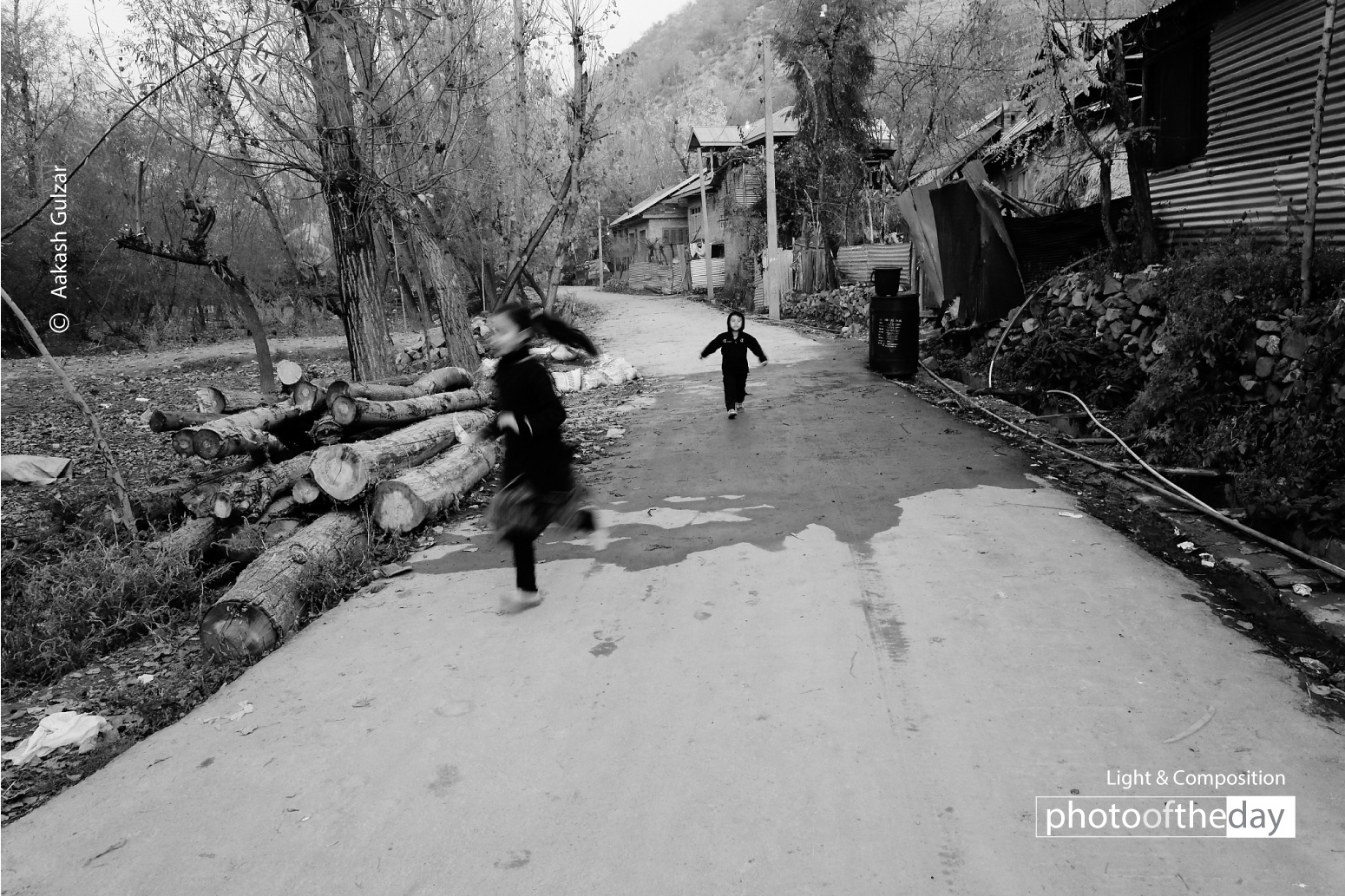
Exposure 1/30sec @ f/3.5 | ISO 250 | Focal Length 18mm
Aakash Gulzar
Hailing from the picturesque region of Kashmir, India, Aakash Gulzar is an adventurous photographer and dedicated nature enthusiast. With his Nikon D7200 in hand, he focuses on the art of visual storytelling, documenting the untamed beauty and raw human experiences found within his expeditions. His work serves as a bridge between his thrilling travels and his audience, reflecting a deep-seated passion for capturing the essence of the world through a lens of curiosity and empathy.
Resonance Score Breakdown
Transparency Note: The resonance score (7.8/20) is calculated based on social engagement metrics collected before the award announcement.
Expert Photography Reviews · 3
The Weight of the Pavement
I remember a boy in a dusty alleyway in Sarajevo who was playing with a ball made of tightly wound plastic bags.
Read the reflection →The Persistence of Motion
I am generally wary of images that lean too heavily on the contrast between innocence and ruin. It feels like a shortcut, a way to demand a reaction without doing the work of earning it.
Read the reflection →Reviews & Comments
Share your thoughts about this award-winning photograph. Your reviews contribute to the community engagement score.
The frame’s geometry is dictated by the fractured verticality of the dead trees. They anchor the composition, forcing the eye toward the kinetic blur of the children. It’s a precarious balance. The negative space doesn’t collapse, though it teeters. I’ve rarely seen such structural hostility yield to movement so effectively. The wide focal length stretches the street into a taut diagonal. It’s cold, it’s rigid, and frankly, it’s the only way to hold this chaos together.
These children run beneath a sky that doesn’t care for our borders or broken trees. At 1/30th of a second, the shutter captures a blink in the life of a star, yet it’s enough to hold their joy. I’ve spent my life measuring the cold, ancient light of galaxies, but looking at their faces, I feel a sudden, sharp ache. It’s a beautiful, fleeting collision of human resilience and the vast, indifferent dark.
The blurred motion of these children against the splintered, skeletal trees echoes the stark, post-conflict lyricism of Don McCullin’s early work, yet it’s far more buoyant. Gulzar’s use of the 18mm wide angle creates a disorienting, expansive depth that pulls the viewer into their frantic joy. I’ve spent decades cataloging the wreckage of history, but seeing this raw, kinetic defiance against such a somber Kashmiri backdrop genuinely caught my breath. It’s a rare, hauntingly beautiful collision.