Hustle and Bustle by Heron Pereira
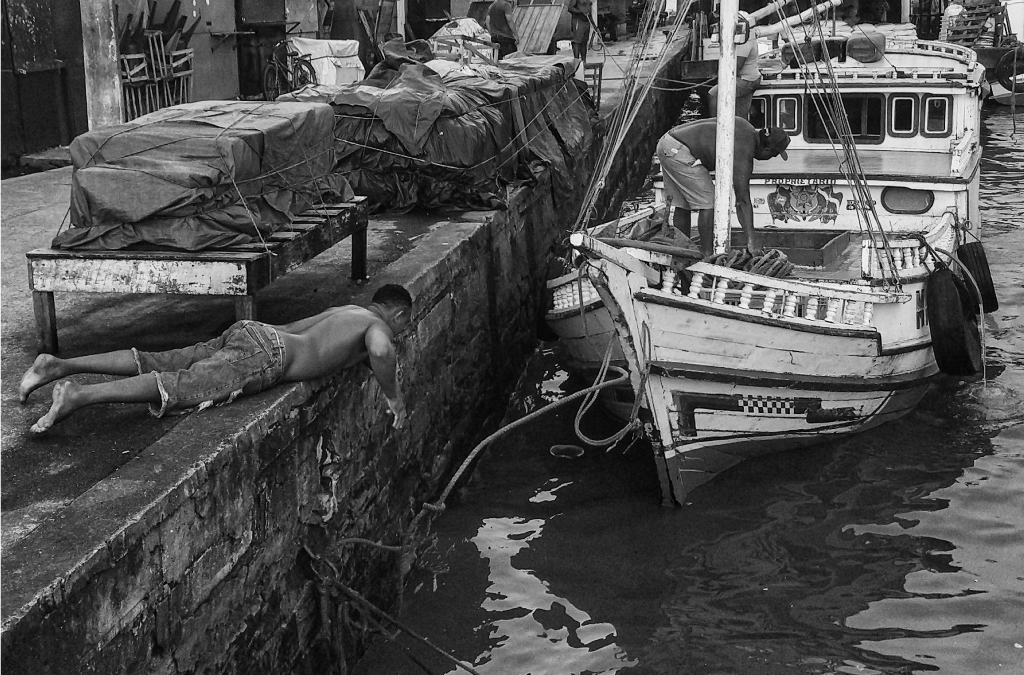
In this evocative image, Heron Pereira captures the frantic energy of the açaí market in Belém, Brazil. The photograph documents local workers as they perform urgent maintenance on their fishing boats, a vital ritual for those transporting the region's iconic fruit from the islands. Pereira’s composition masterfully balances the raw, kinetic movement of the laborers with the traditional backdrop of the riverfront. By freezing this fleeting moment of industrial labor, the photographer highlights the intersection of daily survival and cultural heritage, earning recognition for its authentic storytelling and keen observation of human activity in a bustling urban environment.
Heron Pereira
Born in Belém, Pará, Brazil, Heron Pereira is a dedicated photographer currently based in Marituba. With over eight years of experience, he specializes in street photography, often blending the juxtaposition of modern and historical architecture with spontaneous human interactions. Beyond his visual pursuits, Pereira is a passionate musician who seeks to harmonize the rhythmic qualities of sound with the static beauty of his images, resulting in a unique and deeply personal artistic style.
Resonance Score Breakdown
Transparency Note: The resonance score (9.0/20) is calculated based on social engagement metrics collected before the award announcement.
Expert Photography Reviews · 5
The Rhythm of the River
When I was seven, my uncle took me to the docks to watch the men unload crates of mangoes.
Read the reflection →The Weight of the Current
I keep a small, rusted iron key in the velvet lining of my jewelry box, though I have long since forgotten which door it once opened. It is heavy for its size, cold to the touch, and carries the faint, metallic scent of a house that no longer exists.
Read the reflection →Reviews & Comments
Share your thoughts about this award-winning photograph. Your reviews contribute to the community engagement score.
1/500sec at f/1.7, ISO 50, 4.25mm. A smartphone sensor pushed to its physical limit. The wide aperture creates a shallow plane that struggles to contain the chaotic depth of the boatyard. It’s a gamble that barely pays off. I’ve spent years staring at these sensor artifacts, and honestly, the noise reduction here is aggressive. It’s technically messy, yet the shutter speed was the right call to freeze that frantic labor. It’s sharp enough to matter.
The frantic energy here feels performative. Why are these laborers framed as mere components of a picturesque riverfront? I’m unsettled by how the Moto G6 lens flattens their urgency into a tourist-friendly aesthetic. Does the photographer see these men as partners in a shared reality, or just props for a local color narrative? It’s a slick composition, but it leaves me wondering: whose survival are we actually consuming here? The gaze feels far too comfortable.
The frame’s architecture struggles under the weight of chaotic activity. While the riverfront provides a necessary horizontal anchor, the laborers’ movements lack a cohesive fulcrum. It’s a frantic sprawl that doesn’t quite resolve into a singular visual statement. I’m genuinely exhausted by the lack of negative space here; the eye is trapped in a claustrophobic cycle of wood and water. It’s technically competent, yet the composition fails to impose order upon the inherent noise of the market.
You didn’t just snap a market scene; you caught the grit under their fingernails. I can feel the humidity and the urgency of those boat repairs. It’s not polished, and that’s why it works. You waited for the chaos to align, and you didn’t blink. There’s something honest happening here—a real sense of survival. I’ve stood in places like that, and you’ve captured the exact weight of that labor. You were there. I respect that.
The shutter speed catches the grit perfectly. It’s a kinetic blur of labor, a frame that feels like the opening sequence of a gritty neorealist drama. I love the way the light hits those boat hulls; it’s raw, urgent, and alive. Pereira didn’t need a cinema camera to find the rhythm here. He’s captured the exact second before the cut, holding the chaos of Belém in a single, breathless, perfectly timed exposure. It’s honest work.