Sandy Day by Abdellah Azizi
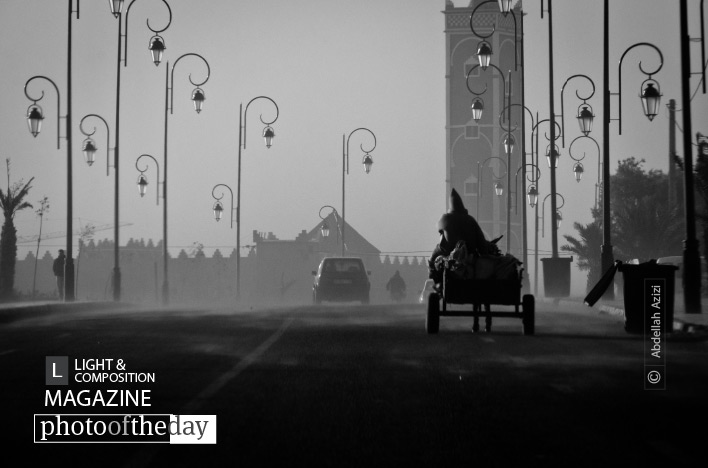
Captured during a late afternoon in Zagora, Morocco, this image documents a dramatic shift in weather as a serene day suddenly gave way to an intense, swirling sandstorm. Rather than seeking shelter, the local residents remained steadfast, continuing their daily tasks with remarkable resilience. The photographer was drawn to this display of human endurance, framing the scene to highlight the grit and character of the people amidst the harsh elements. The photograph is award-worthy for its powerful juxtaposition of environmental volatility and the quiet, unwavering dignity of the subjects, rendered with sharp technical precision.
Abdellah Azizi
Hailing from Ouarzazate, Morocco, Abdellah Azizi is a 25-year-old photographer whose work is deeply rooted in the vibrant culture of his homeland. With a background as a cameraman and lighting technician, he brings a professional eye for composition and atmosphere to his photography, which he has pursued with dedication for several months. Azizi specializes in documenting the landscapes, traditions, and daily life of Southern Morocco, capturing the authentic spirit of the region for a local e-magazine.
Resonance Score Breakdown
Transparency Note: The resonance score (13.1/20) is calculated based on social engagement metrics collected before the award announcement.
Expert Photography Reviews · 4
The Weight of the Wind
The wind does not ask for permission. It arrives with a dry, scouring intent, erasing the lines we draw in the dust. We build walls, we stack stones, we believe in the permanence of our own footprints.
Read the reflection →The Weight of the Wind
I was walking home this afternoon when the wind suddenly picked up, whipping grit into my eyes and forcing me to pull my coat tight. It wasn't a storm, just a sudden shift in the air that made the world feel chaotic and unmanageable for a few minutes.
Read the reflection →Reviews & Comments
Share your thoughts about this award-winning photograph. Your reviews contribute to the community engagement score.
In Zagora, the light doesn’t reveal; it erodes. Azizi captures a world dissolving into grit, where the shadows aren’t merely absent sun, but the very texture of human persistence. It’s a brutal, suffocating beauty. When I look at these figures, I feel a sudden, cold ache in my own lungs. They’ve surrendered to the storm, yet they hold their ground. It’s not resilience I see here, but a quiet, terrifying pact with the encroaching dark.
In Zagora, the light doesn’t merely illuminate; it bruises, saturating the air with the ochre of pulverized bone and the muted, dusty gold of a Turner sunset. It’s a chromatic suffocation that I find utterly intoxicating, where the figures dissolve into a monochromatic haze of burnt sienna and parched clay. One feels the grit against one’s own skin, a tactile, swirling symphony of earth tones that renders the human form a mere ghost within the storm.
Most street photography from Zagora relies on the exoticism of the desert, but this frame earns its place because it captures the friction of survival. The 170mm compression flattens the swirling grit against the subjects, making the environment feel like a physical weight they’re pushing against. It’s rare to see such raw, unvarnished resilience. I’ve looked at thousands of storm shots, but this one makes me feel the sand in my own teeth. It’ll endure.
The frame’s architecture relies on the diagonal sweep of the sand, creating a necessary fulcrum against the subjects’ verticality. It’s a rigid geometry that anchors the chaos. The negative space isn’t empty; it’s a pressurized void that forces the eye back to the figures. I’m genuinely unsettled by how the 170mm compression flattens the depth, turning the storm into a solid wall. It doesn’t just hold; it traps the viewer within the grit.