Dubrovnik Sunset by Silvia Bukovac Gasevic
Captured during the golden light of early autumn, this photograph showcases the historic walls of Dubrovnik. Rather than settling for a conventional perspective, the photographer sought a unique vantage point to frame the ancient architecture. To enhance the seasonal warmth, a Cokin yellow filter was employed, creating a rich, evocative palette. Despite the challenge of shooting handheld without a tripod, the photographer successfully managed the lighting conditions by utilizing a higher ISO, resulting in a crisp, atmospheric image that perfectly balances technical precision with the timeless beauty of the Adriatic coast.
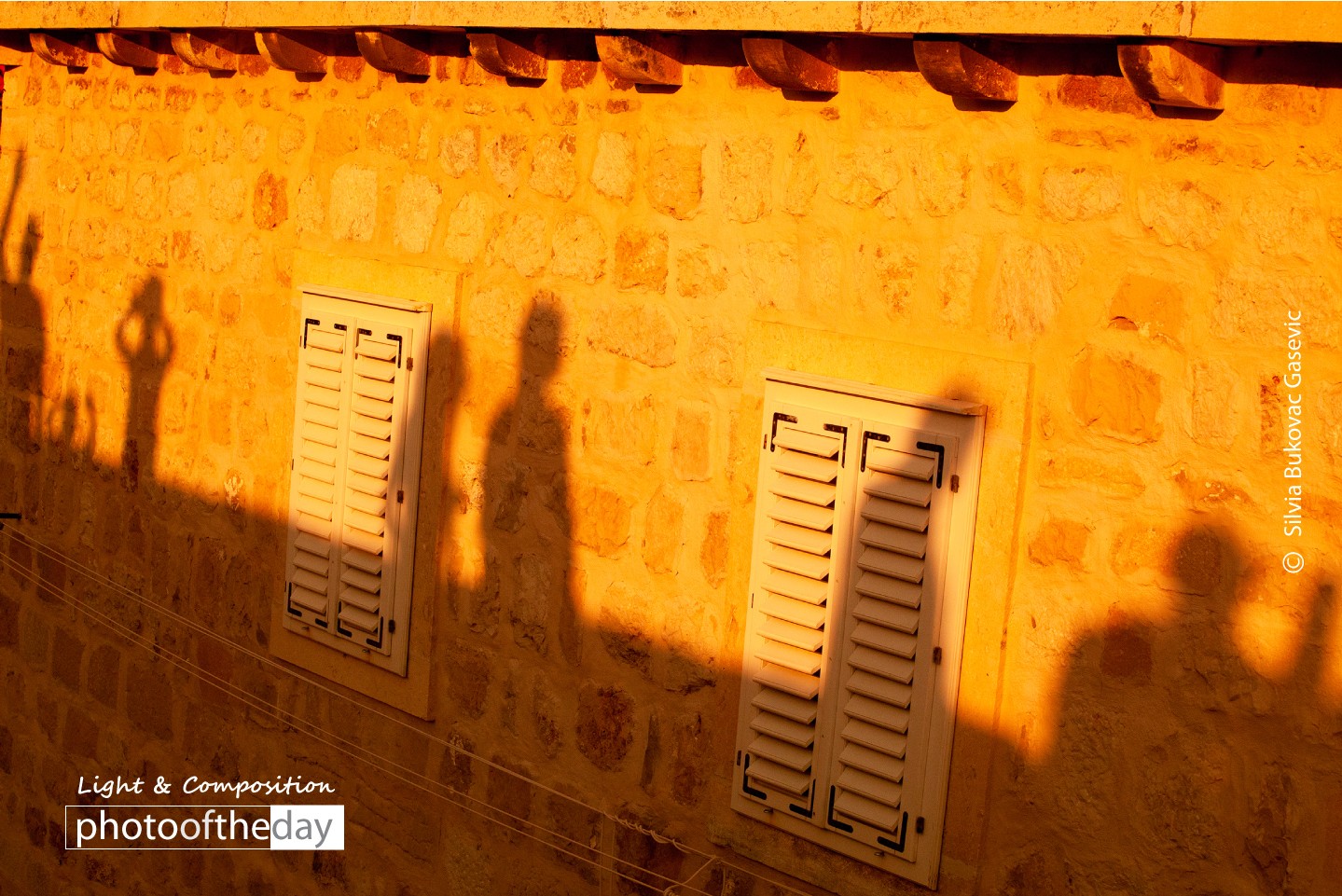
Exposure 1/160sec @ f/11 | ISO 1600 | Focal Length 70mm
Silvia Bukovac Gasevic
Born in Croatia and currently based in Germany, Silvia Bukovac Gasevic is a dedicated photographer with a profound passion for nature and wildlife. She balances her creative pursuits as a freelancer for three international photo agencies, constantly seeking to capture the aesthetic beauty found in everyday moments. Driven by the pursuit of the perfect image, she is rarely seen without a camera, documenting the world through a lens that finds elegance and artistry in every subject she encounters.
Resonance Score Breakdown
Transparency Note: The resonance score (9.2/20) is calculated based on social engagement metrics collected before the award announcement.
Expert Photography Reviews · 8
The Salt on the Skin
The air before a storm tastes of copper and wet stone. I remember standing on a balcony where the wind felt like a rough wool blanket dragged across my shoulders, heavy with the scent of brine and sun-baked limestone.
Read the reflection →The Weight of Ancient Light
There is a particular kind of silence that only stone can hold. It is a heavy, patient quiet, built over centuries by the slow accumulation of seasons and the steady rhythm of the tides.
Read the reflection →Reviews & Comments
Share your thoughts about this award-winning photograph. Your reviews contribute to the community engagement score.

That yellow filter feels like a heavy, artificial veil draped over Dubrovnik. Why force a sunset that isn’t there? It’s a tourist’s fantasy, sanitizing the stone walls into a golden postcard. I find myself frustrated by this deliberate distortion of the Adriatic light. Does the history of these fortifications matter less than the aesthetic warmth? We’re looking at a performance of beauty, not the place itself. It’s a hollow, gilded gaze that ignores the actual city.
At f/11, the diffraction limit begins to soften the fine masonry, yet the 70-200mm lens holds the stone’s texture with surprising rigor. That Cokin yellow filter shifts the spectral transmission, warming the Adriatic light until it feels almost tactile. I’m genuinely moved by how the sensor noise at ISO 1600 mimics the grain of ancient limestone. It’s a rare moment where optical compromise actually enhances the historical weight of the scene. It’s quite beautiful, really.
The Cokin filter’s amber infusion transforms Dubrovnik’s stone into the honeyed, melancholic light one finds in a late Vermeer, turning the Adriatic’s edge into a liquid, gilded threshold. It’s a chromatic fever dream that makes my heart ache for a home I’ve never known. While the graininess of the ISO 1600 threatens to dissolve the architecture, it’s precisely this atmospheric friction that allows the warmth to bleed into the shadows, creating a truly sublime, sun-drenched dissonance.
Dubrovnik’s walls have been photographed to death, yet one finds a certain grit here. Handheld at ISO 1600? It’s a gamble that usually ends in digital noise, but she’s pulled it off. I’ve spent enough shivering hours on those ramparts to know the wind doesn’t care for your shutter speed. The Cokin filter is a bit nostalgic, perhaps a touch heavy, but it’s clear she didn’t just walk by. She stayed. That’s worth a nod.
Dubrovnik’s stone massing is flattened here by that aggressive yellow filter, turning a tactile, historical datum into a monochromatic abstraction. It’s a shame; the fenestration and the threshold between the ramparts and the sea are lost to this golden haze. I’d love to feel the actual grit of those walls. Still, the way the light catches the edge of the parapet—it’s haunting. It almost makes me miss the salt air on my own skin.
Dubrovnik’s walls are beautiful, but they’re just stone. Where are the people? I’ve spent my life looking for the pulse of a place, and here, it’s missing. The yellow filter feels like a mask, hiding the city’s real skin. It’s technically sharp, sure, but it doesn’t invite me in. I’m left staring at architecture when I’m starving for a human story. It’s a pretty postcard, but it doesn’t have a soul.
The golden light clinging to those ancient stone walls feels like a warm embrace, echoing the tactile history of the Adriatic. It’s not just architecture; it’s a stage waiting for a soul to inhabit it. I’m genuinely moved by how the yellow filter softens the sharp edges of the masonry, turning the city into a living, breathing character. When the environment holds this much weight, the missing subject becomes a haunting, beautiful presence in the frame.
It’s a pretty postcard, but it leaves me cold. I’ve spent enough weeks in the field to know that beauty shouldn’t be manufactured with a yellow filter. When you’re waiting for a peregrine falcon to crest those walls, you don’t need artificial warmth; the light is already there if you’re patient enough to watch for it. This feels like an extraction of a scene rather than a genuine encounter with the Adriatic’s wild pulse.