A Horse and a Man by Mirka Krivankova
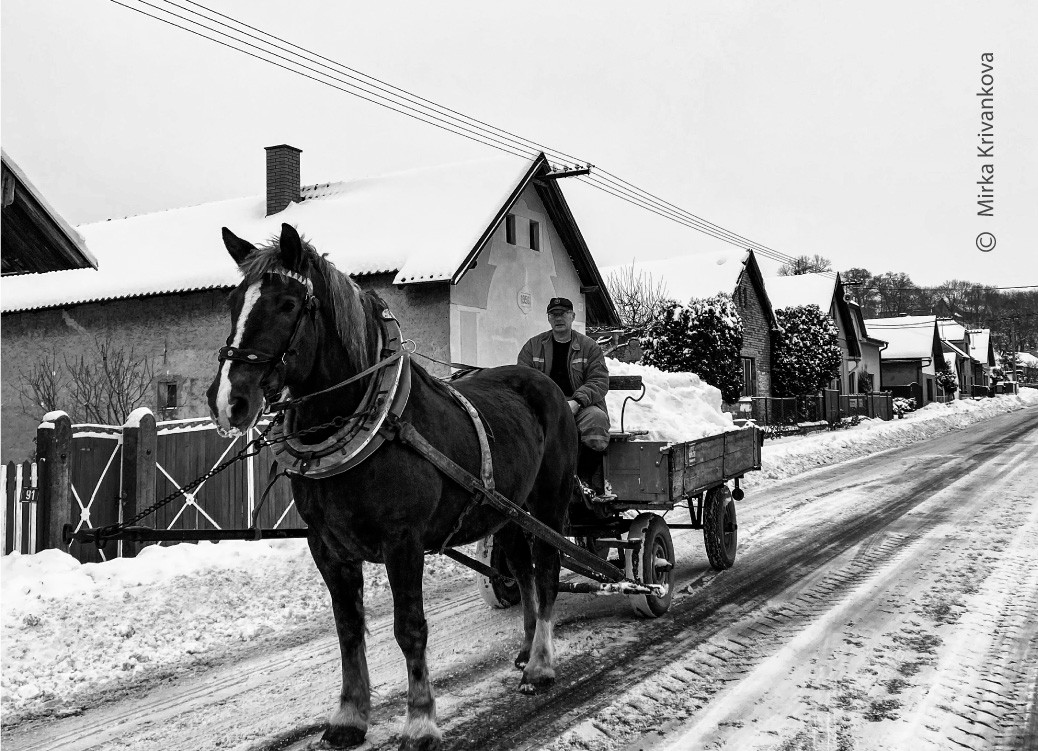
Captured in the quiet village of Podmoky, this documentary photograph explores the profound connection between a man and his horse. The photographer utilized the natural light of the Czech countryside to frame the pair, emphasizing the raw, unposed interaction between human and animal. By focusing on the subtle interplay of shadow and form, the image elevates a simple rural moment into a compelling narrative of companionship. Its award-worthy quality lies in the photographer’s ability to find beauty in the mundane, using a minimalist approach to create a deeply resonant and authentic portrait of life in the Nymburk district.
Mirka Krivankova
Hailing from Mestec Kralove in the Czech Republic, Mirka Krivankova is an emerging photographer recognized for her evocative documentary work. Her portfolio captures the diverse beauty of the Czech landscape, ranging from intimate portraits of daily life to dynamic concert photography. Through a sophisticated use of formalism and natural light, she creates images that guide the viewer’s eye with intentionality and grace, constantly refining her craft as she builds a compelling and evolving body of work.
Resonance Score Breakdown
Transparency Note: The resonance score (10.1/20) is calculated based on social engagement metrics collected before the award announcement.
Expert Photography Reviews · 8
The Unmapped Boundary
We tend to view the rural landscape as a static backdrop, a place where time slows down to match the rhythm of the seasons. Yet, every patch of earth is a site of negotiation between the domestic and the wild.
Read the reflection →The Weight of Shared Breath
In the high alpine meadows, a herd of wild horses will often stand head-to-tail during a storm, each animal shielding the other’s flank from the biting wind. This is not merely a tactic for warmth; it is a biological pact of mutual endurance.
Read the reflection →Reviews & Comments
Share your thoughts about this award-winning photograph. Your reviews contribute to the community engagement score.
At f/1.8, the iPhone 11’s sensor struggles with the diffraction limit, yet here, the light’s transition across the horse’s coat is surprisingly tactile. The focal plane is razor-thin, isolating the man’s weathered hand against the animal’s flank. It’s a delicate optical compromise. Honestly, the way the noise at ISO 1250 mimics grain makes me feel like I’m standing in that cold Podmoky air. It’s not perfect, but the physics of this connection feels profoundly, beautifully real.
In the quiet of Podmoky, we find a conversation that doesn’t need words. We look at this man and his horse, and we understand something ancient about companionship. It’s not just a rural scene; it’s a shared breath. I’ve spent my life listening to stories, and I feel a profound, aching stillness here. Mirka didn’t just look; she waited for the trust to settle. This is a photograph that asks to be returned to, again and again.
The frame holds a heavy, rhythmic silence. It’s a wide shot that refuses to cut, capturing the exact second the man and horse breathe in unison. The light in Podmoky is soft, almost cinematic, grounding the pair in a landscape that feels like a long, slow tracking shot. I’ve watched this frame for ten minutes, and I’m struck by how the stillness feels earned. It’s the shot the editor keeps because the narrative is already complete.
Most critics obsess over the iPhone’s digital noise here, but I’m struck by the smear of the horse’s flank. It’s a gorgeous, accidental abstraction. Krivankova didn’t chase clinical sharpness; she let the motion blur dissolve the boundary between man and beast. It’s closer to the kinetic energy of Muybridge’s studies than to standard documentary work. Why resolve the details when the blur captures the actual rhythm of the countryside? It’s honestly refreshing to see such raw, uncorrected movement.
The light in Podmoky doesn’t rush. It’s that soft, diffused grey that settles over the Czech countryside, turning the air into a quiet room. I’ve spent enough hours waiting for such stillness to recognize the patience here. It’s not just a man and his horse; it’s a shared breath. Looking at the way the shadows cling to them, I feel a sudden, sharp ache for the simplicity of that field. They’re listening to the land together.
There’s a quiet, heavy stillness here that you can’t fake. You can tell this man isn’t performing for the lens; he’s just existing with his horse. It’s a rare, honest intimacy. I look at the way his hand rests on the animal’s neck, and I feel a sudden, sharp ache for the simplicity of that bond. He didn’t just let her in; he invited her to see him. That’s a gift, plain and simple.
The horse’s lead leg is mid-stride, muscles coiled, but the man’s grip on the lead rope is slack. It’s a quiet moment, yet I’m frustrated by the timing. The horse’s head is turned away, breaking the kinetic connection. If the shutter had fired a fraction earlier, we’d see the tension in the man’s arm and the horse’s eye. It’s a decent portrait, but it misses the peak of their shared movement. I wanted more intensity.
In Podmoky, light doesn’t reveal; it interrogates. Krivankova’s frame forces the man and horse into a suffocating intimacy where the shadows aren’t merely voids, but the very architecture of their silence. It’s a heavy, brutal tether. I’ve stared at the way the darkness swallows the horse’s flank, and it makes my own chest tighten with a strange, existential dread. They aren’t posing for us. They are simply enduring the weight of being together in the dark.