Daughter by Yury Rephar
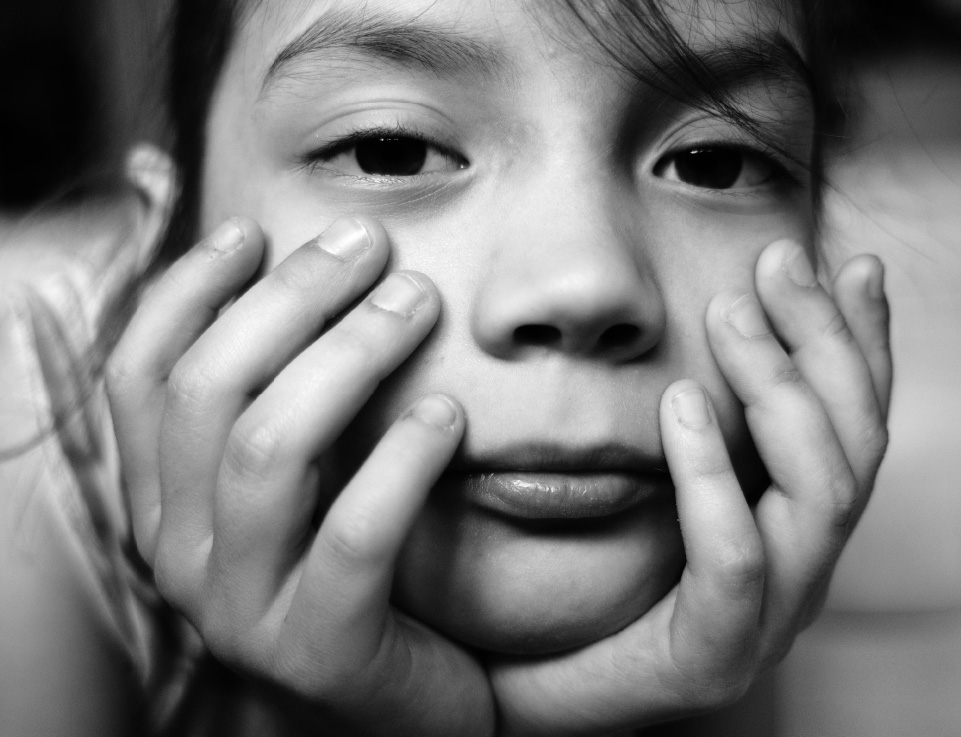
In this intimate portrait, Yury Rephar captures his middle daughter, Adele, moving beyond the traditional documentation of childhood milestones to focus on the nuances of her inner world. By prioritizing her mood and fleeting expressions over staged outfits or formal settings, the photographer creates a candid, authentic connection that feels both personal and universal. The image is award-worthy for its ability to distill a complex emotional state into a single, quiet moment, demonstrating a profound sensitivity to the subject’s perspective and a masterful command of natural, unposed storytelling.
Yury Rephar
Born in Belarus in 1967, Yury Rephar spent his formative years traveling extensively throughout the Soviet Union before settling in Saint Petersburg in 2002. A graduate of the Saint Petersburg Polytechnic University, he balances a professional career in information technology with a dedicated pursuit of photography as both a creative outlet and a professional endeavor. As a father of three, his work is deeply informed by his family life, focusing on candid, emotive portraits that seek to capture the genuine spirit and shifting moods of his subjects.
Resonance Score Breakdown
Transparency Note: The resonance score (10.5/20) is calculated based on social engagement metrics collected before the award announcement.
Expert Photography Reviews · 8
The Weight of Becoming
We watch them grow, yet we are never quite ready for the distance they create. It is a quiet migration. One day they are held in the palm of your hand, and the next, they are looking through you, toward a horizon you cannot see.
Read the reflection →The Architecture of Becoming
We often mistake the city for a collection of stone, steel, and glass, forgetting that its most vital infrastructure is the internal life of its inhabitants. Every neighborhood is a landscape of private histories, a map of where we have been and where we are permitted to go.
Read the reflection →Reviews & Comments
Share your thoughts about this award-winning photograph. Your reviews contribute to the community engagement score.
The shutter caught a breath, not a pose. It’s a quiet frame, the kind an editor keeps because the movement is all internal. Adele isn’t performing for the lens; she’s drifting through a private scene. I’ve seen a thousand portraits, but this one hits me—that soft, natural light feels like a memory I’ve lived. The cut would’ve been a mistake. Rephar didn’t force the rhythm; he just let the film roll until the truth arrived.
Adele isn’t performing for a lens here; she’s just existing in the quiet gravity of her own thoughts. I’ve spent years watching how people hold themselves when they don’t feel watched, and there’s a rare, unguarded softness in her posture. It’s clear she trusts the person behind the camera completely. This face has a whole life in it, a flickering, melancholic beauty that makes me want to sit beside her and just listen.
One suspects the light didn’t just happen upon Adele; it was invited. Most parents snap away until the child tires, but Rephar has clearly sat in that room until the camera became an afterthought. It’s a quiet, heavy sort of patience I’ve rarely seen in domestic work. I find myself looking at her eyes and feeling a sudden, sharp pang of nostalgia for my own children’s fleeting, unposed silences. He earned this one.
Before the eye identifies the girl, something in the chest tightens. It’s the weight of Adele’s gaze, a quiet gravity that pulls the breath from your lungs. I’ve returned to this portrait three times today, and each time, her stillness feels like a mirror for my own forgotten childhood anxieties. It doesn’t just capture a mood; it triggers a somatic ache. When I look away, I’m still carrying that heavy, beautiful silence with me.
Adele’s gaze isn’t just a look; it’s a quiet collision with the lens. I’ve spent years hunting that specific flicker of inner life, the kind Winogrand chased through the chaos. You caught her right before the mood shifted, that fragile fraction of a second where the soul sits exposed. One tenth of a second later and the tension vanishes. It’s haunting. I felt my own breath hitch. You didn’t just document a daughter; you trapped a ghost.
Adele’s gaze holds a stillness I usually only find in the deep, cold vacuum between galaxies. While I’m accustomed to sensors fighting thermal noise and high ISO grain to capture ancient photons, Yury has captured the fleeting, fragile light of a human soul. It’s a quiet, profound exposure. Looking at her, I feel a sudden, sharp ache for the brevity of our lives. We’re all just stardust, briefly illuminated, waiting for the dark to return.
The frame’s geometry is tight, almost claustrophobic. Adele’s head occupies the upper quadrant, creating a precarious spatial tension against the blurred, vertical lines of the background. It’s a calculated imbalance. The negative space doesn’t offer relief; it traps the subject’s gaze. I’ve rarely seen such a rigid architecture applied to a candid moment. It’s cold, yes, but the structural discipline is undeniable. The composition holds. It doesn’t collapse under the weight of its own sentiment.
You didn’t try to dress her up or force a smile, and that’s why this works. I’ve spent years watching people hide behind lenses, but you just let Adele be. There’s a heavy, quiet ache in her eyes that caught me off guard; it reminded me of my own daughter at that age. You waited for the truth, and you found it. It’s a rare, honest look at a soul just beginning to understand the world.