The Paperboy by Shahnaz Parvin
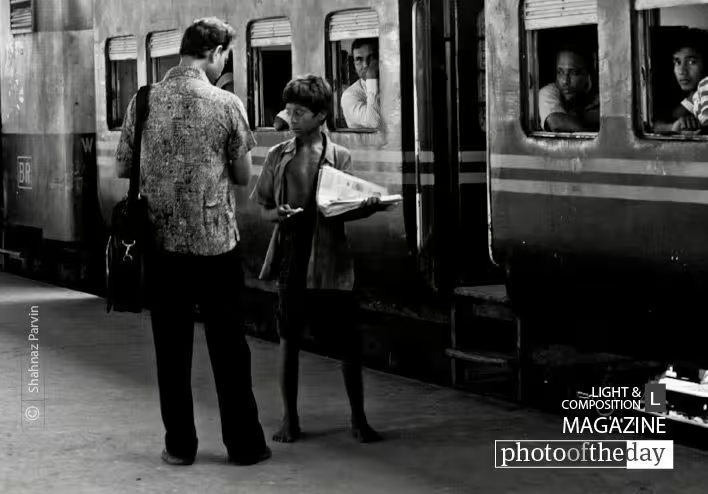
Captured at the bustling Kamlapur railway station, this poignant documentary image highlights the daily life of a young paperboy interacting with a customer. The photographer skillfully utilized a 55mm focal length to isolate the subject amidst the chaotic environment of the transit hub. The image offers a window into the lives of these transient workers, many of whom travel from outside Dhaka to sustain their livelihoods. This photograph is award-worthy for its authentic storytelling and its ability to humanize the labor behind the city's news distribution, capturing a fleeting, intimate moment of commerce within a vast, impersonal station.
Shahnaz Parvin
Residing in Bangladesh, Shahnaz Parvin balances a professional career as a system administrator with a profound dedication to documentary photography. She is driven by a desire to represent the cultural and social landscape of her home country through her lens. Her evocative work has garnered international recognition, having been featured in numerous renowned magazines across the globe.
Resonance Score Breakdown
Transparency Note: The resonance score (13.1/20) is calculated based on social engagement metrics collected before the award announcement.
Expert Photography Reviews · 5
The Weight of Ink
We are taught that time is a river. It is not. Time is a stack of papers, folded and unfolded, passed from hand to hand until the edges fray.
Read the reflection →The Weight of the Morning
I was standing at the train station this morning, clutching my lukewarm tea, watching the crowd move like a single, restless organism. Everyone seemed to be chasing something—a seat, a connection, a minute they had already lost.
Read the reflection →Reviews & Comments
Share your thoughts about this award-winning photograph. Your reviews contribute to the community engagement score.
The 55mm focal length creates a necessary compression, forcing the paperboy against the station’s chaotic geometry. It’s a tight, claustrophobic frame. The vertical alignment of the pillars anchors the boy’s slight frame, preventing the composition from dissolving into the background’s visual noise. I’m genuinely unsettled by how the customer’s shadow bisects the frame, creating a harsh, diagonal tension. It’s a rigid, disciplined architecture. The frame holds, barely, but it’s the only thing keeping the chaos contained.
At f/4, the 55mm focal plane renders the paperboy with a crispness that cuts through the station’s ambient haze. The lens manages the diffraction limit beautifully, preserving the delicate texture of the newsprint against the chaotic bokeh of the platform. I’m genuinely moved by the way the light catches the boy’s eyes; it’s a rare, sharp clarity that humanizes the blur of Dhaka. It’s not just a document; it’s a precise optical triumph of empathy.
Kamlapur’s chaos doesn’t swallow this boy; it defines him. The darkness clinging to the train’s undercarriage isn’t just lack of light, but the heavy, indifferent weight of the city itself. I’ve stared at his hands, and it’s the shadow between his fingers that hurts—a quiet, ink-stained gravity. Parvin understands that truth hides in the gloom. It’s not a scene of commerce, but a meditation on the permanence of struggle. I find it deeply, hauntingly beautiful.
The station is a roar. Yet, here, the boy stands in a pocket of stillness. He holds the news, but he’s holding the quiet. I’ve watched this frame for an hour. It’s the space between the boy and the passenger that pulls me in. It’s heavy. It’s deliberate. Nothing here is accidental. The empty corner isn’t empty; it’s where the noise finally stops. I feel a sudden, sharp ache for that silence. It’s rare.
The light at Kamlapur isn’t just illumination; it’s a heavy, dusty veil hanging over the platform. Shahnaz waited until the chaos settled into this singular, quiet exchange. I’ve felt that same stillness when the world finally stops rushing. It’s a sacred pause. She didn’t force the frame; she listened to the rhythm of the station until the boy’s posture matched the morning’s gravity. It’s a beautiful, aching reminder that even in transit, we are all anchored.