Foggy Morning by Ayen Sharma
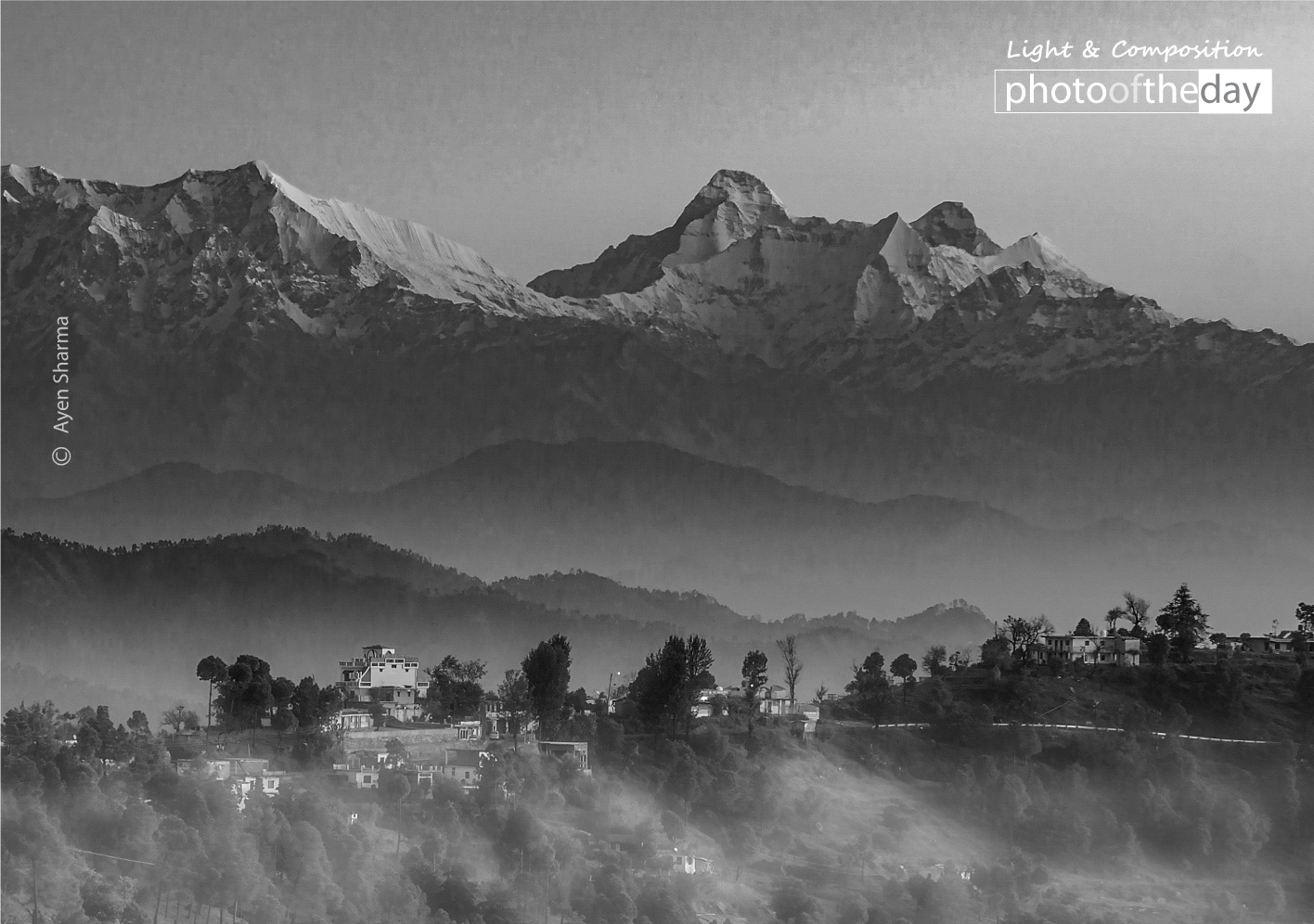
Captured from the serene heights of Kasar Devi in Uttarakhand, India, this photograph showcases the majestic Great Himalayan Range. The photographer ventured to a cliffside vantage point at dawn to frame the village houses against the backdrop of 7,000-meter peaks visible across the valley. By choosing the golden hour, the photographer successfully balanced the intimate architecture of the ridge with the vast, ethereal scale of the mountains. This image is award-worthy for its masterful composition and the atmospheric clarity that brings the distant, snow-capped giants into a harmonious dialogue with the quiet village life below.
Ayen Sharma
Born in Delhi, India, Ayen Sharma is a dedicated landscape photographer with a profound passion for the timeless aesthetic of black and white imagery. Having transitioned from a career in commercial photography, he currently balances his creative pursuits with his professional role at an advertising agency in Gurgaon. Sharma remains deeply engaged with the global photographic community, constantly refining his craft and expanding his artistic vision through contemporary digital platforms.
Resonance Score Breakdown
Transparency Note: The resonance score (9.7/20) is calculated based on social engagement metrics collected before the award announcement.
Expert Photography Reviews · 4
The Architecture of Silence
We often mistake the periphery for the unimportant. In the study of human geography, we are taught to look at the centers of power, the dense grids of commerce, and the loud, neon-lit arteries of the metropolis.
Read the reflection →The Weight of Silence
When the temperature drops below freezing, water molecules slow their frantic dance, locking into a hexagonal lattice that we call frost.
Read the reflection →Reviews & Comments
Share your thoughts about this award-winning photograph. Your reviews contribute to the community engagement score.
Kasar Devi’s ridge evokes the stark, high-altitude clarity of Vittorio Sella’s Himalayan expeditions, yet Sharma trades Sella’s scientific detachment for a softer, painterly intimacy. It’s a delicate balance; the village architecture grounds the frame, preventing the peaks from drifting into mere topographical abstraction. I’ve spent decades studying mountain landscapes, but the way the morning light catches those jagged, snow-dusted summits against the valley’s encroaching mist genuinely took my breath away. It’s a quiet, hauntingly beautiful dialogue.
The light hits the peaks at the exact second the valley floor loses its shadows. It’s the physiological equivalent of a sprinter’s perfect block start—the tension is held, then released. I’ve spent my life chasing that precise millisecond of transition, and honestly, it makes my chest ache to see it captured here. The composition doesn’t miss. It’s not a second early or late. It’s the frame. The mountain holds its breath, and so do I.
Kasar Devi at dawn is a gamble. You’re waiting for the light to hit those peaks before the fog swallows the village. Sharma caught it. That sliver of golden light touching the ridge is perfect. One tenth of a second later and the shadow has moved, the frame has collapsed. I’ve stood in that cold air; it’s biting, but this timing is pure heat. It’s not just a landscape. It’s a heartbeat caught in the Himalayas.
Kasar Devi at dawn is a biting, thin-aired affair. Most would’ve retreated to a tea shop once the first frame was secured, but Sharma clearly lingered until the light settled into that precise, cool stillness. It’s a rare, quiet patience that allows the village to breathe against those giants. I’ve spent enough mornings shivering on ridges to know when someone’s actually put in the work. It’s a decent bit of graft, and I respect it.