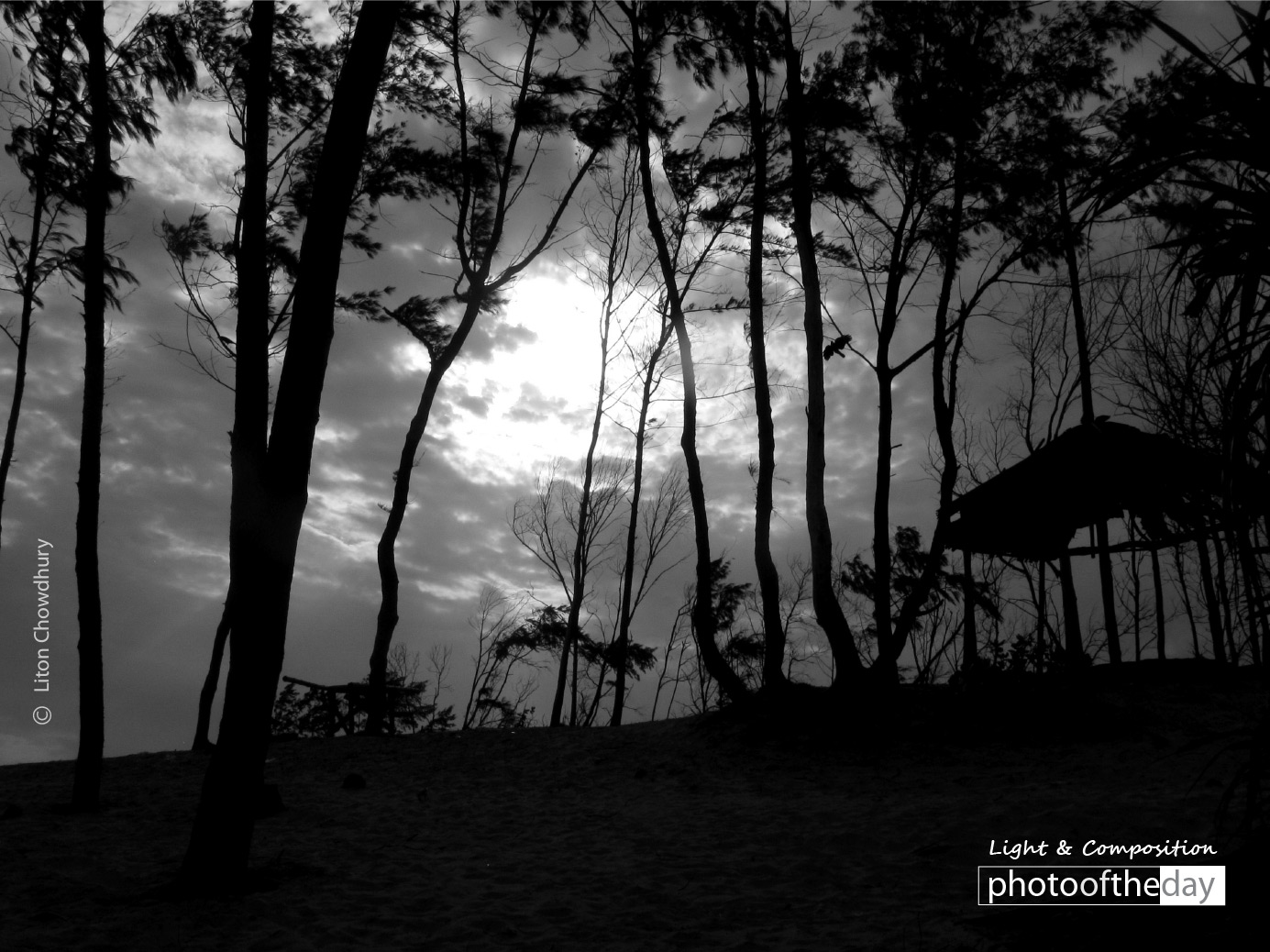
In a Cloudy Evening by Liton Chowdhury
Captured on a moody, overcast evening at the beach in Digha, West Bengal, this photograph explores the quiet intersection of land and sea. The photographer was drawn to the stillness of the twilight hour, seeking to translate the calm atmosphere into a visual narrative. By balancing the soft, diffused light of the cloudy sky with the rhythmic textures of the shoreline, the image achieves a meditative quality. Its award-worthy appeal lies in the photographer's ability to find profound serenity within a simple landscape, transforming a fleeting moment of coastal solitude into a timeless, evocative composition.
Liton Chowdhury
Based in Kolkata, India, Liton Chowdhury is a dedicated software professional who balances his technical career with a profound passion for photography. His creative journey began as a heartfelt pursuit to document the formative years of his daughter, who remains his most frequent and cherished subject. Through his lens, Chowdhury explores the quiet beauty of everyday life, blending his professional precision with an intuitive eye for capturing intimate, peaceful moments that resonate with viewers worldwide.
Resonance Score Breakdown
Transparency Note: The resonance score (11.4/20) is calculated based on social engagement metrics collected before the award announcement.
Expert Photography Reviews · 7
The Architecture of Silence
We often mistake silence for an absence, a hollow space where sound has simply ceased to be. But silence is a weight, a physical presence that settles over the world like salt air clinging to the skin.
Read the reflection →The Weight of the Tide
There was a blue wool sweater, thick and smelling of cedar, that lived on the hook by the back door for seven years. It belonged to a man who no longer walks through that door, and when he left, he took the rhythm of his arrival with him.
Read the reflection →Reviews & Comments
Share your thoughts about this award-winning photograph. Your reviews contribute to the community engagement score.
The horizon line bisects the frame with clinical precision, anchoring the composition against the encroaching tide. It’s a rigid geometry that forces the eye to reconcile the heavy, muted tonality of the sand with the atmospheric weight above. The spatial tension is palpable. I’m genuinely unsettled by how the negative space swallows the periphery. It doesn’t offer comfort; it demands a structural reckoning. The frame holds because the architecture of the shoreline refuses to collapse into sentimentality.
Digha’s shoreline feels hollow here. Why does the frame strip away the human labor that defines this coast? It’s a sanitized, aestheticized void that ignores the reality of West Bengal’s working beaches. I find the silence unsettling rather than serene. Does the photographer fear the messiness of actual life? By erasing the people who inhabit this space, he turns a living landscape into a mere prop. It’s technically clean, but ethically, it feels like a ghost town.
There’s a frustrating safety in how this captures Digha. It’s technically competent, sure, but it’s far too polite. Why resolve the shoreline with such clinical precision? I’d have loved to see Chowdhury surrender to the motion of the tide, letting the shutter drag to dissolve that rigid horizon. It’s a missed opportunity for abstraction. I find myself craving a bit of chaos here; it’s just too comfortable, and frankly, that’s a bit of a bore.
The flat, directionless light of a Digha evening doesn’t demand attention; it asks for surrender. I’ve stood in that same damp, grey silence, waiting for the tide to reveal the earth’s quiet bones. It’s a humble frame, yet it breathes. When I look at these rhythmic textures, I feel a sudden, sharp ache for that solitude. He didn’t rush the shutter. He simply waited until the sea stopped speaking and the land finally began to listen.
Most entries in this category rely on high-contrast drama to force emotion, but Chowdhury’s work succeeds through restraint. The low horizon line forces the viewer to confront the vast, oppressive weight of the clouds, turning a simple beach into a study of insignificance. I’ve looked at thousands of coastal shots, and this one actually makes me feel the damp chill of that Digha evening. It’s a quiet, enduring piece that doesn’t need to shout to be remembered.
You’ve found a rare stillness on that Digha beach. It’s quiet, and I appreciate that you didn’t try to force a narrative onto the tide. Because you waited for the light to soften, the sand and sea feel like they’re breathing. I’ve spent enough time on coastlines to know that solitude isn’t just empty space; it’s a weight. You captured that heavy, meditative peace perfectly. There’s something honest happening here. You felt the calm, and it shows.
The tide pulls back, leaving a wet, silver stage. It’s a long take, breathless and still. I’ve spent hours in edit suites hunting for this kind of silence; it’s the frame the editor keeps when the narrative finally stops screaming. The exposure is tight, holding the texture of the sand against that heavy, bruised sky. It makes me want to stand there until the light dies. A cut here would have been a mistake.