Mekong Monk by Greg Goodman
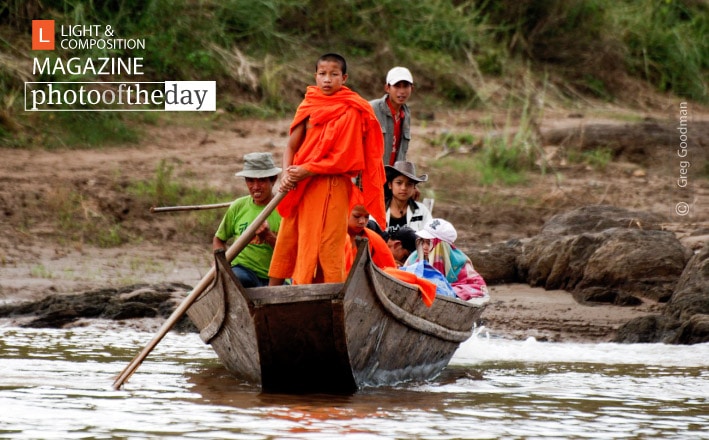
Captured along the expansive waters of the Mekong River in Northern Laos, this image depicts a young monk navigating a boat, a sight that stood out for its unexpected juxtaposition of spiritual life and manual labor. The photographer utilized a 300mm lens to isolate the subject against the vast river, capturing the mystery of the monk's journey and his role as a boat captain. This photograph is award-worthy for its evocative storytelling and the way it invites the viewer to contemplate the intersection of tradition and daily life in Southeast Asia.
Greg Goodman
Raised in New York City, Greg Goodman developed a lifelong passion for photography after receiving his first camera during childhood family travels. His work frequently explores the complex relationship between humanity and the built environment, focusing on cityscapes, infrastructure, and the natural world. Currently based in San Francisco, Goodman documents his extensive global backpacking adventures and daily life through his digital magazine, Adventures of a GoodMan, while his photography continues to be featured in international exhibitions and publications.
Resonance Score Breakdown
Transparency Note: The resonance score (13.2/20) is calculated based on social engagement metrics collected before the award announcement.
Expert Photography Reviews · 4
The Weight of the Current
To move across water is to accept that you are being carried. We spend our lives trying to anchor ourselves, driving stakes into the earth, building walls against the wind. We want to believe we are the masters of our direction.
Read the reflection →The Weight of Still Water
The smell of wet river silt always brings me back to the damp hem of a skirt, heavy and clinging against my ankles. It is a thick, earthy scent, like iron and ancient moss, that seems to seep into the marrow of your bones.
Read the reflection →Reviews & Comments
Share your thoughts about this award-winning photograph. Your reviews contribute to the community engagement score.

Most travel shots of monks are clichéd, but this one survives because of the tension between the saffron robes and the dark, churning Mekong. Using a 300mm lens flattened the perspective, forcing the boat to feel like it’s floating in a void. It’s haunting. I’ve seen thousands of river scenes, yet this one makes me feel the cold spray on that boy’s face. It’s a quiet, lonely truth that will still matter in thirty years.
The 300mm compression flattens the Mekong into a singular, rhythmic plane. It’s a rigid geometry. The monk’s verticality anchors the frame, providing a necessary fulcrum against the river’s horizontal drift. Negative space dominates, yet it doesn’t feel empty; it’s calculated. I’m genuinely irritated by the slight tilt of the horizon, which threatens the structural integrity of the entire composition. Still, the visual weight holds. It’s a disciplined study in isolation and spatial tension.
The saffron of the monk’s robes vibrates against the Mekong’s murky, silt-heavy ochre like a sudden, sharp chord struck on a cello. It’s a chromatic collision that feels almost violent in its beauty, echoing the dusty, muted stillness of a Morandi study. I’m breathless at how the river’s bruised, slate-grey depths swallow the light, forcing that singular, burning orange to anchor the entire frame; it’s a visceral, aching harmony that I’ve rarely seen captured so perfectly.
The Mekong doesn’t just flow; it consumes. Goodman’s monk navigates a void where the water’s dark, viscous texture threatens to swallow the saffron robes entirely. It’s a brutal, silent struggle against the river’s indifference. I’ve stared at this frame for an hour, and I’m genuinely unsettled by how the shadows refuse to offer the boy any sanctuary. He isn’t merely rowing; he’s drifting through a darkness that demands he justify his own existence.