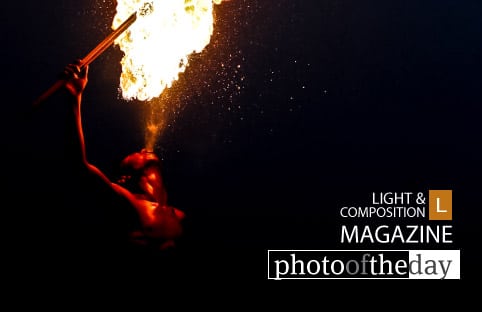
Fire of Soul by Rizwan Hasan
In Fire of Soul, Rizwan Hasan captures the raw intensity of performers who master the element of flame. Taken at night in Dhaka, the image freezes a fleeting moment where fire becomes an extension of the subject's spirit. By utilizing a wide aperture and a fast shutter speed, the photographer isolates the dancer against the encroaching darkness, emphasizing the brilliant, chaotic trails of light. This photograph is award-worthy for its evocative storytelling, successfully transforming a dangerous, ephemeral performance into a permanent testament to human resilience and the artistic pursuit of light within the shadows.
Rizwan Hasan
Based in Dhaka, Bangladesh, Rizwan Hasan is a dedicated photographer who has been refining his craft since 2010. His work is deeply rooted in the observation of human life, with a primary focus on lifestyle and street photography. Hasan is particularly drawn to the unique challenges and atmosphere of night photography, where he seeks to document the interplay between light and the urban environment. His portfolio reflects a keen eye for capturing the spirit of his subjects amidst the vibrant, often unpredictable energy of city life.
Resonance Score Breakdown
Transparency Note: The resonance score (13.2/20) is calculated based on social engagement metrics collected before the award announcement.
Expert Photography Reviews · 4
The Alchemy of Breath
We are taught that fire is a hunger, a wild thing that consumes the forest floor and leaves only the memory of wood behind. But there is another way to hold the flame—not as a master, but as a vessel.
Read the reflection →The Singe of Memory
The smell of kerosene always pulls me back to the damp concrete of my childhood courtyard. It is a sharp, oily scent that clings to the back of the throat, metallic and ancient.
Read the reflection →Reviews & Comments
Share your thoughts about this award-winning photograph. Your reviews contribute to the community engagement score.
The frame’s geometry relies on the dancer’s arc to anchor the chaotic light trails. It’s a precarious balance, yet the negative space holds the subject firmly against the encroaching void. The shutter speed effectively arrests the motion, preventing the composition from collapsing into mere blur. I’ve grown weary of such pyrotechnic subjects, but the structural discipline here is undeniable. It doesn’t just capture fire; it traps the energy within a rigid, calculated architecture.
One suspects Hasan didn’t just stumble upon this. Freezing flame at 1/2500th of a second requires a tedious sort of persistence, standing in the soot and heat until the timing finally clicks. I’ve spent enough nights shivering in the dark to appreciate the discipline here. It’s not merely a lucky snap; it’s a hard-won collision of chaos and control. He clearly stood his ground long enough to earn that light. It’s a respectable bit of work.
Most night photography relies on long exposures that blur the soul right out of the subject. Hasan didn’t do that. By freezing the flame at 1/2500sec, he caught the jagged, violent geometry of the fire itself. It’s rare to see such raw heat rendered with this much clinical precision. I’ve stared at this for years, and it still makes me hold my breath. It’s not just a performance; it’s a permanent scar of light against the dark.
The amber of a dying hearth, that specific, searing cadmium orange, bleeds into the obsidian void of Dhaka’s night like Turner’s late, feverish canvases. It’s a violent, beautiful collision where the heat doesn’t just illuminate; it consumes the frame. I’ve found myself breathless, truly, watching how those flickering, molten trails of light carve a desperate, golden geometry against the encroaching gloom. One cannot help but surrender to the sheer, scorching audacity of such a luminous, fleeting alchemy.