Silhouette in the Lonely World by Easa Shamih
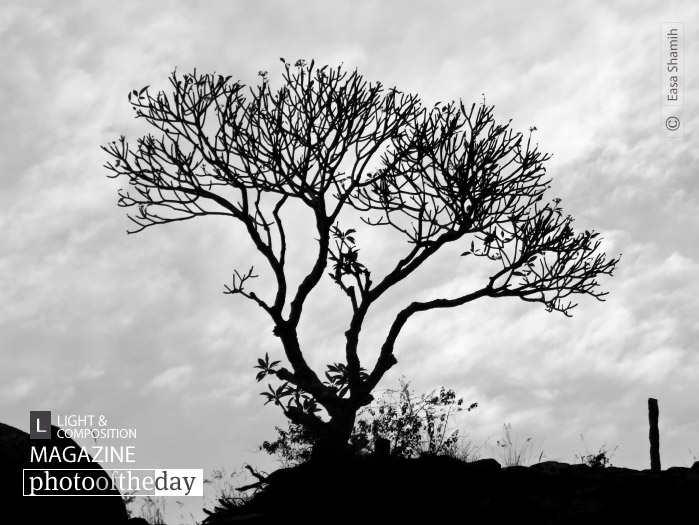
Captured near the Akkulam Bridge in Kerala, this evocative silhouette captures a solitary tree standing as the final sentinel on a desolate mountain road. The photographer utilized a high-aperture setting to emphasize the stark contrast between the lone subject and the expansive, moody sky. By stripping away color, the image highlights the tree's intricate, skeletal form, turning a simple landscape element into a poignant symbol of isolation and resilience. This photograph is award-worthy for its minimalist composition and the profound sense of quietude it evokes, transforming a mundane roadside scene into a powerful, contemplative narrative of the lonely world.
Easa Shamih
Hailing from the Maldives, often celebrated as a paradise on earth, Easa Shamih is a dedicated photographer who balances his creative pursuits with a professional career in network administration and graphic design. His diverse portfolio spans sports, landscapes, macro, and portraiture, with a particular passion for the timeless aesthetic of black and white photography. Driven by a desire to continuously refine his craft, Shamih finds inspiration in the world around him, whether he is capturing the quiet solitude of a mountain road or enjoying his personal interests in sports and cinema.
Resonance Score Breakdown
Transparency Note: The resonance score (13.2/20) is calculated based on social engagement metrics collected before the award announcement.
Expert Photography Reviews · 6
The Weight of Silence
The air before a storm has a specific, metallic taste—like copper coins pressed against the tongue. It is a heavy, static-charged breath that makes the fine hairs on my arms stand upright, searching for a shift in the wind that refuses to come.
Read the reflection →The Architecture of Silence
We are taught to fear the empty space, to fill the quiet with the clutter of our own voices or the frantic movement of our hands. Yet, there is a profound dignity in standing alone against a vast, unanswering sky.
Read the reflection →Reviews & Comments
Share your thoughts about this award-winning photograph. Your reviews contribute to the community engagement score.

Stripping away the chromatic spectrum doesn’t erase colour; it merely forces one to confront the charcoal-grey of a bruised Kerala sky, a tone so heavy it feels like wet slate against the skin. It’s a haunting, monochromatic ache that reminds me of Morandi’s dustiest bottles. I’m genuinely breathless at how the silhouette’s ink-black depth swallows the light, turning the tree into a jagged, silent prayer against the infinite, suffocating void of that vast, lonely horizon.
The light here isn’t just illumination; it’s a heavy, expectant silence. Easa stood by that bridge as the sky turned to lead, waiting for the world to stop breathing. I’ve felt that same ache in my own chest, watching a lone tree surrender its color to the grey. It’s a fragile, skeletal prayer against the vastness. He didn’t just take a picture; he listened to the landscape until it finally whispered its loneliness to him.
Most silhouettes I see are lazy, relying on cheap contrast to hide a lack of subject. Shamih avoids that trap. By stopping down to f/13, he forces the eye to map every jagged, skeletal branch against that oppressive sky. It’s a brutal, honest study of endurance. I’ve stared at this for weeks, and honestly, it makes me feel small in the best way. In thirty years, this quiet, lonely sentinel will still be holding its ground.
The frame’s geometry relies on the tree’s vertical axis, anchoring the composition against a vast, oppressive negative space. It’s a stark exercise in spatial tension. The aperture choice forces a clinical sharpness, stripping the subject to its skeletal essence. While the horizon line threatens to collapse, the weight of the silhouette holds the picture plane together. I’ve rarely seen such a brutal economy of form. It doesn’t need sentiment; the architecture of the frame is enough.
A solitary tree against a Kerala sky. It’s easy to snap a silhouette, but capturing that specific, skeletal tension requires more than a passing glance from a car window. I’ve spent enough hours shivering in damp fields to recognize when someone has actually sat with a landscape until it revealed its bones. Shamih didn’t just find this; he waited for the light to drain away. It’s a quiet, earned piece of work. I quite like it.
Shadow isn’t merely the absence of light; it’s the architecture of silence. In this Trivandrum landscape, the tree doesn’t just exist; it bruises the sky. I’ve stared at these skeletal branches until my own pulse slowed to match their stillness. It’s a brutal, honest geometry. By refusing to soften the edges, the darkness forces us to confront our own isolation. It’s not a pretty view, but it’s the only one that feels true tonight.