Street Kabob by Afnan Naser Chowdhury
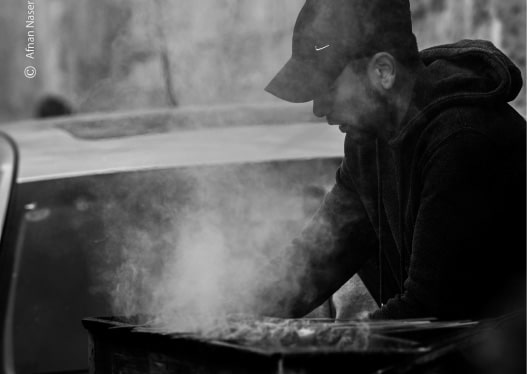
Captured within the historic, atmospheric streets of Jerusalem, this photograph celebrates the universal language of culinary tradition. The photographer masterfully documents the intricate, rhythmic process of grilling kabobs, focusing on the interplay of light and shadow against the backdrop of an ancient city. By utilizing a wide aperture, the image isolates the subject with a soft, cinematic depth that emphasizes the texture of the food and the artisan's focus. This piece is award-worthy for its ability to transform a mundane street-side preparation into a compelling cultural narrative, showcasing both technical precision and a deep, empathetic connection to the human experience.
Afnan Naser Chowdhury
Afnan Naser Chowdhury is a Virginia-based photographer whose creative journey began during his undergraduate studies at North South University. With a lifelong fascination for nature and the fine arts, he brings a painterly eye to his photographic work, often exploring the intersection of culture and daily life. Beyond his lens, he maintains a keen interest in technology and digital innovation, frequently engaging with the global photography community to share his evolving perspective on the world.
Resonance Score Breakdown
Transparency Note: The resonance score (13.1/20) is calculated based on social engagement metrics collected before the award announcement.
Expert Photography Reviews · 7
The Smoke of Memory
There was a kitchen in my grandmother’s house that smelled of charcoal and scorched rosemary, a scent that clung to the curtains long after the fire had died. It is the specific smell of labor, of hands working against the cooling air to provide something warm.
Read the reflection →The Scent of Memory
I keep a small, tarnished copper spice tin in the back of my pantry, long since emptied of its contents. It belonged to my grandmother, and even now, if I press my nose against the metal, I can almost catch the ghost of cumin and toasted coriander that once filled her kitchen.
Read the reflection →Reviews & Comments
Share your thoughts about this award-winning photograph. Your reviews contribute to the community engagement score.
Before the eye identifies the smoke, something in the chest tightens. It’s the heat, I think—that visceral, primal pull of fire against stone. The blurred, golden light of the Jerusalem street doesn’t just frame the kabobs; it anchors a sensory memory I haven’t lived. When I return to this, I feel the grit of the ancient air. It’s a quiet, rhythmic activation of hunger that follows me into the night, long after the screen dims.
Of the thousands of street scenes I’ve reviewed, most rely on tired tropes. This succeeds because the shallow depth of field doesn’t just blur the background; it forces a claustrophobic intimacy with the charcoal smoke. I’m genuinely hungry looking at it. The 1/15sec shutter speed captures the artisan’s motion with a blur that feels like a heartbeat. It’s a fleeting moment, yet in thirty years, this grit will still feel more honest than any polished travelogue.
We look at this man’s hands, dancing with the heat of the coals, and we realize he isn’t just cooking; he’s reciting a history. The smoke curls around him, blurring the ancient stones of Jerusalem into a soft, golden memory. I’ve spent my life listening to stories, and I can hear the rhythm of his work in this frame. It’s a quiet, searing intimacy. It makes me ache for a taste of that home.
A wide aperture at 1/15th of a second suggests a photographer who didn’t mind hovering in the smoke until the rhythm felt right. It’s a quiet, tactile study. I’ve spent enough damp mornings waiting for the light to hit a ridge to appreciate when someone actually commits to the scene. Chowdhury didn’t just snap a lunch break; he waited for the steam to settle. It’s a rare, honest bit of work. I’d have stayed for a second skewer.
The smoke curls around the kabobs, but it’s the blur of the Dome of the Rock that haunts me. Why push the sacred into a soft, unrecognizable bokeh? It feels like a convenient erasure. Does the artisan’s labor gain dignity by stripping away the political weight of his own street? I’m left feeling uneasy. We’ve turned a site of profound tension into a shallow, aestheticized backdrop for lunch. Is this empathy, or just a tourist’s hunger?
Smoke curls through the frame like a ghost of history, yet it’s the encroaching darkness that truly haunts. Chowdhury doesn’t just grill meat; he carves a void into the Jerusalem stone. I’ve stared at these shadows until my eyes ached, feeling the weight of a city that refuses to be fully illuminated. It’s a brutal, beautiful resistance. When the light fails, the truth begins. This isn’t a simple meal; it’s a slow, smoldering meditation on absence.
Smoke curls against the ancient stone. It’s a heavy, grey veil. The kabobs sizzle, yet the frame holds a strange, quiet stillness. I’ve spent minutes watching the blur behind the artisan’s hands. It’s not just food. It’s the weight of the city pressing into the void. I feel a sudden, sharp ache for the history buried in that shadow. Nothing here is accidental. The empty corner is not empty. It’s a breath held in stone.