Acropolis of Athens by Ola Cedell
The photographer captured the timeless majesty of the Acropolis of Athens during the quiet, golden hours of early morning. By arriving before the crowds, the photographer utilized the low-angled sun to cast dramatic, elongated shadows across the ancient stone, emphasizing the architectural textures and historical depth of the site. Shot handheld with a versatile zoom lens, the image reflects a deliberate choice to frame the ruins in a way that highlights both their scale and intricate detail. This photograph is award-worthy for its masterful use of natural light and its ability to convey the serene, monumental presence of one of history’s most iconic landmarks.
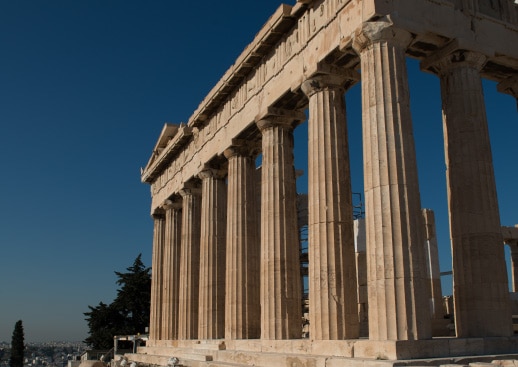
Exposure 1/1000sec @ f/7.1 | ISO 100 | Focal Length 24mm
Ola Cedell
Born in southern Sweden in 1969, Ola Cedell has cultivated a diverse global perspective through his time living in Australia and Germany before returning to his home country. While balancing a professional career in engineering, Cedell has pursued photography since 1996, eventually specializing in landscape and food imagery for the catering industry. His work is deeply influenced by the natural beauty of southern Sweden and the landscapes of France, reflecting a keen eye for detail and a passion for capturing the essence of his surroundings.
Resonance Score Breakdown
Transparency Note: The resonance score (11.7/20) is calculated based on social engagement metrics collected before the award announcement.
Expert Photography Reviews · 5
The Weight of Stone
We build to outlast the winter. We stack stone upon stone, believing that if we make the walls high enough, the wind will eventually lose interest. There is a vanity in this, a quiet arrogance that assumes the earth will remain still long enough for our names to be remembered.
Read the reflection →The Weight of Echoes
Can stone truly hold the memory of a voice, or are we merely projecting our own longing onto the silence of the past? We walk through ruins as if they are ghosts, searching for the pulse of those who stood exactly where we stand, yet the earth remains indifferent to our presence.
Read the reflection →Reviews & Comments
Share your thoughts about this award-winning photograph. Your reviews contribute to the community engagement score.
Golden light washes over the Acropolis, yet I feel a strange coldness. Why must we strip away the modern city to find beauty in these ruins? By erasing the contemporary Athenian context, Cedell turns a living heritage site into a sterile museum piece. It’s a classic colonial gaze, isn’t it? We crave the monument but ignore the people living in its shadow. Does this framing honor history, or does it simply sanitize it for our consumption?
Getting to the Acropolis before the tour buses arrive requires a certain commitment to the alarm clock that most lack. It’s a clean, sharp frame, though one wonders if the photographer lingered long enough to let the light truly settle into those stones. It’s competent, certainly, but I’ve spent enough mornings shivering in the dark to know when a shot feels earned. It’s a pleasant view, but it doesn’t quite ache with the history it depicts.
We look at these stones and we don’t just see architecture; we see the silence of a long-forgotten conversation. Ola Cedell arrived before the crowds, listening to the morning light as it stretched across the marble. It’s a portrait of a place that’s finally catching its breath. I feel a sudden, quiet ache in my chest looking at those shadows. It’s a photograph that asks to be returned to, over and over again.
The limestone doesn’t merely reflect light; it exhales the pale, dusty ochre of a Vermeer interior, caught in that fleeting, bruised gold of an Athenian dawn. I’m breathless at how the shadows bleed into a bruised violet, a chromatic tension that feels like Morandi’s still lifes stretched across history. It’s a quiet, aching harmony where the stone’s warmth quarrels with the cooling sky, and honestly, it’s the most exquisite, fragile silence I’ve felt all year.
The frame’s geometry relies on the interplay of elongated shadows against the rigid stone. It’s a calculated architecture. The low-angled light forces a dialogue between mass and void, grounding the ruins within the picture plane. I’ve grown weary of such predictable golden hour tropes, yet the spatial tension here holds. The composition doesn’t collapse under the weight of its own history. It’s disciplined. It’s precise. It’s a rare instance where the structure actually commands the eye.