Other Side of the World by Shirren Lim
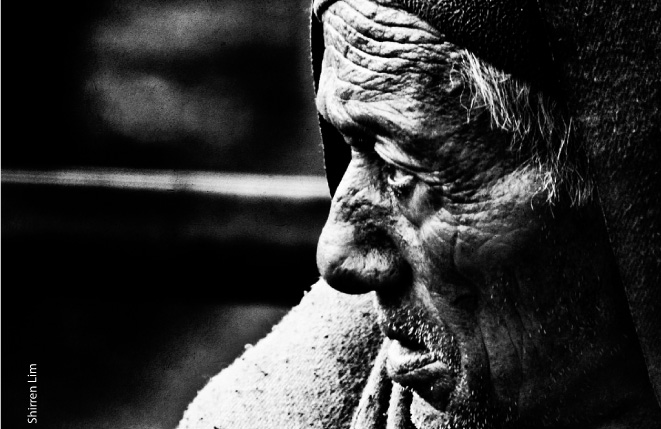
While exploring the bustling streets of Kalimati in Kathmandu, the photographer encountered a beggar sitting unnoticed amidst the flow of daily life. Captured with a Nikon D40X, the image isolates this quiet, overlooked figure against the chaotic backdrop of the city. The photographer’s decision to focus on this individual highlights the stark contrast between the subject’s stillness and the surrounding urban movement. This poignant portrait is award-worthy for its ability to transform a fleeting street encounter into a powerful, empathetic narrative that invites the viewer to pause and acknowledge the humanity often lost in the rush of the world.
Shirren Lim
Born on Penang Island, Malaysia, in 1970, Shirren Lim is a Jakarta-based photographer who discovered her true passion for the craft in 2009. Specializing in portraiture, she seeks to capture the raw sincerity and uncovered expressions of humanity, producing work often described as intense and earthy. Deeply inspired by the iconic imagery of Steve McCurry, Lim strives to document moments that resonate with global significance, and her evocative photography has been featured in numerous web and printed publications.
Resonance Score Breakdown
Transparency Note: The resonance score (12.0/20) is calculated based on social engagement metrics collected before the award announcement.
Expert Photography Reviews · 4
The Weight of the Unseen
In the study of physics, there is a concept regarding the observer effect: the mere act of looking at a particle changes its behavior. We are not merely witnesses to the world; we are participants who alter the state of what we behold.
Read the reflection →The Weight of Stillness
I remember sitting in a crowded train station in Mumbai, watching thousands of people blur past me in a frantic, rhythmic tide. Everyone was moving toward a destination, their eyes fixed on clocks or screens, their bodies leaning into the momentum of the day.
Read the reflection →Reviews & Comments
Share your thoughts about this award-winning photograph. Your reviews contribute to the community engagement score.

At 200mm, the compression of the focal plane isolates the subject with surgical precision. The f/5.6 aperture keeps the background blur just soft enough to suggest the chaotic motion of Kathmandu without losing the context of the street. I’m genuinely moved by how the sensor resolves the texture of the beggar’s skin against that depth. It’s a rare moment where the optics don’t just capture a scene; they force us to confront a human reality.
The street blurs. A smear of motion. Then, the figure. He sits in the dust of Kalimati, anchored by a stillness that defies the city’s rush. It’s a heavy quiet. I’ve felt this ache before, the sudden weight of being alone in a crowd. Nothing here is accidental. The empty corner isn’t empty. It’s a breath held in the throat. Lim doesn’t fill the frame; she lets the silence settle. It’s enough.
The 1/25sec shutter speed here isn’t a technical failure; it’s a deliberate surrender to the chaos of Kathmandu. By letting the city smear into a ghostly blur around the beggar, Lim forces us to confront the friction between stillness and motion. It’s closer to Sugimoto’s long-exposure theatres than standard street reportage. I’m genuinely moved by what she chose not to resolve. Why demand clarity when the blur captures the city’s indifference so much better?
It’s a haunting frame, but I’m left wondering about the distance. In the wild, I’ve spent days motionless to earn a subject’s trust, yet here, the proximity feels intrusive. Did the photographer ask, or just take? There’s a coldness in the isolation of this man’s struggle against the city’s blur. It’s technically sharp, sure, but it feels extracted. I find myself wishing for the restraint that comes from truly knowing a subject, not just spotting one.