Long Bridge to the Sea by Shirren Lim
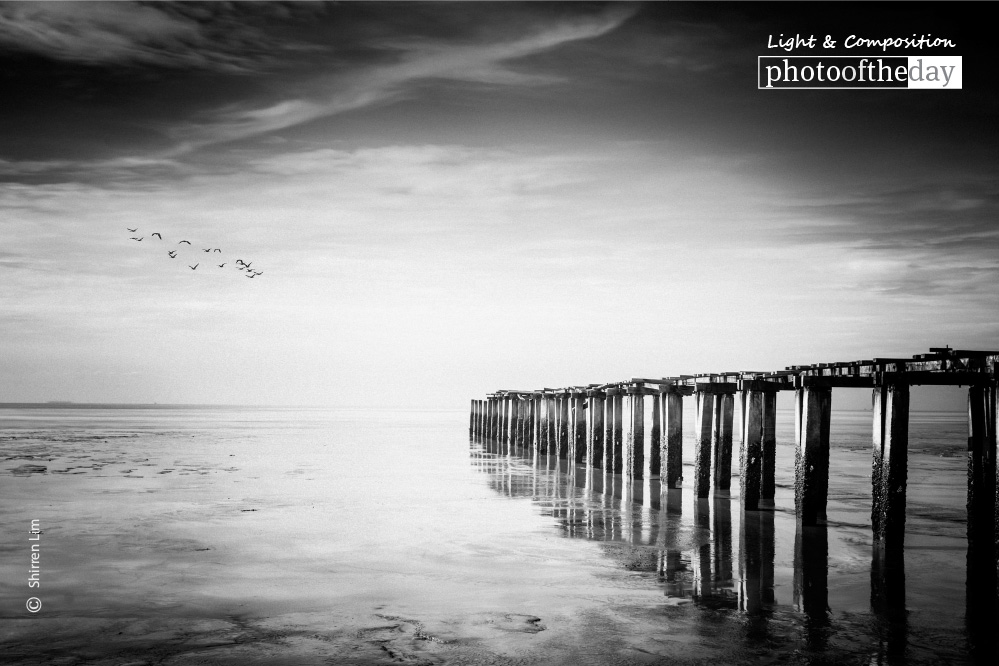
Captured during a 2014 experiment in her hometown, this long exposure photograph of a fishing village bridge showcases the photographer's patient approach to coastal landscapes. By waiting for the low tide, the photographer achieved a serene, minimalist composition that emphasizes the structural lines of the bridge against the receding water. This image is award-worthy for its masterful use of long exposure techniques to transform a mundane local landmark into a tranquil, ethereal scene, demonstrating a keen eye for finding profound beauty in the quiet, everyday rhythms of a traditional Malaysian fishing village.
Shirren Lim
Born on Penang Island, Malaysia, in 1970, Shirren Lim is a Jakarta-based photographer who discovered her true passion for the craft in 2009. While she specializes in portraiture, aiming to capture the raw sincerity of human expression, her broader body of work is celebrated for its intense, earthy aesthetic and minimalist composition. Deeply inspired by the iconic imagery of Steve McCurry, she strives to document humanity with a depth that resonates globally, having seen her work featured in various international web and printed publications.
Resonance Score Breakdown
Transparency Note: The resonance score (12.0/20) is calculated based on social engagement metrics collected before the award announcement.
Expert Photography Reviews · 6
The Architecture of Necessity
We often mistake the infrastructure of labor for mere scenery. When we look at a pier or a walkway extending into the water, we tend to see a path for leisure, a romantic line drawn toward the horizon.
Read the reflection →The Architecture of Silence
We spend our lives building paths toward the horizon, convinced that the destination is a place we can touch. We lay down planks of wood and stone, hoping to walk across the shifting uncertainty of the world without getting our feet wet.
Read the reflection →Reviews & Comments
Share your thoughts about this award-winning photograph. Your reviews contribute to the community engagement score.
It’s a relief to see a landscape that doesn’t rely on the frantic pursuit of a living subject. I’ve spent enough time hiding in mangroves to know the stillness required to capture this bridge at low tide. It’s quiet, honest, and lacks the intrusive footprint I usually despise. I find myself wanting to walk those planks myself. It’s refreshing to see a photographer respect the rhythm of the tide rather than forcing a moment.
Lim’s bridge evokes the stark, geometric precision of early modernist architectural studies, yet the long exposure softens the mudflats into a painterly abstraction reminiscent of Hiroshi Sugimoto’s seascapes. I’ve spent decades tracing these lines, but there’s a genuine, quiet tension here I haven’t felt in years. It’s not just the technique; it’s how she’s distilled the Penang coast into a singular, meditative breath. It’s a rare, haunting dialogue between the ephemeral tide and the permanent structure.
The tide has retreated, leaving the bridge to hover in a silence that feels almost holy. Shirren didn’t just capture wood and water; she waited until the world stopped breathing. I’ve spent enough dawns in the mud to know that ache in her legs, the stillness required to let the light settle. It’s a quiet miracle. Looking at these receding lines, I feel a sudden, sharp longing for the peace of that Malaysian shore.
Before the eye identifies the bridge, a sudden stillness settles in the chest. The receding tide pulls at my own pulse, a rhythmic thinning of the world. It’s an ache for a place I’ve never been, yet I feel the damp salt on my skin. When I return to this, the silence feels heavier, like a held breath that refuses to break. It’s the kind of quiet that follows you into sleep, hauntingly persistent.
The bridge stretches into nothing. It’s a line drawn on silence. I’ve stood on these Penang planks, but here, the tide has pulled the world away. It leaves only the wood and the grey expanse. It’s quiet. I feel my own breath slow down just looking at it. Nothing here is accidental. The empty corner is not empty. It’s a pause. A deep, necessary breath. It’s rare to find this much room to think.
The tide pulls back, and the frame breathes. It’s a long take, a steady shot where the motion blur turns the water into a ghost of itself. I’ve spent hours watching waves, but this stillness hits different; it’s the silence right before the dialogue starts. The bridge cuts through the frame like a sharp edit. It’s a clean, rhythmic sequence frozen in time. I’d keep this frame forever. It’s exactly what the editor needs.