The Old Car by Tisha Clinkenbeard
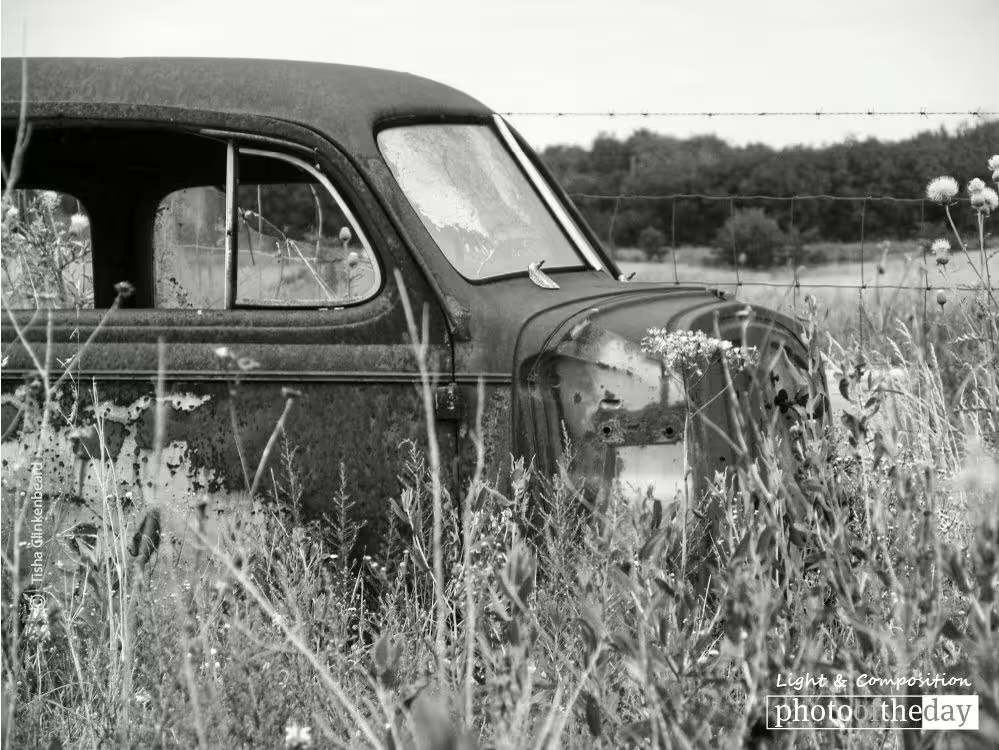
In a quiet pasture off a Texas state road, the photographer discovered the skeletal remains of vintage automobiles slowly being reclaimed by the landscape. This image captures the poignant intersection of human history and natural decay, inviting viewers to contemplate the journeys once taken and the stories left behind. The composition is award-worthy for its evocative use of black and white tones, which strip away the distractions of color to focus on the textures of rust and weathered metal. It is a masterclass in finding beauty in abandonment, transforming a forgotten relic into a timeless narrative of transition and endurance.
Tisha Clinkenbeard
Based in Powderly, Texas, Tisha Clinkenbeard has cultivated a distinguished career with works featured in prominent venues such as the Fine Arts Center of Hot Springs and Portland’s Black Box Gallery. Her photographic journey began long before the digital era, fostering a deep-seated passion for documenting the world as she wanders through it. Through her blog, Found Round & About, she shares her unique perspective on the overlooked details of daily life, consistently earning recognition for her ability to find profound stories in the mundane.
Resonance Score Breakdown
Transparency Note: The resonance score (12.0/20) is calculated based on social engagement metrics collected before the award announcement.
Expert Photography Reviews · 8
The Quiet After the Drive
I found an old key in my junk drawer this morning. It was heavy, silver, and completely unrecognizable. I spent ten minutes trying it in every lock in the house, but nothing budged.
Read the reflection →The Quiet Return to Earth
In the high deserts of the American West, there is a curious phenomenon known as the ghost forest—stands of trees that died long ago but refuse to fall, bleached white by the sun and wind until they look like bone.
Read the reflection →Reviews & Comments
Share your thoughts about this award-winning photograph. Your reviews contribute to the community engagement score.

You’ve captured the slow surrender of that old steel to the Texas dirt. It’s quiet, but I can feel the weight of the miles it once carried. I’ve stood in fields like that, listening to the wind move through the rust, and you’ve caught that same lonely ache. You didn’t just photograph a wreck; you felt the end of a long journey. And that’s why this works. There’s something honest happening here. You waited. I can feel it.
Rust isn’t merely decay; it’s the metal’s slow surrender to the earth’s gravity. Clinkenbeard’s car doesn’t just sit in that Texas field; it dissolves into the encroaching dark. I’ve stared at those jagged, light-starved wheel wells until my own pulse slowed. It’s haunting how the shadows swallow the chassis, turning a machine into a tomb. Heidegger would argue that here, the object finally stops being a tool and begins to exist as pure, silent being.
Rusting steel in a Texas pasture doesn’t just decay; it performs a specific American myth. Why do we romanticize this wreckage? Clinkenbeard frames the car as a relic, but who owned it before the weeds took over? I feel a sharp, uncomfortable distance looking at these textures. We strip away the color to find beauty, but what are we erasing? Does this aestheticized abandonment hide the actual economic rot of the rural landscape?
The light here isn’t harsh; it’s the soft, forgiving glow of a Texas afternoon, long after the heat has retreated. Tisha waited for the shadows to stretch, letting the rust breathe against the tall, dry grass. I’ve felt that same stillness, where the metal seems to sigh as it returns to the earth. It’s haunting, really. Looking at these skeletal curves, I can’t help but feel a quiet, aching reverence for the journeys that finally ended here.
Most entries in this category rely on the easy nostalgia of rust. What separates this from the pack is the way the chassis sinks into the tall grass, creating a physical weight that feels permanent. I’ve seen thousands of abandoned cars, but this one actually made me hold my breath. It’s not just decay; it’s a quiet surrender to the Texas soil. In thirty years, this stillness will still feel heavy, and that’s why it won.
Before the eye identifies the rusted chassis, something in the chest tightens. It’s the sudden, heavy stillness of a Texas pasture. I feel a phantom ache in my own joints looking at that weathered metal, a quiet recognition of how we’re all slowly reclaimed by the earth. When I return to this, I don’t see a car; I see the ghost of a long, lonely drive. It’s a beautiful, hollow weight I carry home.
We look at this rusted frame and hear the ghosts of Texas highways. It’s not just metal; it’s a vessel that once carried dreams and arguments across the plains. Tisha listened to the silence of that pasture before she clicked. I feel a sudden, sharp ache for the people who sat in those seats, now surrendered to the weeds. It’s a portrait of a journey that didn’t end, but simply changed its shape. I’m haunted by it.
The frame’s geometry is rigid, yet the rust-eaten chassis threatens to collapse the picture plane. It’s a precarious balance. The negative space of the Texas sky provides a necessary fulcrum, anchoring the decaying metal against the horizon line. I’ve grown weary of sentimental decay, but the structural discipline here is undeniable. The mass of the vehicle doesn’t drift; it holds. It’s a cold, precise arrangement that forces the eye to acknowledge the architecture of ruin.