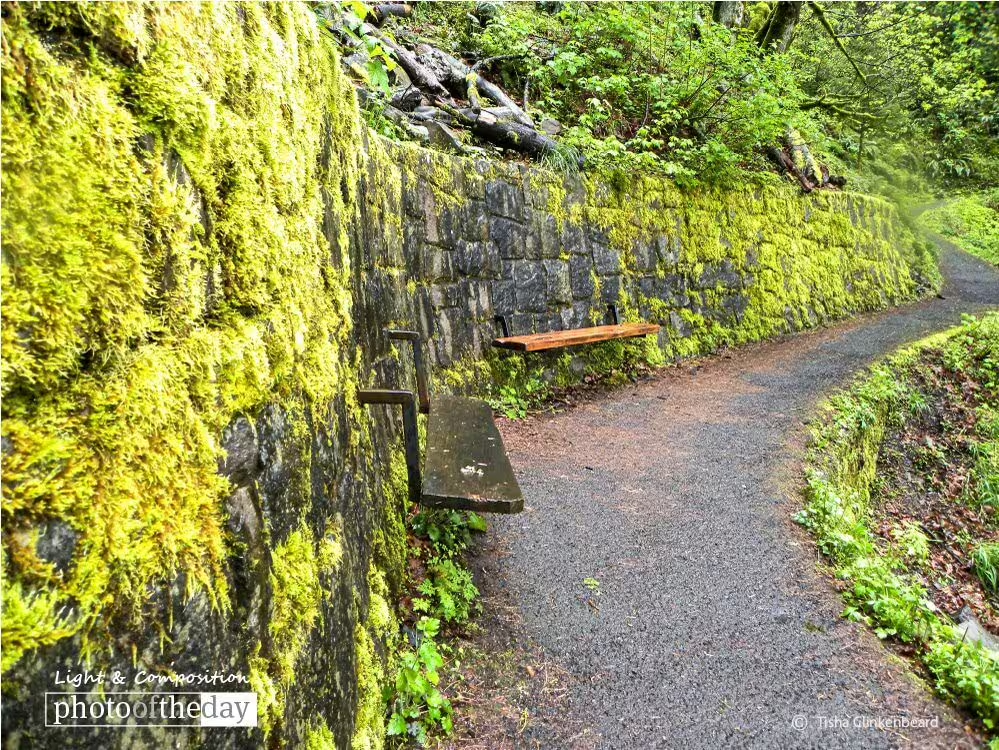
Benches on the Walls by Tisha Clinkenbeard
Captured within the lush, verdant surroundings of the Wakheena Falls area near Portland, Oregon, this photograph highlights a unique architectural detail: benches seamlessly integrated into the forest wall. The photographer masterfully frames these resting spots, inviting the viewer to pause and absorb the tranquil atmosphere of the cascading falls and winding trails. By focusing on the intersection of human-made structures and the untamed mossy landscape, the image evokes a sense of quiet contemplation. Its award-worthy quality lies in the harmonious balance between the structural geometry of the benches and the organic, sensory-rich environment of the Pacific Northwest wilderness.
Tisha Clinkenbeard
Based in Powderly, Texas, Tisha Clinkenbeard is a dedicated photographer whose work has been featured in prestigious venues such as The Fine Arts Center of Hot Springs and Portland’s Black Box Gallery. Her artistic journey began long before the advent of modern digital technology, fostering a deep-seated passion for documenting the world as she wanders. Through her blog, Found Round & About, she shares her unique perspective on the beauty she encounters, further establishing her reputation through features in publications like Birds & Blooms.
Resonance Score Breakdown
Transparency Note: The resonance score (12.1/20) is calculated based on social engagement metrics collected before the award announcement.
Expert Photography Reviews · 7
The Weight of Resting
I keep a small, smooth stone in my pocket that I picked up from a path I walked years ago. It is worn down by the friction of my thumb, a quiet record of the miles I have traveled and the moments I have chosen to stop.
Read the reflection →Where the Wild Things Rest
Why do we feel the need to leave a mark upon the wilderness before we can truly belong to it? We walk through ancient forests, past trees that have witnessed centuries of silence, yet we carry our own furniture with us.
Read the reflection →Reviews & Comments
Share your thoughts about this award-winning photograph. Your reviews contribute to the community engagement score.

The benches act as a datum against the chaotic, moss-laden verticality of the gorge. It’s a clever tension; the rigid, horizontal geometry of the timber forces us to acknowledge the forest’s organic mass. I’m struck by how the light catches the grain, grounding the structure within the void. Yet, I wonder what’s omitted—the damp chill, the roar of the falls. It’s a quiet, honest meditation on how we carve our own thresholds into the wild.
Moss claims the stone. The wood of the bench yields to the damp Oregon air. I’ve sat on these benches, yet here, they feel like ghosts. The frame doesn’t crowd the falls. It lets the silence breathe. Nothing here is accidental. The empty corner is not empty. It’s a quiet invitation to stop moving. I feel a sudden, sharp ache for that stillness. It’s rare to find a place that lets you simply be.
Most nature photography today is just wallpaper. Of the thousands I’ve reviewed, this one actually sticks. It’s the way those benches anchor the chaos of the mossy wall that caught me; it’s a quiet, human intrusion that doesn’t feel like a violation. I’d sit there myself, and that’s the point. It’s not just a pretty waterfall shot. It’s a place that’ll still feel like a sanctuary thirty years from now. That’s rare.
We look at these benches tucked into the mossy Oregon stone and we hear the ghosts of travelers who sat here. Tisha Clinkenbeard hasn’t just captured a landscape; she’s recorded a silent conversation between the forest and the weary. I feel a sudden, sharp ache to sit there myself, to listen to the falls and let the silence settle in my bones. It’s a portrait of a place that’s waiting for us to finally arrive.
Before the eye identifies the stone benches, something in my chest softens. It’s the mossy dampness, that specific Pacific Northwest chill that triggers a phantom shiver. I’ve returned to this frame three times today, and each time, the silence of Wakheena Falls feels heavier. It’s not just architecture; it’s an invitation to sit with one’s own exhaustion. I feel a sudden, sharp ache to be there, letting the forest reclaim my pulse until I’m still.
The tension between the rectilinear bench and the chaotic, bryophytic Oregon wall echoes the formalist rigor of early architectural surveys, yet it’s softened by a romanticism reminiscent of Carleton Watkins’s wet-plate explorations of the Columbia River Gorge. It’s a quiet, deliberate dialogue. I’ve spent decades cataloging these intersections, but the way the moss here threatens to reclaim the wood—it actually made me catch my breath. It’s a rare, haunting stillness I haven’t felt in years.
The benches anchor the frame, providing a necessary fulcrum against the chaotic, moss-laden verticality of the falls. It’s a rigid geometry that forces the eye to settle. Without these lines, the composition would collapse into mere texture. I’m genuinely irritated by the soft focus on the periphery, which threatens the structural integrity of the scene. Still, the tension between the man-made slats and the organic sprawl holds. It’s a disciplined, if fragile, equilibrium.