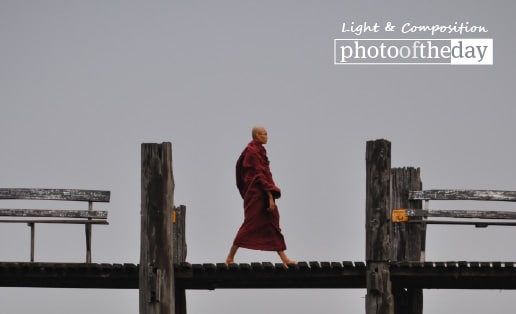
A Monk on the Bridge by Ryszard Wierzbicki
Captured at the iconic U Bein Bridge in Myanmar, this evocative photograph frames a solitary monk traversing the world's oldest and longest teakwood bridge. The photographer masterfully utilizes the bridge’s rhythmic structure and the serene atmosphere of Taungthaman Lake to highlight the monk’s daily pilgrimage to his monastery. By balancing the warmth of the setting sun against the weathered textures of the ancient wood, the image captures a profound sense of timelessness and spiritual devotion. This composition is award-worthy for its ability to transform a simple act of travel into a poignant narrative of human connection and cultural heritage.
Ryszard Wierzbicki
Born in 1963 and a graduate of the University of Gdańsk, Ryszard Wierzbicki transitioned from a diverse career in social sciences and marketing to become a dedicated traveler and photographer. After relocating to the United Kingdom in 2006, he channeled his passion for exploration into founding travel and photography forums, while frequently volunteering with orphanages in South-East Asia. Now working as a marketing advisor and tour organizer, Wierzbicki captures the essence of his global travels through a lens that emphasizes cultural immersion and the beauty of the human experience.
Resonance Score Breakdown
Transparency Note: The resonance score (12.6/20) is calculated based on social engagement metrics collected before the award announcement.
Expert Photography Reviews · 5
The Grain of Time
The smell of sun-baked wood always brings me back to the splintered floorboards of my childhood home. It is a dry, toasted scent, like cedar needles left too long on a hot stone. When I run my palm over such surfaces, I feel the history of every footfall that came before mine.
Read the reflection →The Weight of One
We walk because the earth demands it. A path is not merely a way to reach a destination; it is a record of where we have been and what we have chosen to leave behind. In the north, the ice makes its own decisions.
Read the reflection →Reviews & Comments
Share your thoughts about this award-winning photograph. Your reviews contribute to the community engagement score.
The jury’s obsession with clarity here feels stifling. Wierzbicki’s monk is trapped in a sharp, predictable reality. I’d have preferred the bridge’s rhythmic teak structure to dissolve into the haze of Taungthaman Lake, pushing toward the ethereal abstraction of Sugimoto’s long-exposure seascapes. Why resolve the monk so clearly? By choosing total sharpness, the photographer misses the chance to turn a pilgrimage into a ghost. It’s technically competent, sure, but I’m left craving a little more beautiful failure.
Before the eye identifies the monk, something in the chest settles. It’s the rhythm of the teak planks, a visual metronome that slows my pulse. I’ve returned to this bridge a dozen times, and each visit, the warmth of that fading light feels like a physical weight lifting from my shoulders. It doesn’t just capture a pilgrimage; it demands I walk with him, tethered to that ancient, weathered wood, until my own breath matches his pace.
U Bein Bridge is a tourist conveyor belt, yet Wierzbicki crops out the chaos to sell us a curated silence. Why does the monk’s spiritual journey require the erasure of his modern context? It’s a beautiful composition, sure, but I feel a sharp, uncomfortable ache when I see how we commodify this man’s daily walk for our aesthetic pleasure. Are we honoring his devotion, or are we just consuming a hollow, exoticized ghost?
The bridge cuts the frame. It’s a line of teak against the haze. The monk is a sliver of saffron, small, deliberate. I’ve spent minutes watching him walk. He doesn’t arrive. He doesn’t leave. He simply exists within the stillness of the lake. The water holds the light. It’s quiet here. Nothing is accidental. The empty corner isn’t empty. It’s a breath held. I feel my own pulse slow down. It’s rare to find this much peace.
1/180sec at f/6.7, 174mm. A tight compression of the teak pillars. The shutter speed is adequate for the monk’s pace, but f/6.7 feels indecisive. It’s neither wide enough to isolate the subject nor stopped down to render the bridge’s geometry with clinical sharpness. I’ve spent years analyzing these files, and honestly, the lack of micro-contrast in the wood grain irritates me. It’s a competent capture, but the technical execution doesn’t quite match the ambition.