Poverty by Ryszard Wierzbicki
Captured in the Bagan region of Myanmar, this poignant documentary photograph serves as a powerful testament to the harsh realities of poverty. The photographer utilizes a 200mm focal length to isolate the subject, creating an intimate yet respectful distance that highlights the gravity of the moment. By documenting this scene, the photographer seeks to bridge the gap between the viewer and the struggles of the marginalized, transforming a fleeting encounter into a lasting narrative. The image is award-worthy for its raw emotional honesty and its ability to evoke deep empathy, effectively using the medium of photography to advocate for those often overlooked by the world.
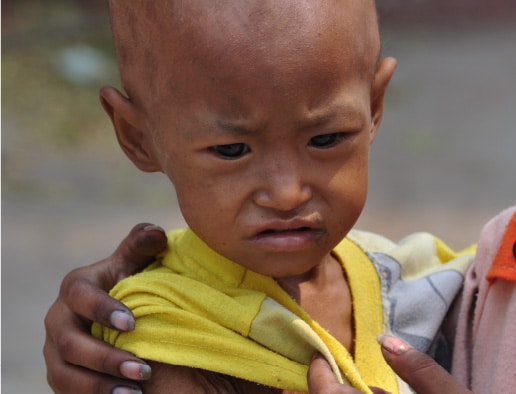
Exposure 1/250sec @ f/5.6 | ISO 500 | Focal Length 200mm
Ryszard Wierzbicki
Born in 1963, Ryszard Wierzbicki is a Polish-born photographer and educator currently based in Swindon, United Kingdom. After a diverse career in social sciences and marketing, he transitioned into full-time travel and documentary photography, fueled by his extensive explorations of South-East Asia. His work is deeply informed by his humanitarian efforts with orphans in Thailand and Burma, reflecting a commitment to social advocacy. Through his platforms, Instant Travelling and World Around, he shares his unique perspective on global cultures, blending technical expertise with a profound sense of empathy for his subjects.
Resonance Score Breakdown
Transparency Note: The resonance score (12.1/20) is calculated based on social engagement metrics collected before the award announcement.
Expert Photography Reviews · 5
The Weight of Dust
The smell of dry earth after a long drought is a scent that clings to the back of the throat, tasting of minerals and ancient, parched stone.
Read the reflection →The Weight of Quiet
There is a particular kind of gravity found in the lives of those who carry very little. We often mistake stillness for an absence of movement, but sometimes it is the result of a life stripped down to its most essential rhythm.
Read the reflection →Reviews & Comments
Share your thoughts about this award-winning photograph. Your reviews contribute to the community engagement score.
At 200mm, the compression flattens the Bagan dust into a soft, atmospheric bokeh, isolating the subject against the diffraction limit of the lens. It’s a delicate balance; the f/5.6 aperture keeps the focal plane razor-thin, pulling the subject’s weary gaze into sharp, unforgiving relief. I’m genuinely moved by how the light catches those textures. It’s not just a portrait; it’s a precise optical capture of human fragility that the naked eye would surely miss.
Bagan’s dust doesn’t just settle; it buries the soul in a monochromatic haze. Wierzbicki’s 200mm compression forces us to confront a gaze that refuses to blink. I’ve stared at these shadows for an hour, and they don’t offer comfort—they demand an accounting. It’s a brutal, honest weight. When the light fails to penetrate the subject’s periphery, we aren’t looking at poverty; we’re looking at the silence that follows when the world stops listening.
The ochre dust of Bagan clings to the skin like a Morandi still life, yet it’s the parched, sun-bleached umber of the subject’s garment that truly breaks one’s heart. It’s a palette of exhaustion, where the light doesn’t illuminate but rather erodes, leaving behind a chromatic dissonance that feels almost unbearable. I’ve found myself weeping before these muted, earth-bound tones, for they don’t merely depict poverty; they taste of the very grit and silence of a life worn thin.
A 200mm lens often suggests a photographer keeping a safe, polite distance. It’s a common shortcut. Yet, Wierzbicki has captured a gaze here that feels heavy, earned through more than a passing glance. I’ve spent enough hours in the dust to know that look isn’t given to strangers easily. It’s uncomfortable, isn’t it? He clearly didn’t just stumble upon this. He stayed until the subject stopped performing for the camera. That, I respect.
Of the thousands of documentary frames I’ve reviewed, most lean too heavily on pity. Wierzbicki avoids that trap. By using the 200mm compression, he forces us to confront the subject’s gaze without the intrusion of a wide-angle lens. It’s an honest, uncomfortable intimacy. I felt a genuine ache in my chest looking at those hands. It’s not just a record of hardship; it’s a quiet, enduring demand that we acknowledge a life that isn’t ours.