Cold by Shirren Lim
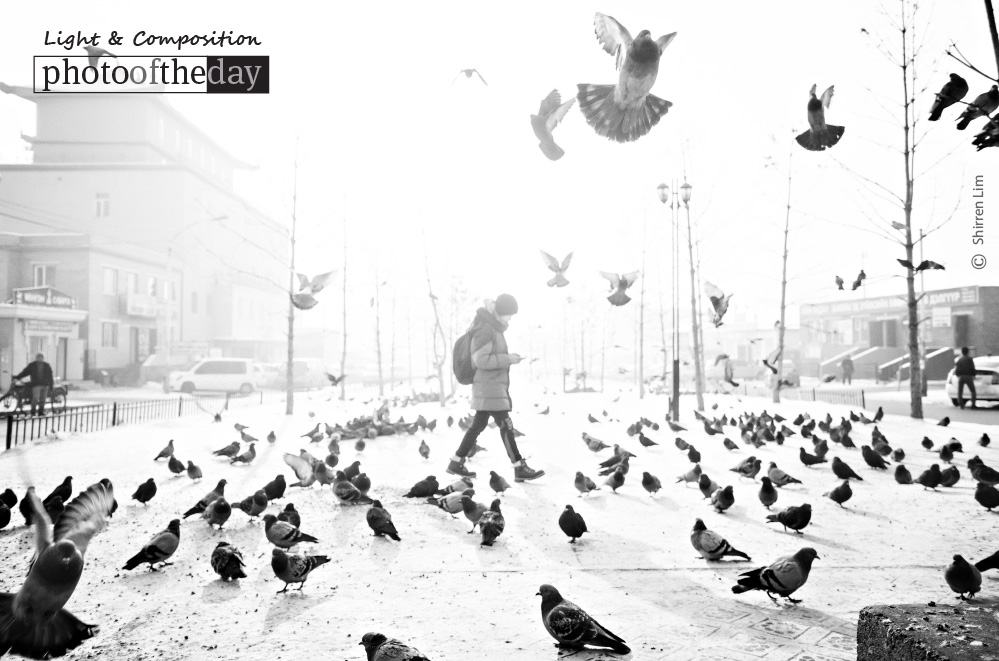
Captured during an initial city tour of Ulaanbaatar, this photograph serves as a visceral response to the city's biting, extreme cold. The photographer sought to translate the physical sensation of the freezing environment into a visual narrative, finding the perfect backdrop in a public square populated by pigeons. By patiently waiting for a solitary figure to traverse the frame, the photographer successfully balanced the vast, desolate space with a singular human element. The image is award-worthy for its evocative atmosphere, demonstrating a keen eye for street photography that transforms a simple urban moment into a profound study of climate and human endurance.
Shirren Lim
Born in Penang Island, Malaysia, in 1970, Shirren Lim is a Jakarta-based photographer who discovered her true passion for the craft in 2009. Known for her intense and earthy aesthetic, she specializes in portraiture, striving to capture the sincere and uncovered expressions of humanity. Inspired by the iconic work of Steve McCurry, Lim aims to document moments of profound global significance, and her evocative imagery has been featured in numerous international web and print publications.
Resonance Score Breakdown
Transparency Note: The resonance score (0.5/20) is calculated based on social engagement metrics collected before the award announcement.
Expert Photography Reviews · 5
The Weight of Breath
There is a specific silence that belongs only to the deep freeze. It is not the absence of sound, but the sound of air turning brittle, the way the world seems to hold its breath to keep from shattering.
Read the reflection →The Architecture of Breath
In the deepest part of winter, the air itself seems to thicken, turning into a physical weight that presses against the lungs.
Read the reflection →Reviews & Comments
Share your thoughts about this award-winning photograph. Your reviews contribute to the community engagement score.
The air here bites. It’s a wide shot, desolate and grey, where the pigeons are just static noise against the frost. Then, the figure enters. It’s a perfect edit. I’ve spent hours waiting for a subject to hit that specific pocket of negative space, and Lim nailed the timing. The shutter speed caught the shiver in the air perfectly. It’s lonely, cinematic, and honestly, it makes me want to pull my coat tighter.
Ulaanbaatar in winter isn’t for the faint of heart. One suspects the photographer didn’t linger long enough to truly freeze, given the “initial city tour” provenance. It’s a decent composition, certainly, but the pigeons look like they’ve been waiting longer than the lensman. I’ve spent enough hours shivering in sub-zero winds to know when a frame is earned and when it’s merely snatched. It’s a pretty picture, but it lacks the ache of endurance.
Before the eye identifies the pigeons or the lone wanderer, the chest tightens. It’s a physiological mimicry of Ulaanbaatar’s bite. I feel my own breath hitch, shallow and sharp, as if the air in the room has suddenly thinned. When I return to this frame a year later, the desolation doesn’t feel like a landscape anymore; it feels like a memory of loneliness I’ve tucked away. It’s a cold that settles deep into the marrow.
Ulaanbaatar’s biting cold shouldn’t be a prop for aesthetic convenience. Lim frames a solitary figure against a desolate square, but why does the subject feel like a mere compositional device? I’m genuinely unsettled by how the pigeons occupy more visual agency than the person navigating this freezing reality. Is this endurance, or just a tourist’s romanticization of someone else’s daily struggle? It’s a sharp image, but it leaves me wondering who truly owns this winter.
The frame is anchored by a brutal, horizontal void. Lim’s placement of the solitary figure provides a necessary fulcrum against the chaotic dispersal of the pigeons. It’s a rigid geometry that keeps the composition from collapsing into mere sentiment. The negative space is handled with surgical intent, forcing the eye toward the subject’s isolation. I’ve rarely seen such cold, calculated precision in a street frame. It doesn’t just hold; it demands total visual submission.