Actors by Saniar Rahman Rahul
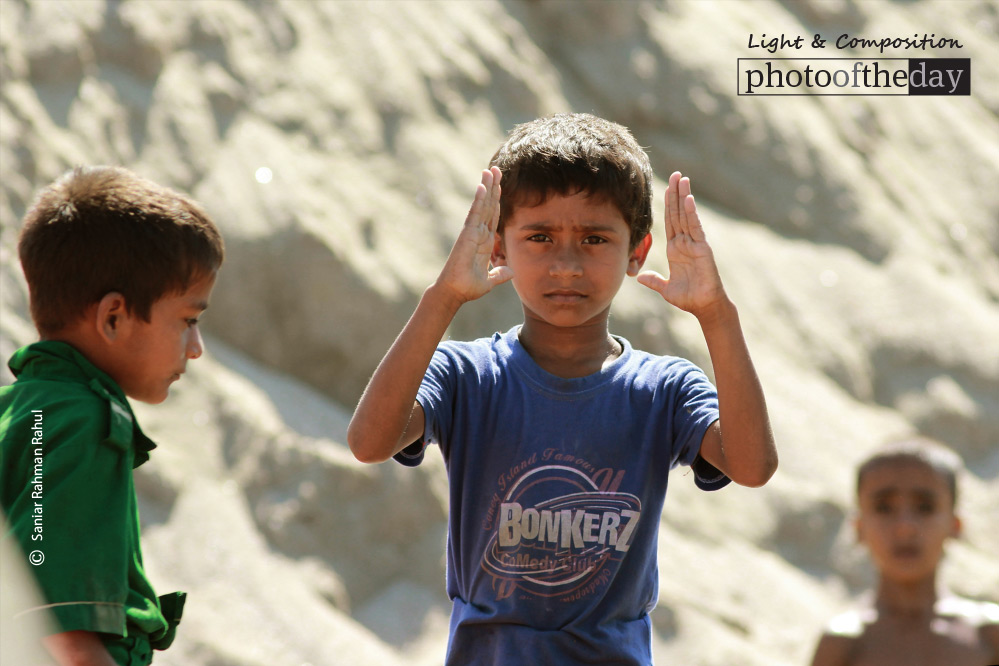
Captured in the expansive wetlands of Tanguar Haor, this image documents a spontaneous moment where children transformed into performers upon noticing the camera. The photographer expertly utilized a 300mm lens to maintain a respectful distance, allowing the subjects to remain immersed in their playful, self-conscious acting. The composition highlights the intersection of childhood innocence and the performative nature of being observed. This photograph is award-worthy for its authentic portrayal of human behavior within a vital, remote ecosystem, demonstrating a keen eye for capturing fleeting, unscripted narratives that define the spirit of documentary photography.
Saniar Rahman Rahul
Based in Dhaka, Bangladesh, Saniar Rahman Rahul is an accomplished Art Director and photographer whose creative journey began in childhood while observing his father’s work. After establishing a successful career in graphic design and advertising with global agencies like Grey Worldwide, he rediscovered his passion for photography in 1997. His work is characterized by a deep commitment to documentary storytelling, often focusing on the human condition within the unique landscapes of his home country. A recognized talent, Rahul has been honored with multiple photography awards for his evocative and technically precise imagery.
Resonance Score Breakdown
Transparency Note: The resonance score (13.4/20) is calculated based on social engagement metrics collected before the award announcement.
Expert Photography Reviews · 3
The Stage of Childhood
I remember a dusty alleyway in Marrakech where three boys suddenly stopped their game of marbles the moment they saw me. They didn't run; instead, they straightened their shirts, puffed out their chests, and began to march with the exaggerated seriousness of soldiers on parade.
Read the reflection →The Stage of Open Air
We are all born with a theater inside us, a small, private stage where we rehearse the people we might become. Before the world teaches us to be guarded, we try on masks as easily as we pull on a shirt.
Read the reflection →Reviews & Comments
Share your thoughts about this award-winning photograph. Your reviews contribute to the community engagement score.
This photography shows a common experience every Travel Photographer faces when “shooting”. Kids want to take part in your performance actively. Therefore they try to play the roles and making jokes of your presence in their village. That is a perfect and convenient situation for the photographer because he can catch the real contact with local hooligans and show his distanced approach to his work and just treat it as a kind of play with kids … and doing pictures. I experienced the same when exploring Flores Island in Indonesia.
The wetlands of Tanguar Haor aren’t merely a backdrop; they’re a void where these children perform their own existence. By pulling them from the distance with a long lens, Rahul forces a confrontation between the observed and the observer. It’s haunting. I’ve felt that same heavy silence in a Tarkovsky frame. The shadows here don’t hide the subjects; they anchor their fleeting play against the encroaching dark, proving that even innocence must eventually negotiate with the abyss.
The frame snaps open. It’s a wide shot of pure kinetic energy, caught at 300mm. The compression flattens the wetlands, forcing the children into a tight, theatrical ensemble. They aren’t just playing; they’re performing for an audience of one. I’ve spent years watching actors find their light, but these kids find it instinctively. It’s a beautiful, unscripted cut. The shutter speed freezes the chaos perfectly. I’d give anything to have been standing there in that humid, golden air.
The 300mm compression flattens the Tanguar Haor horizon into a rigid, horizontal band. It’s a precarious balancing act. The subjects occupy the lower third, their gestures creating a jagged, rhythmic counterpoint to the stillness of the water. The negative space above them is heavy, almost suffocating. It doesn’t collapse, though. I’m genuinely unsettled by how the frame traps their performance. The geometry holds the chaos in check. It’s a disciplined, architectural triumph of the lens.