Barking 2 by Keith Goldstein
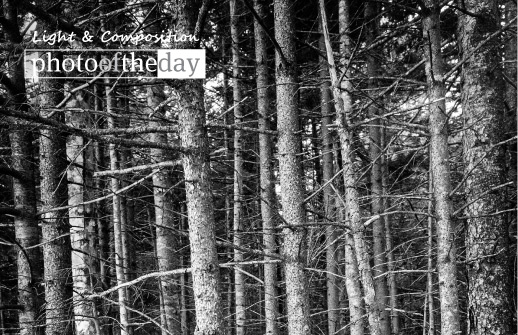
Captured within the rugged, atmospheric landscapes of Acadia National Park, Barking 2 serves as a poignant homage to the photographer’s mentor, Tad Yamashiro. The image reflects a deep commitment to the emotional interior, moving beyond mere technical execution to explore the intangible space between the viewer and the frame. By utilizing the subtle, emotive qualities of the Fujifil X100T, the photographer distills the raw essence of the Maine wilderness into a singular, evocative moment. This work stands as a testament to the power of unencumbered, intuitive photography, where the artist’s personal truth is laid bare through a masterful balance of composition and soulful restraint.
Keith Goldstein
Born in Brooklyn in 1957, Keith Goldstein is a distinguished fine art photographer and educator based in Hamilton Heights, New York City. After earning his BFA from the School of Visual Arts and an MFA from the Cranbrook Academy of Art, he developed a signature emotive style defined by simplicity and a rejection of technical clutter. With an extensive exhibition history dating back to 1980, his work has been featured in numerous international publications and media outlets, reflecting a lifelong dedication to using the camera as a tool for profound personal and creative exploration.
Resonance Score Breakdown
Transparency Note: The resonance score (12.3/20) is calculated based on social engagement metrics collected before the award announcement.
Expert Photography Reviews · 6
The Texture of Silence
I spent this morning trying to peel a stubborn label off a glass jar. My fingernails were sore, and the paper kept tearing into tiny, useless strips. I eventually gave up and left it sitting on the counter, half-covered in jagged bits of white.
Read the reflection →The Texture of Time
I remember sitting on a porch in Maine with an old carpenter named Elias. He spent the better part of an hour running his thumb over the grain of a cedar plank, tracing the knots and the scars left by a harsh winter. He told me that wood doesn't just grow; it remembers.
Read the reflection →Reviews & Comments
Share your thoughts about this award-winning photograph. Your reviews contribute to the community engagement score.

1/60sec at f/5.6, ISO 1250, 19mm. It’s a strange compromise. The shutter speed is sluggish for handheld work, yet the ISO is unnecessarily high for a static landscape. Why the noise? It’s a technical failure that muddies the texture of the bark. I’ve spent years staring at sensors, and this grain feels like a missed opportunity for clarity. It’s not emotive; it’s just sloppy. Goldstein had the light, but he didn’t respect the physics.
You waited for the light to hit that bark just right, didn’t you? There’s a quiet ache in this frame that hits me in the chest. It’s not just a tree; it’s a memory of your mentor, and I can feel that weight in the texture. Because you didn’t rush the shutter, the silence of Acadia actually made it onto the sensor. You’ve captured something deeply personal here. It’s honest work, and I respect that.
Stripped of chromatic distraction, one finds a monochromatic symphony where the silver-grey of Maine’s granite meets the charcoal depths of a storm-bruised sky, evoking the quiet, dusty stillness of a Morandi still life. It’s a haunting, tactile silence that I’ve felt only in the deepest woods; the tonal gradation here doesn’t merely describe the bark, it breathes, pulling one into a melancholic, velvet-shadowed embrace that feels profoundly, achingly intimate against the cold, northern light.
In Acadia, Goldstein doesn’t just frame trees; he interrogates the void. The shadows here aren’t mere absences, but heavy, tectonic shifts of silence that swallow the light. It’s a brutal, honest confrontation with the dark. I’ve stared at these textures until my eyes ached, feeling the cold Maine air bite through the grain. It’s a lonely, necessary work. When the light fails, the image finally begins to think. It’s a haunting, beautiful refusal to be seen.
Before the eye identifies the texture of the Maine bark, something in my chest tightens. It’s a sudden, sharp stillness. Goldstein’s frame doesn’t just capture a tree; it forces a physiological pause, a held-breath moment that feels like grief. When I return to it, the shadows seem deeper, more insistent. I’ve found myself thinking of it at night. It’s an ache I can’t quite name, a quiet, visceral pull toward the cold, dark woods.
The Maine coast doesn’t reveal itself to the hurried. Keith stood here in the cooling hour, waiting for the granite to breathe. It’s a quiet, monochromatic surrender to the fog. I’ve felt that same stillness, where the shutter click feels like an intrusion on the silence. He didn’t force the light; he simply let the landscape settle into the frame. It’s a rare, honest conversation between a man and the stones he calls home.