Still Three by Morris Hilarian
During an afternoon excursion dedicated to street photography, the photographer sought to capture a sense of profound stillness amidst the urban landscape. Discovering a set of water supply pipe meters tucked away in a quiet, lonely back alley, the photographer utilized the deliberate pace of analog medium format to frame the scene. The resulting image is a masterclass in composition, transforming mundane industrial infrastructure into a contemplative study of texture and light. Its award-worthy quality lies in the photographer's ability to find beauty in overlooked corners, elevating a simple utilitarian subject into a poignant, monochromatic narrative of urban isolation.
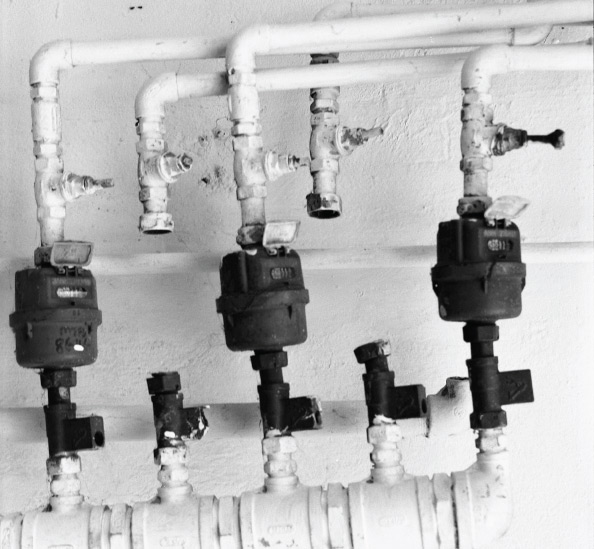
Exposure 1/125sec @ f/3.8 | ISO 100 | Focal Length 90mm
Morris Hilarian
Born in North Borneo, Malaysia, in 1987, Morris Hilarian balances a professional career as a biochemist with a deep-seated passion for analog photography. After beginning his journey with plastic cameras in 2010, he transitioned to serious film work, mastering the use of the Nikon FM2n and the Mamiya RB67 Pro S. Hilarian is highly regarded for his commitment to the craft, including the meticulous development of his own black-and-white negatives. His work reflects a belief that experience is earned through persistent practice and a constant exploration of new techniques.
Resonance Score Breakdown
Transparency Note: The resonance score (13.4/20) is calculated based on social engagement metrics collected before the award announcement.
Expert Photography Reviews · 7
The Architecture of Waiting
There is a peculiar dignity in things that are left to wait. We tend to value the active, the moving, the things that demand our immediate attention with their noise or their color.
Read the reflection →The Quiet Utility of Things
I remember walking through a back alley in Marseille, looking for a shortcut to the port. The main streets were loud, filled with the smell of diesel and the shouting of vendors, but here, the city seemed to hold its breath.
Read the reflection →Reviews & Comments
Share your thoughts about this award-winning photograph. Your reviews contribute to the community engagement score.
You chose a heavy Mamiya to photograph water meters in a back alley. That’s a deliberate, quiet choice. I’ve spent enough time in alleys to know they’re usually places we rush through, but you stopped. And because you slowed down, you found a rhythm in those pipes. It’s lonely, sure, but it’s honest. I felt a sudden, sharp pang of solitude looking at this. You didn’t just document infrastructure; you captured the silence of being alone.
Most entries in this category rely on high-contrast drama to mask a lack of substance. Hilarian’s work succeeds because he respects the silence of these pipes. The deliberate, boxy framing of the Mamiya forces a stillness that digital snapshots simply can’t replicate. I felt a genuine, quiet ache looking at those rusted meters; it’s a rare moment of industrial decay that feels permanent. In thirty years, this won’t be dated—it’ll be a document of a vanishing, lonely world.
Before the eye identifies the pipes, a sudden stillness settles in the chest. It’s a rhythmic, mechanical silence that slows my pulse. I’ve returned to these rusted meters three times this week, and each time, the shadows feel heavier, pulling me into that lonely Kota Kinabalu alley. It doesn’t just show infrastructure; it triggers a phantom thirst. I feel a strange, hollow ache in my throat—the quiet weight of things left behind, waiting for someone.
The vertical axis here is anchored by the rhythmic repetition of the pipe meters, creating a precise 1:2 ratio between the metallic foreground and the receding alley. I’m struck by how the diagonal shadows slice the frame, effectively balancing the negative space against the dense, industrial textures. It’s a beautifully solved spatial equation. The geometry forces the eye into a meditative loop; I’ve rarely seen such mundane infrastructure resolve into such perfect, silent equilibrium.
The alley doesn’t clamor. It waits. Three meters sit against the concrete, anchored in shadow. I’ve spent minutes looking at the negative space between the pipes. It’s heavy. It’s quiet. I feel a sudden, sharp ache for this kind of solitude in my own life. Nothing here is accidental. The empty corner is not empty. It’s a breath held in the heat of Kota Kinabalu. Hilarian trusts the silence. I’m grateful he didn’t fill it.
The frame holds its breath. It’s a locked-off shot, static and heavy with the weight of industrial silence. Hilarian didn’t just find these pipes; he framed the exact moment the alley stopped moving. I’ve spent hours staring at these textures, and honestly, it makes me want to reach out and touch the cold, rusted metal. The 90mm lens keeps the depth tight, refusing to cut away. It’s the perfect, lonely establishing shot for a film that never happened.
Dragging a Mamiya RB67 into a back alley for water meters is a peculiar sort of penance. Most would have snapped a digital frame and moved on, but Hilarian clearly lingered until the light stopped fighting him. I’ve spent enough hours staring at rust and concrete to know when someone’s actually looked. It’s quiet, deliberate, and frankly, it makes my own knees ache just thinking about the setup. He earned this stillness. It’s quite good.