Three Fishermen by Saniar Rahman Rahul
Captured in the vast expanse of Hakaluki Haor, Bangladesh, this evocative image documents the daily struggle of local fishermen as winter wanes. The photographer frames the trio against the stark, marshy landscape, highlighting the resilience of a community living on land that only emerges from the water during the coldest months. By focusing on the rhythmic movement of the men toward the water, the image captures a poignant intersection of human labor and environmental fragility. This photograph is award-worthy for its masterful use of natural light and its ability to transform a challenging, remote existence into a compelling visual narrative of survival.
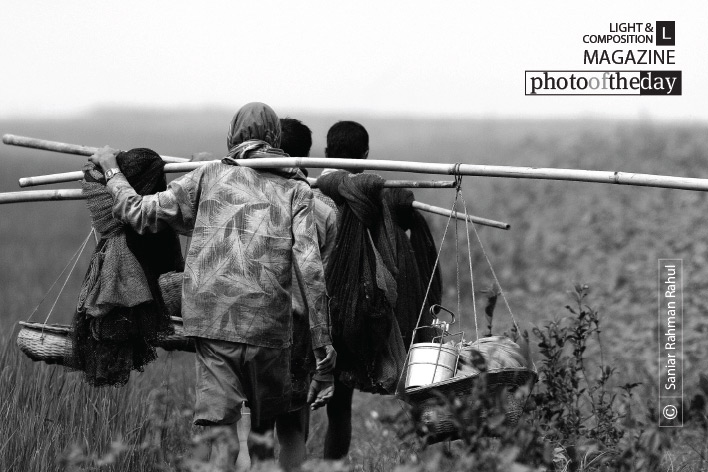
Saniar Rahman Rahul
Saniar Rahman Rahul is a dedicated photographer based in Bangladesh, known for his insightful documentation of the country's diverse landscapes and the resilient communities that inhabit them. His work frequently explores the intimate relationship between people and their environment, particularly in the remote marshlands of the region. Through a lens that balances cultural storytelling with artistic composition, Rahul captures the essence of daily life in areas often overlooked by the mainstream, earning recognition for his ability to convey profound human narratives in challenging natural settings.
Resonance Score Breakdown
Transparency Note: The resonance score (12.8/20) is calculated based on social engagement metrics collected before the award announcement.
Expert Photography Reviews · 6
The Weight of the Water
The horizon is not a line, but a promise of depth. We spend our lives standing on the edge of things, looking into the gray, waiting for the surface to tell us what lies beneath.
Read the reflection →The Rhythm of the Tide
We are all tethered to the pulse of a landscape, moving in time with the slow, deliberate breathing of the earth. There is a quiet dignity in the way a person leans into their work, as if they are not merely laboring, but participating in a conversation with the mud and the mist.
Read the reflection →Reviews & Comments
Share your thoughts about this award-winning photograph. Your reviews contribute to the community engagement score.
The flat, grey light of the Haor doesn’t just illuminate; it humbles. I feel a sudden, sharp chill in my bones looking at these three figures. They’ve walked into the vast, receding marshland, moving with a rhythm that isn’t theirs, but the water’s. It’s a quiet surrender. He stood here in the cooling hour, waiting for the land to exhale. It’s not a struggle I’m watching, but a slow, sacred return to the deep mud.
The horizon line cuts the frame. It’s a thin, sharp divide. Three figures walk toward the water, yet they don’t arrive. They remain suspended in the grey. I’ve spent minutes watching them, and I feel a sudden, sharp ache in my chest. The vastness isn’t just landscape. It’s a breath held. Nothing here is accidental. The empty corner is not empty. It’s the weight of the silence they carry into the marsh.
Before the eye identifies the figures, a sudden stillness settles in the chest. The vast, empty horizon of Hakaluki Haor pulls the breath thin, mirroring the cold, marshy isolation of these men. I’ve found myself returning to their rhythmic, trudging silhouettes; they don’t just walk, they anchor the void. It’s a quiet, aching weight that follows me into sleep. I feel the damp chill of that water in my own bones, long after looking away.
Stripped of chromatic distraction, one finds the tonal range here evokes the dusty, melancholic greys of a Morandi still life, where the silvered light of the Hakaluki Haor clings to the fishermen’s skin like damp silk. It’s a haunting, monochromatic ache that I’ve felt deep in my marrow; the way the shadows bleed into the marshy horizon makes me yearn for the tactile weight of those winter mists, suspended in a fragile, breathless equilibrium.
The horizontal expanse of the Haor dictates the frame. It’s a rigid geometry. The three figures act as a fulcrum, anchoring the vast, empty negative space of the water. Their rhythmic placement creates a necessary tension against the horizon line. I’ve rarely seen such disciplined use of the picture plane. It doesn’t rely on sentiment; it relies on the weight of the subjects. The composition holds. It’s a cold, precise architecture of survival.
One can smell the damp silt and the biting chill of the Haor just looking at this. It’s clear Rahul didn’t just stumble upon these men; he’s stood in that muck long enough to earn their trust and the light. I’ve spent enough mornings shivering in waders to recognize the patience required here. It’s a quiet, brutal sort of beauty. He didn’t just take a picture; he waited until the landscape finally let him in.