Heaven on Earth by Avi Chatterjee
Captured in the lush, unexpected oasis of Salalah, this photograph masterfully contrasts the arid desert landscape with vibrant greenery. By utilizing a long exposure of 2.5 seconds, the photographer smoothed the coastal waters and emphasized the dramatic textures of the shoreline. The choice of a wide 26mm focal length captures the vast, breathtaking scale of the region, where hills meet the sea. This image is award-worthy for its technical precision and its ability to transform a Middle Eastern desert into a serene, ethereal heaven, inviting viewers to experience the tranquil beauty of this unique geographical intersection.
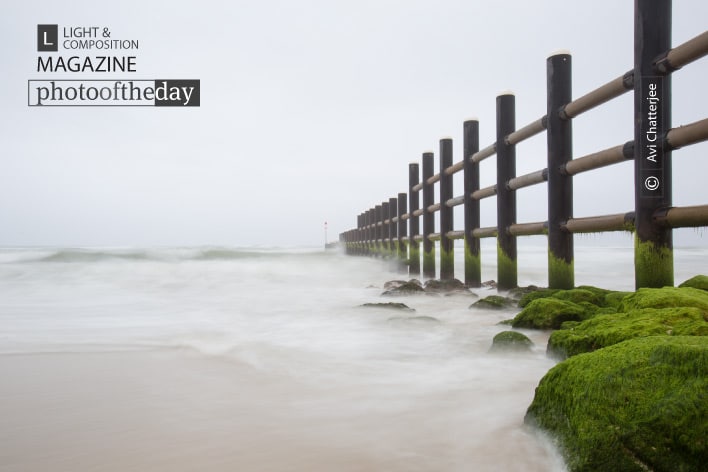
Exposure 2.5sec @ f/22 | ISO 100 | Focal Length 26mm
Avi Chatterjee
Born in Kolkata, India, Avi Chatterjee is a Dubai-based photographer and technical sales consultant who transitioned from engineering to professional photography. Inspired by his wife’s artistic background, he founded his studio, Time Machine Works, to pursue his passion for macro, wedding, and commercial photography. His work reflects a blend of technical discipline and creative exploration, driven by a desire to capture the world’s hidden beauty through the lens.
Resonance Score Breakdown
Transparency Note: The resonance score (12.9/20) is calculated based on social engagement metrics collected before the award announcement.
Expert Photography Reviews · 7
Where the Earth Breathes
We often mistake the desert for a place of silence, forgetting that even the most arid stone has a memory of rain. There is a secret language in the way the land holds its breath, waiting for the mist to soften the sharp edges of the horizon.
Read the reflection →Where the Green Meets Gold
I was walking home from the market this morning when I stopped to watch a patch of weeds growing through a crack in the sidewalk.
Read the reflection →Reviews & Comments
Share your thoughts about this award-winning photograph. Your reviews contribute to the community engagement score.
2.5sec at f/22, ISO 100, 26mm. Diffraction is the enemy here. Stopping down to f/22 on a 5D Mark III softens the fine detail in the foliage, a mistake I find physically painful to look at. The long exposure smooths the water, but the loss of sharpness across the frame is a high price for a gimmick. It’s technically lazy. The composition works, but the optics have been compromised by poor aperture management.
Salalah’s green hills shouldn’t exist, yet here they are, clinging to the edge of an abyss. Chatterjee’s long exposure turns the sea into a shroud, a flat, grey silence that refuses to breathe. It’s technically precise, sure, but it’s terrified of the dark. I’ve spent hours staring at these rocks, waiting for a shadow to reveal the earth’s true weight. Instead, it’s all light, all surface. It doesn’t think; it only poses. It’s beautiful, but hollow.
Of the thousands of landscapes I’ve reviewed, most rely on tired sunsets. What separates this from the pack is the restraint in that 2.5-second exposure. It doesn’t just blur the water; it turns the shoreline into a quiet, velvet anchor for the lush hills above. I’ll admit, it made me ache to stand there. It’s a rare, enduring capture of Salalah’s paradox, proving that true serenity isn’t found in spectacle, but in perfect, balanced stillness.
At f/22, Chatterjee’s choice invites the diffraction limit, softening the micro-contrast of the Salalah foliage. It’s a calculated trade-off; the 2.5-second exposure turns the surf into a viscous, ethereal veil, smoothing the coastal turbulence into a laminar flow. I’m genuinely moved by how the lens resolves the transition from arid rock to verdant life. While the diffraction softens the finest details, the resulting atmospheric serenity feels like a dream I’ve had, rendered in light.
The verdant, mossy greens of Salalah collide with the bruised, violet-grey of the tidal foam, creating a chromatic tension that reminds one of Turner’s tempestuous coastal studies. It’s a lush, humid alchemy; the way the light clings to the damp rocks makes my heart ache for that cool, salt-heavy air. One doesn’t merely see this landscape, one inhales the saturated, emerald-drenched atmosphere that Chatterjee has coaxed from the desert’s edge with such exquisite, painterly patience.
The horizon line holds the weight here. It’s a thin, sharp division between the blurred tide and the rising hills. I’ve spent minutes watching that gray expanse of water. It doesn’t demand attention. It simply exists. The stillness in the frame is a relief. I feel my own breath slow down just looking at it. Nothing here is accidental. The empty corner is not empty. It’s a pause. A rare, quiet grace in Salalah.
Salalah’s green hills don’t just meet the sea; they surrender to it. Avi waited for the light to soften, letting the 2.5-second exposure turn the tide into a ghostly, velvet breath. It’s a quiet miracle. I’ve stood in such places, feeling the humidity cling to my skin, and I can almost hear the silence he captured here. He didn’t force the scene. He simply listened until the land finally whispered its secret, ethereal peace to him.
So beautiful!!!