Vigil by Don Peterson
Captured from a vantage point overlooking a steep, 300-step stairway, this photograph evokes the haunting history of Point Reyes. The photographer utilized a tripod to stabilize the frame, carefully composing the shot to capture the rugged, unforgiving nature of the coastline where countless mariners met their fate before the lighthouse was established in 1870. The image serves as a solemn vigil over the Gulf of the Farallones, balancing the stark, industrial geometry of the cyclone fence with the vast, treacherous beauty of the sea. It is an award-worthy study in atmosphere, transforming a historical maritime graveyard into a poignant visual narrative.
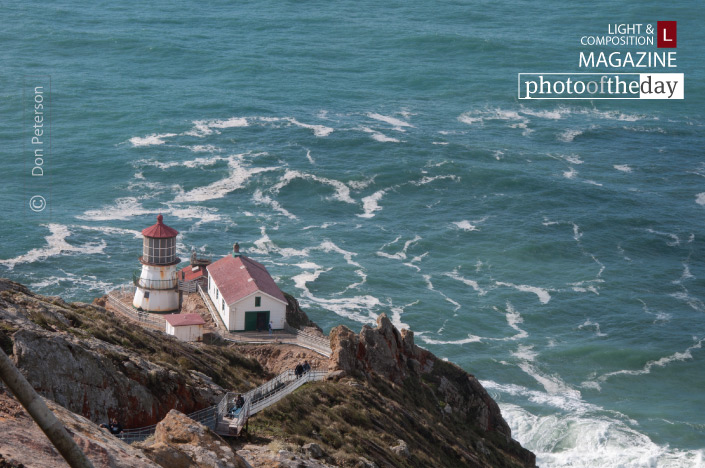
Exposure 1/160sec @ f/16 | ISO 200 | Focal Length 62mm
Don Peterson
Based in Rio Vista, California, Don Peterson is a dedicated photographer whose lifelong passion was reignited following a career as an industrial mechanic. After earning a BA in Photography from Columbia College Chicago at the age of 63, he embraced a nomadic lifestyle, traveling extensively across the United States to document diverse landscapes and experiences. His work reflects a deep commitment to the craft, shaped by decades of evolution from early film experimentation to his current digital practice, consistently seeking to capture the profound stories hidden within the American terrain.
Resonance Score Breakdown
Transparency Note: The resonance score (0.5/20) is calculated based on social engagement metrics collected before the award announcement.
Expert Photography Reviews · 5
The Weight of the Watch
There is a quiet dignity in standing guard over a place that has seen the turning of many tides. To watch is not merely to look; it is to offer one’s presence to the history of a landscape.
Read the reflection →The Weight of the Watch
There is a particular kind of silence that belongs only to the edge of the world. It is not the absence of sound, but rather a heavy, pressurized stillness that seems to accumulate where the solid earth finally admits defeat to the water.
Read the reflection →Reviews & Comments
Share your thoughts about this award-winning photograph. Your reviews contribute to the community engagement score.
Most entries this year relied on the lighthouse itself, but Peterson’s choice to focus on the cyclone fence is what won me over. It’s a cold, industrial barrier that forces the eye to acknowledge the danger below. I felt a genuine shiver looking at those rusted links against the churning grey abyss. It’s not just a landscape; it’s a reminder of human fragility. In thirty years, this stark, uncomfortable geometry will still hold its haunting, quiet power.
At f/16, the diffraction limit begins to soften the finer textures, yet here it serves the atmosphere. The lens resolves the cyclone fence’s geometry with clinical precision, contrasting against the chaotic, fluid motion of the Gulf. I’m genuinely moved by how the focal plane anchors that industrial wire against the infinite, churning sea. It’s a rare moment where the optics don’t just record the scene; they translate the cold, unforgiving physics of the Farallones into pure, haunting poetry.
The salt air clings to these iron wires. I’ve stood on such cliffs, feeling the weight of the Pacific’s indifference. Peterson didn’t just frame a staircase; he waited for the light to turn cold, matching the ghosts of the Farallones. It’s a heavy, quiet ache in my chest looking at it. He didn’t rush the shutter. He let the sea dictate the rhythm, capturing the exact moment the land surrendered to the encroaching, grey silence.
The cyclone fence cuts through the frame like a jagged, industrial scar, refusing to let the eye settle on the horizon. It’s a brutal, necessary obstruction. I’ve stared at these stairs for an hour, feeling the cold salt air bite into my own skin. Peterson understands that the sea isn’t a backdrop; it’s a hungry, dark abyss. By obscuring the light, he forces us to confront the silence of the drowned. It’s haunting, and honestly, it terrifies me.
The fence cuts the frame. It’s a sharp, cold line against the gray expanse. I feel a sudden chill looking at the water. It’s vast. It’s indifferent. Peterson doesn’t ask us to look at the lighthouse. He asks us to look at the space between the wire and the horizon. Nothing here is accidental. The empty corner is not empty. It’s a breath held in the salt air. I’ve never felt the silence quite like this.