Their Shadows by Abdellah Azizi
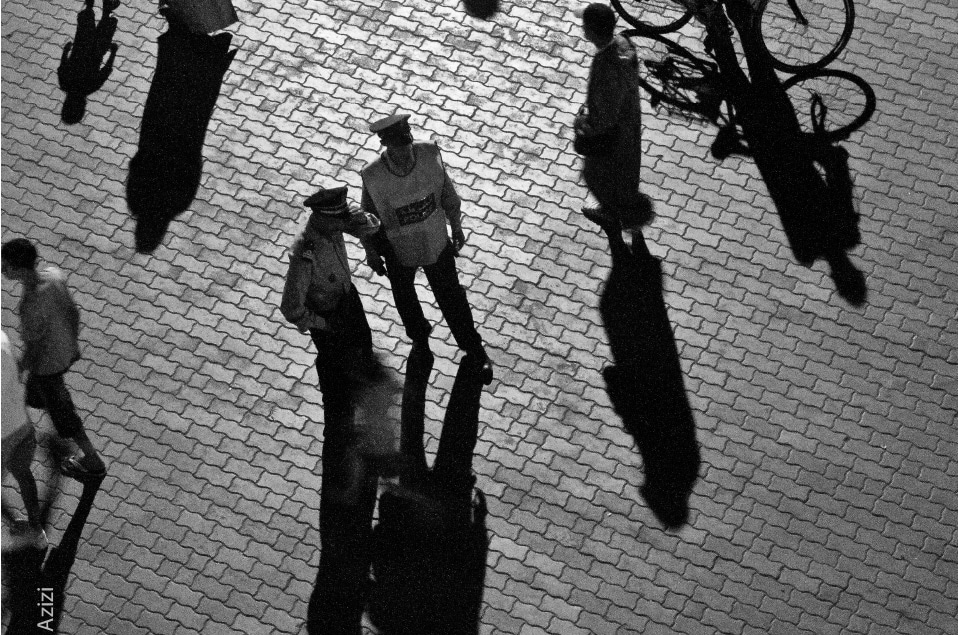
Captured during a music concert, this striking black and white photograph centers on two policemen standing beneath the harsh, dramatic glow of a streetlight. The photographer patiently waited for a passerby with a bicycle to enter the frame, successfully introducing a sense of movement and dynamic tension against the static figures. This deliberate timing transforms a routine scene into a compelling narrative of urban life. The image is award-worthy for its masterful use of light and shadow, which creates a cinematic atmosphere and highlights the photographer’s keen ability to find profound, fleeting moments within a bustling public environment.
Abdellah Azizi
Born in Ouarzazate in 1987, Abdellah Azizi is a Moroccan photographer deeply inspired by the landscapes, folklore, and vibrant daily life of his home region. After formal training in lighting, grip techniques, and audio-visual post-production, he transitioned from a career in film and videography into the world of photography. Azizi is celebrated for his evocative work, which he pursues with a profound sense of creative freedom, capturing the unique spirit of the African continent through his lens.
Resonance Score Breakdown
Transparency Note: The resonance score (12.3/20) is calculated based on social engagement metrics collected before the award announcement.
Expert Photography Reviews · 7
The Weight of Being Seen
I was walking home from the grocery store this evening when I noticed a man standing perfectly still under a streetlamp. He wasn't doing anything in particular, just waiting, but the way the light hit him made him look like a statue carved out of the night.
Read the reflection →The Weight of Passing
We often mistake stillness for an absence of life, believing that to be quiet is to be removed from the world. Yet, there is a profound rhythm in the way we move through the spaces others have carved out for us.
Read the reflection →Reviews & Comments
Share your thoughts about this award-winning photograph. Your reviews contribute to the community engagement score.
You waited for that cyclist, and it paid off. The static weight of those two policemen against the fleeting motion of the bike creates a real tension. It’s not just about the light; it’s about the rhythm of a night in Ouarzazate. I felt a sudden, sharp loneliness looking at those long shadows. You didn’t just snap a frame; you caught the pulse of the street. There’s something honest happening here. Good work.
The streetlamp’s harsh, artificial sun carves these men from the Ouarzazate night. I’ve spent enough hours in the dark to know the stillness they held before the cyclist arrived. It’s a heavy, expectant silence. When that bicycle blurred into the frame, it didn’t just add movement; it broke the spell of the shadows. I feel a strange, quiet ache looking at it—the way light reveals our solitude even when we’re standing right next to each other.
Stripped of pigment, one finds the monochromatic spectrum here isn’t merely grey, but a velvet charcoal that swallows the Ouarzazate night. It’s the ink-wash of a Morandi still life, where the streetlight’s harsh, clinical glare bleeds into the shadows like spilled milk. I’m breathless at how the bicycle’s blur cuts through that static, obsidian gloom; it’s a haunting, silver-toned vibration that makes the silence of those two officers feel heavy, almost suffocatingly profound.
The harsh streetlight flattens these policemen into symbols of authority, but why does the cyclist feel like an intruder? I find the power dynamic here deeply unsettling. Azizi captures the tension of surveillance, yet he leaves the subject’s agency in the dark. Does the bicycle represent freedom or just another obstacle for the state to monitor? It’s a slick composition, sure, but I can’t shake the feeling that we’re watching a performance of control.
Ouarzazate’s harsh sodium glare echoes the high-contrast drama of Bill Brandt’s nocturnal London, yet Azizi’s geometry feels distinctly modern. The bicycle’s blur disrupts the static authority of the policemen, a tension reminiscent of Cartier-Bresson’s decisive moments, but with a sharper, contemporary edge. I’ve spent decades tracing these silhouettes, yet the way the light carves those figures against the void genuinely stopped me. It’s a rare, rhythmic collision of history and the fleeting, kinetic present.
The streetlight in Ouarzazate doesn’t illuminate; it interrogates. Those two policemen are anchored in a void, their authority dissolving into the ink of the Moroccan night. When that bicycle enters the frame, it’s not just movement—it’s a ghost haunting the static weight of the law. I’ve stared at this darkness for an hour, and it’s unsettling. It’s a reminder that we’re all just fleeting silhouettes, desperately trying to outrun the shadows we cast.
There’s a cold distance here. While the geometry of the shadows and the bicycle’s blur are technically sharp, the policemen remain anonymous silhouettes. They’re just props in a scene, not people. I’ve spent my life looking for the spark of a soul in a frame, but here, there’s no invitation. It’s a well-composed snapshot, sure, but it doesn’t reach out. I find myself wishing the photographer had stepped closer to ask who they really are.