The Shadow by Moslem Azimi
In The Shadow, Moslem Azimi explores the transformative power of light and silhouette, capturing a moment where reality is distilled into a painterly form. By focusing on the interplay between the subject and its shadow, the photographer creates a visual narrative that blurs the line between the tangible and the dreamlike. The image is award-worthy for its minimalist aesthetic and the clever use of negative space, which invites the viewer to look beyond the surface. Azimi’s technical decision to isolate the subject highlights the inherent beauty found in simple, dark contrasts, resulting in a compelling and evocative composition.
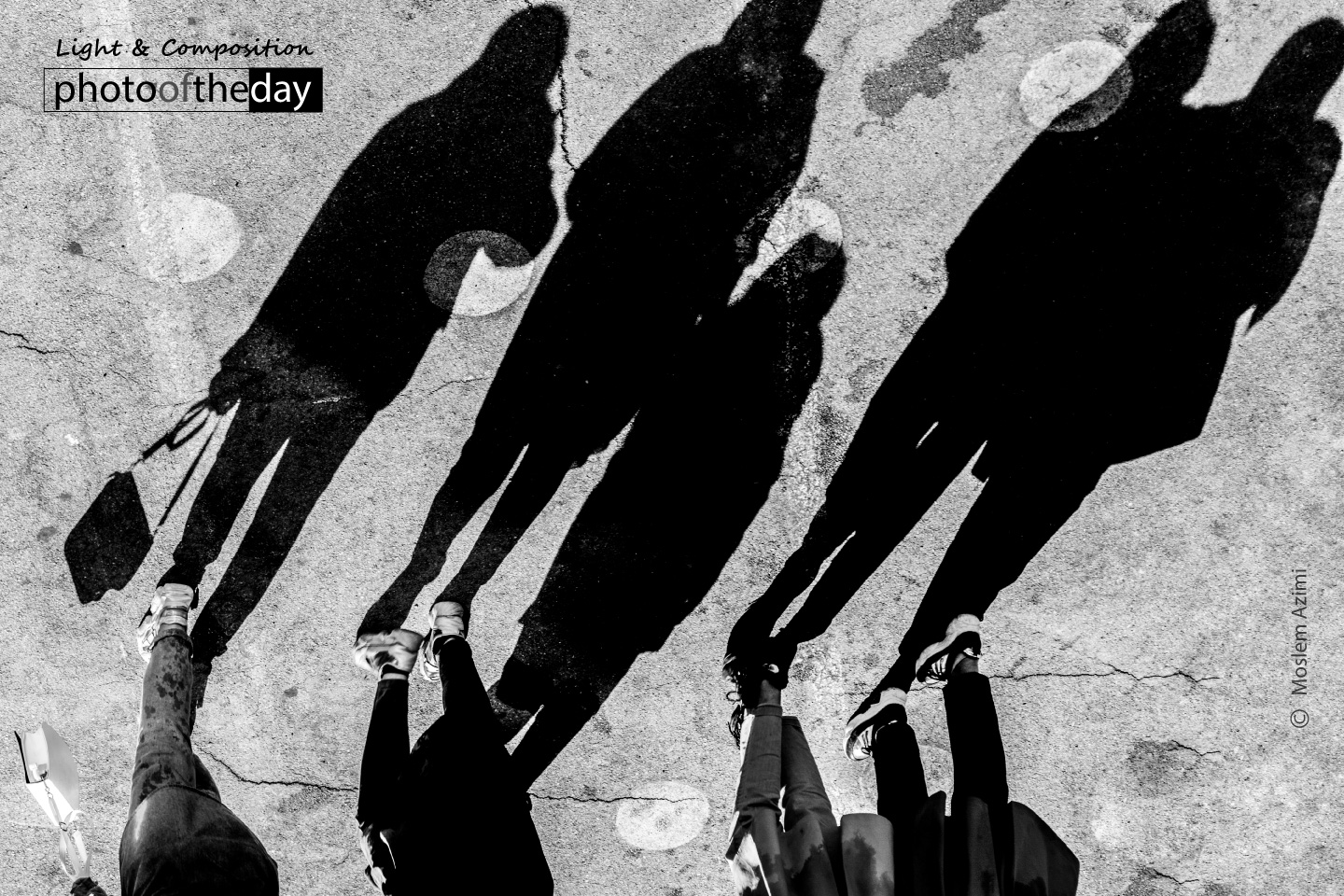
Exposure 1/200sec @ f/7.1 | ISO 100 | Focal Length 95mm
Moslem Azimi
Of Kurdish origin and currently based in Melbourne, Australia, Moslem Azimi is a self-taught photographer who bridges the gap between cultural documentation and artistic expression. Holding a Bachelor of Arts in English Translation, he channels his passion for storytelling into capturing the traditions, lifestyle, and heritage of the Kurdish people. Through his active participation in national and international exhibitions, Azimi has established himself as a dedicated observer of human culture, consistently refining his craft to portray the depth and resilience of his subjects.
Resonance Score Breakdown
Transparency Note: The resonance score (11.7/20) is calculated based on social engagement metrics collected before the award announcement.
Expert Photography Reviews · 8
The Weight of a Trace
I remember sitting in a dusty cafe in Javanroud, watching a man walk past a sun-bleached wall. He didn't notice the shape he was casting, but I couldn't look away.
Read the reflection →The Weight of Absence
In the deep midwinter, when the sun hangs low and thin against the horizon, the shadows stretch across the snow with a startling, ink-black clarity. There is a particular stillness in this light, a meteorological honesty that strips away the clutter of the day.
Read the reflection →Reviews & Comments
Share your thoughts about this award-winning photograph. Your reviews contribute to the community engagement score.
Most entries this year relied on complex staging, but Azimi’s restraint is what lingers. By pinning the subject against that stark, textured wall, he forces us to confront the silhouette’s weight rather than the person’s identity. It’s a quiet, haunting geometry that feels timeless. I’ve stared at this for weeks, and it still makes my chest tighten. It’s not just a shadow; it’s a permanent record of a fleeting, fragile human presence in a vast space.
The light hits, and the frame locks. It’s a silhouette cut from the Javanroud dust, a single beat held in perfect tension. I’m struck by how the shadow stretches, pulling the subject into a dream state where movement feels suspended. The cut would’ve been a mistake; the negative space is the rhythm here. It’s a quiet, heavy frame that refuses to blink. I’ve seen a thousand shadows, but this one actually breathes. It’s pure cinema.
The frame’s geometry is tight, almost claustrophobic. That singular, elongated shadow anchors the composition, providing a necessary fulcrum against the stark, negative space of the wall. It’s a disciplined study in verticality. The tonality doesn’t waver; it’s precise, cold, and entirely intentional. I’ve rarely seen such aggressive restraint. It doesn’t need a narrative to justify its existence. The spatial tension holds perfectly. It’s a rare instance where the architecture of the frame actually commands my respect.
The street doesn’t care about your intentions, only your reflexes. Azimi caught this silhouette right as the geometry locked into place. It’s sharp, clean, and honest. One tenth of a second later and the shadow has moved, the frame has collapsed. I’ve spent years chasing this kind of silence in the chaos, and honestly, it makes me want to grab my camera and hit the pavement right now. That’s the decisive moment, plain and simple.
It’s easy to snap a silhouette, but catching the light just so requires a stubborn sort of patience. One suspects Azimi spent hours watching that wall, waiting for the sun to align perfectly with the subject’s stride. It’s a quiet, disciplined bit of work. I’ve stood in similar dust waiting for a shadow to lengthen, and it’s rarely as effortless as it looks here. He clearly didn’t rush this. It’s a proper, earned photograph.
We look at this silhouette in Javanroud and we aren’t just seeing a shape; we’re hearing a quiet confession. Moslem Azimi didn’t just point a lens; he waited for the light to reveal the person hiding behind the dark. It’s a haunting, painterly dance between presence and absence. I’ve stared at this shadow for hours, and it makes my chest ache with a strange, beautiful loneliness. This is a photograph that asks to be returned to.
Architecture is rarely about the object; it’s about the void it carves. In Javanroud, Azimi captures a threshold where light doesn’t just illuminate—it defines mass. That sharp, elongated shadow against the textured wall creates a datum that grounds the entire frame. It’s a rare, honest distillation of space. I’ve spent years studying how fenestration dictates our movement, but here, the absence of detail is what makes me ache to walk through that doorway myself.
The harsh, geometric light carving through Javanroud creates a stage where the architecture dictates the narrative. It’s not just a shadow; it’s a second, darker self emerging from the stone. I’m struck by how the wall’s texture anchors the figure, grounding this dreamlike silhouette in a very real, rugged place. Azimi understands that the environment isn’t just a backdrop—it’s the silent partner. It’s haunting, really. The space doesn’t just frame the subject; it defines their existence.