Bicycle Stand by Ryszard Wierzbicki
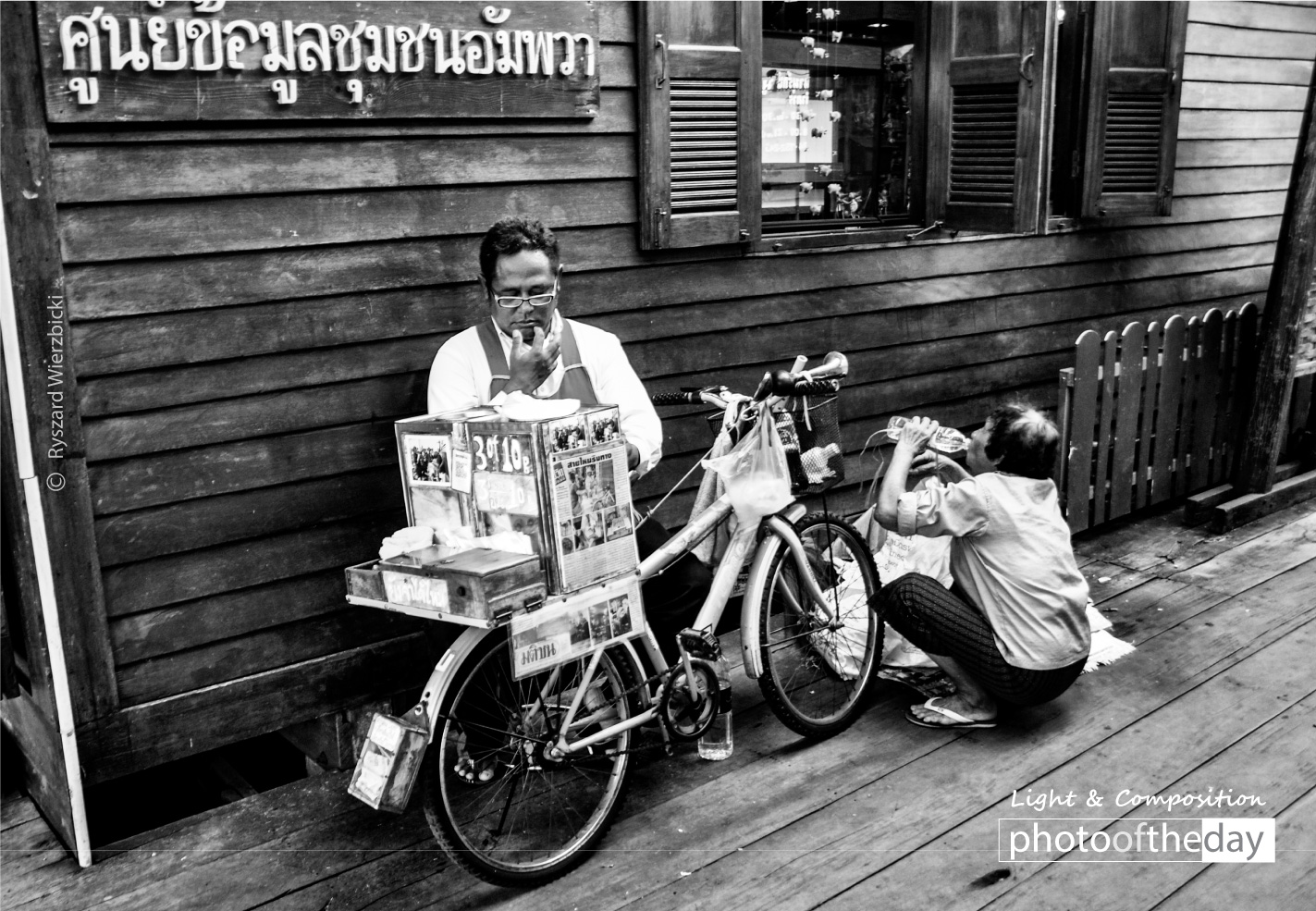
Captured at the vibrant Amphawa Floating Market, this image documents the intersection of traditional canal-side commerce and modern daily life. The photographer focuses on a modest bicycle stand, a humble vessel for local sweets and snacks set against the backdrop of historic wooden shopfronts. By isolating this small, functional detail, the image highlights the enduring charm of the Mae Khlong River’s tributaries. The composition is award-worthy for its ability to transform a fleeting moment of market activity into a timeless study of texture, culture, and the quiet, authentic rhythms of Thai waterfront life.
Ryszard Wierzbicki
Born in 1963 and a graduate of the University of Gdańsk, Ryszard Wierzbicki transitioned from a diverse career in social sciences and marketing to become a dedicated traveler and photographer after moving to the UK in 2006. He frequently explores South-East Asia, where he combines his passion for photography with volunteer work for orphanages. As the founder of the travel and photography forums Instant Travelling and World Around, Wierzbicki now balances his life as a self-employed marketing advisor and tour organizer, documenting the world through a lens shaped by his adventurous spirit and humanitarian commitment.
Resonance Score Breakdown
Transparency Note: The resonance score (11.7/20) is calculated based on social engagement metrics collected before the award announcement.
Expert Photography Reviews · 8
The Weight of the Stationary
Why do we feel the need to anchor ourselves to the earth, even when the world around us is in constant, fluid motion? We build structures, we park our burdens, and we mark our territory as if to convince the passing hours that we have truly been here.
Read the reflection →The Weight of Small Things
In the quiet corners of a house, we often find the objects that define us. A chipped mug, a stack of letters tied with twine, a bicycle leaning against a wall—these are not merely things. They are anchors.
Read the reflection →Reviews & Comments
Share your thoughts about this award-winning photograph. Your reviews contribute to the community engagement score.
Most entries in this category rely on the chaos of the market to hide a lack of focus. Wierzbicki does the opposite. By isolating the weathered bicycle stand, he forces us to confront the texture of daily survival. It’s the peeling paint against the dark, rhythmic wood that caught my eye—I felt a sudden, sharp pang of nostalgia for places I’ve never even visited. It’s a quiet, enduring anchor in a world that usually moves too fast.
The bicycle frame cuts the air. It’s a thin line against the wood. I’ve spent minutes watching the shadow stretch across the planks. It’s quiet here. The snacks are gone, yet the weight remains. Nothing here is accidental. The empty corner is not empty. It’s a breath held in the humidity of the market. I feel a sudden, sharp ache for the stillness. It’s rare to find such peace in the middle of a crowd.
We look at this bicycle stand and we don’t just see a rack for snacks; we see the quiet patience of a life lived by the water. It’s a portrait of a vendor who isn’t in the frame, yet their presence lingers in the worn textures of the wood. I feel a sudden, sharp ache for the stories whispered here. It’s a photograph that asks to be returned to, over and over again.
There’s a quiet dignity in how these sweets are arranged, but I find myself searching for the person behind the handlebars. It’s a clean study of a market, sure, yet it feels like a transaction rather than a conversation. I’m left wanting to know who pedaled this stand here. Where’s the soul? I’ve spent my life looking for the human pulse in a frame, and here, the bicycle is lonelier than it needs to be.
f/5.6 at 35mm, 1/125s, ISO 400. A sensible choice for a static subject in ambient light. The depth of field isolates the bicycle stand from the chaotic market background effectively. It’s a clean, clinical execution that respects the geometry of the wooden shopfronts. I’ve seen enough messy street shots to appreciate this restraint. The exposure is dead on. It doesn’t try to be more than it is, and that’s why it actually works.
Amphawa moves fast, but here, everything holds its breath. That bicycle stand isn’t just a prop; it’s the anchor. I love how the light hits those snacks against the weathered wood. It’s quiet, sure, but the timing is sharp. If Wierzbicki had waited one heartbeat longer, the rhythm would’ve broken. It’s a clean, honest slice of life. I’d have killed to be standing there when he caught that stillness. It’s perfectly, ruthlessly timed.
The focal plane here is razor-thin, isolating the bicycle’s weathered metal against the soft, out-of-focus bokeh of the market. I’m struck by how the lens resolves the oxidation on the frame; it’s a tactile, granular reality the naked eye usually glosses over. There’s no chromatic aberration to distract from the textures, just pure, sharp light hitting the grain. It’s honestly breathtaking how such a mundane stand becomes a monument to light when captured with this precision.
Shadows here don’t merely cling to the bicycle’s frame; they consume the market’s frantic commerce, turning snacks into relics of a vanishing stillness. It’s a heavy, suffocating silence that I find deeply unsettling. When light fails to penetrate those wooden crevices, we’re forced to confront the void beneath the surface. Wierzbicki doesn’t capture a market; he captures the weight of time itself, pressing down until only the dark, essential geometry of survival remains.