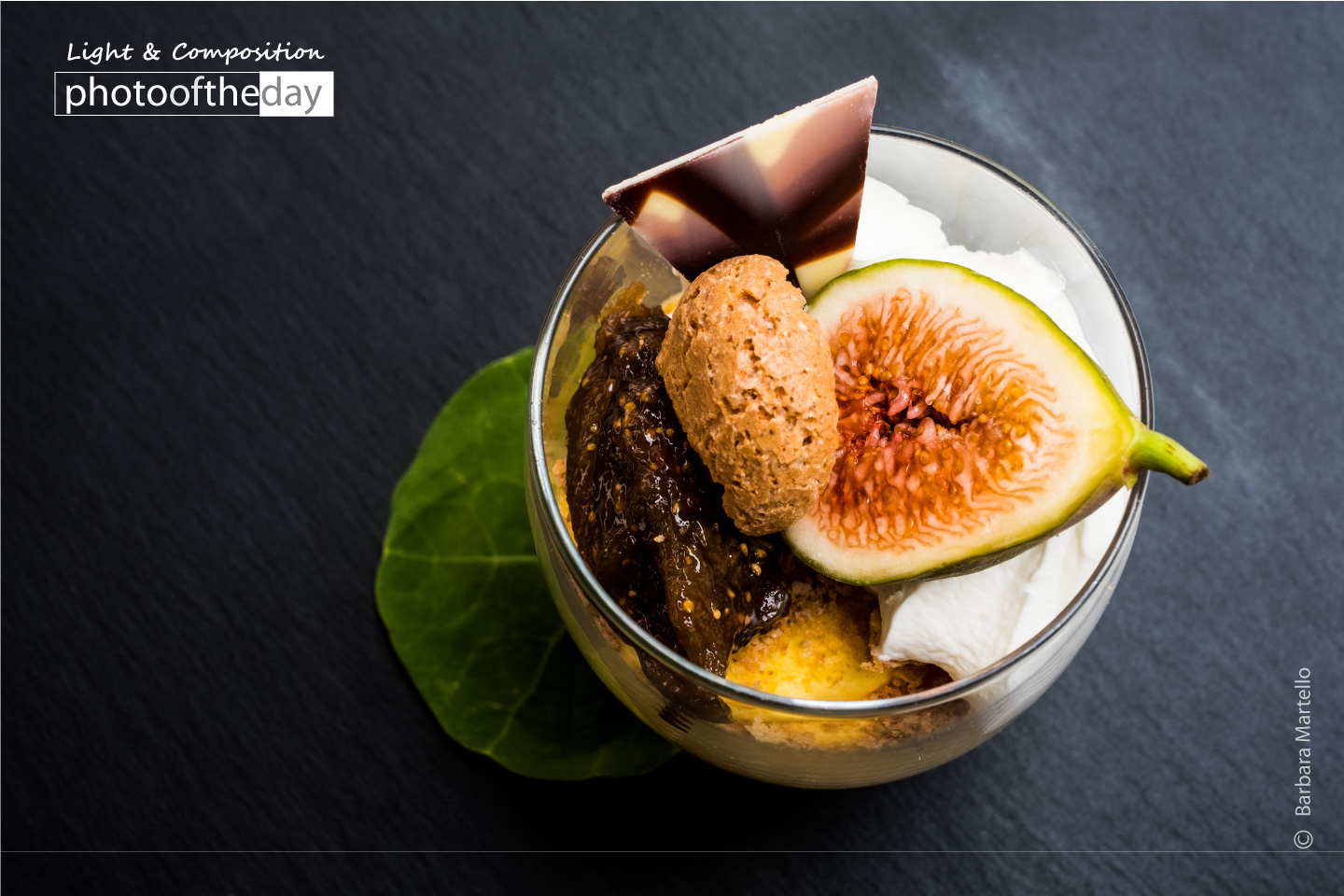
Mascarpone and Figs Dessert by Barbara Martello
Captured during an early autumn food shoot, this photograph highlights a sophisticated dessert of creamy mascarpone and fresh figs, elevated by a touch of white chocolate. The photographer utilized natural light to accentuate the textures of the cream served in a glass and the delicate placement of an Italian amaretto biscuit on a slate plate. The image is award-worthy for its clean, intentional composition and the way it transforms a culinary creation into a visual narrative, balancing the rustic charm of the slate with the refined elegance of the dessert's presentation.
Barbara Martello
Born in Italy, Barbara Martello is based in Udine and travels extensively throughout Europe to document her culinary subjects. Since beginning her photography journey five years ago, she has specialized in food photography, focusing on both restaurant environments and personal projects that explore the origins of recipes and traditional food harvests. Beyond her dedication to food reportage, she maintains a diverse portfolio that includes live music and pet photography, while continuously refining her expertise in studio lighting and the history of the medium.
Resonance Score Breakdown
Transparency Note: The resonance score (2.9/20) is calculated based on social engagement metrics collected before the award announcement.
Expert Photography Reviews · 5
The Ripening of Time
Figs do not ripen by force; they require the slow, patient accumulation of heat and the quiet work of wasps deep within their syconium to transform starch into sugar. It is a process of internal alchemy, a hidden maturation that happens long before the fruit yields to the touch.
Read the reflection →The Weight of Sweetness
Why do we insist on capturing the fleeting nature of pleasure before it dissolves? We spend our lives building monuments to moments that are, by their very design, meant to vanish.
Read the reflection →Reviews & Comments
Share your thoughts about this award-winning photograph. Your reviews contribute to the community engagement score.
1/30sec at f/9, ISO 200, 35mm. A deliberate choice. Stopping down to f/9 ensures the slate texture and the mascarpone’s viscosity remain sharp across the frame. It’s a calculated risk at 1/30sec, but the lack of motion blur proves the tripod was locked. I’ve seen enough soft food shots to appreciate this rigidity. It’s technically sound, though the light feels a bit clinical. Still, the precision here is refreshing. It’s a job done right.
The slate holds the weight of the fruit. Cream rests in glass, unhurried. I’ve spent minutes looking at the shadow beneath the biscuit. It’s quiet. There’s a stillness here that makes me want to hold my breath. Nothing here is accidental. The empty corner is not empty. It’s a deliberate pause in the middle of a meal. I’d sit in this silence forever. It’s enough. The rest is just noise.
It’s a technically competent shot, but frankly, it’s a bit safe. I’m bored by the clinical sharpness of the mascarpone. Why settle for mere documentation? I’d have loved to see Martello embrace the 1/30sec shutter speed to introduce a kinetic, painterly smear of the figs. It’s closer to a commercial catalog than the experimental potential of the medium. What did she choose not to resolve? I crave the blur; perfection is just so terribly predictable.
Food photography usually leaves me cold, but this hits differently. It’s about the light hitting that glass. You’ve got the texture of the mascarpone and the grit of the slate, but it’s the placement of that amaretto biscuit that makes me lean in. It’s precise. One tenth of a second later and the light shifts, the mood dies. You caught the stillness before the spoon ruins it. It’s honest, sharp, and damn near perfect.
It’s a curious exercise to view a dessert through the lens of an architect. The slate plate acts as a datum, grounding the composition, while the glass vessel creates a threshold between solid and void. The light raking across the mascarpone reveals a tectonic quality I find surprisingly moving; it’s almost like watching a soft, edible structure settle into its site. I’m struck by how the fenestration of the figs defines the space within the frame.